Film Analysis: “Eternal Sunshine of the Spotless Mind”

Eternal-Sunshine-of-the-Spotless-Mind-eternal-sunshine-4401681-1024-576

Every couple of years I stumble upon a film that transcends its traditional entertainment purposes and goes for something more divine, ambitious and philosophical. When a film like this comes along, it reassures me that film is indeed the greatest art form of our time. Movies that had that awe-inspiring effect on me include: “Last Year At Marienbad”, “The Exterminating Angel”, “Persona”, “2001: A Space Odyssey”, “Dark City”, “Enter the Void”, “The Thin Red Line”, “Eyes Wide Shut” and “Synecdoche, New York”. I like to call them life-changers.

The first time I watched Michael Gondry’s “Eternal Sunshine of the Spotless Mind” it felt like a life changer. I remember the night I saw it, too. I couldn’t sleep all night due to perpetual thoughts rushing through my head. I used to experience that during the last minutes of an exam I couldn’t finish on time. That night, I needed more time to grasp the film’s brilliant originality and fascinating implications. The second time I saw it, I had a few friends over and it wasn’t as impressive. Now, six years later I’ve given it another shot. Surprisingly, it had that same initial effect on me. This almost never happens to me, and I think I understand why it enchanted me the first and last times. It is one of those rare films, I’d rather watch alone than with an audience.

It reaches for something personal like troubling memories buried deep in our psyche. It is a film that demands the presence of thoughts we put aside when surrounded by people, things we only think about when we’re alone, buried in everlasting thoughts. “Eternal Sunshine of the Spotless Mind” is the rarest of all films, a therapeutically liberating work of art.

Eternal-Sunshine-of-the-Spotless-Mind-eternal-sunshine-4401679-1024-576

Charlie Kauffman’s marvelous screenplay revolves around Joel (Jim Carrey), a soloist stuck in the repetitive formula of everyday life till he meets the spontaneously carefree Clementine (Kate Winslet). Their relationship escalates into a supposedly dead-end when he learns that she had him erased from her memory. Furious and confused, he contacts the inventor of this advanced process, Dr. Howard Mierzwaik (Tom Wilkinson). Out of sheer desperation he resorts to the only logical solution at the time, removing her from his memory as well. But as he re-experiences the passionate days of their earlier relationship, he falls in love with her all over again.

The film then takes a Hitchcockian turn and becomes a man-on-the run film, only this time the protagonists are running from an untouchable entity. They race from one memory to the next desperately escaping the inevitable erasing process. It’s one of the most original and fresh ideas ever shot on film. If you haven’t seen this modern masterpiece, I strongly suggest you stop reading at this point, as I will explore some of the film’s more thought provoking themes.

One of the philosophical questions this film asks is whether we are merely the sum of our memories or if there’s more to us than a summation of past experiences. Would erasing an incident from our micro-history do us any good? Would a woman erasing the memory of a rape make her happier or would removing the incident do more damage to her life than the actual incident itself? Hence, she wouldn’t have learned anything from it or become the stronger person she is today. Is ignorance indeed bliss?

capture1

The film ultimately arrives to the conclusion that no, having a spotless mind does not bring eternal sunshine. You may forget a past memory but you can’t forget the impulses, instincts and emotions that arose from that past incident. They are in some sense untouchable because they shape who we are. Take for example, the simultaneous subplot involving Mary (Kirsten Dunst) discovering that she had her love affair with Dr. Mierzwaik erased. She arrives to that discovery through her love to him. The weak link in Lacuna’s process is that it successfully erases memories but can’t erase feelings.

Another heartbreaking scene that explores the system’s imperfection is when Joel and Clementine finally bid farewell inside his head. She leans in and whispers, “Meet me in Montauk.” You see, the Clementine guiding his escape is merely a projection in Joel’s mind. She represents his will to hold on and he does so through what he knows of her spontaneous personality.

When they challenge the erasing process by hiding in childhood remembrances and other “off the map” memories, the escape route is always suggested by Clementine. Joel would never arrive to such conclusions himself, but he subconsciously asks himself what would Clementine do and acts upon it. So when she whispers that final line inside his head, what he’s really doing is implanting an impulse; something Lacuna can’t touch.

Eternal-Sunshine-of-the-Spotless-Mind-eternal-sunshine-4401761-1024-576

The film opens with a post-erasing scene. On Valentine Day, Joel feels the impulse of going to Montauk instead of working and there he meets Clementine. She too implanted that impulse during her erasing process and it’s such a beautiful encounter. That cold day on the beach, they fall for each other all over again. Both Joel and Clementine do in fact win at the end, implanting that impulse defeats the system in a final attempt of desperation.

In that “second” first encounter, it’s almost like a hidden magnetic force pulls them together. This is portrayed cinematically through brilliant use of music. Music plays when they talk and pauses when they pause. Joel and Clementine click in a disguised coincidence, a natural encounter.

In another simultaneous subplot, Patrick, one of the Lacuna technicians, uses the dialogue he knows from Joel and Clementine’s real initial encounter to sweep her off her feet. The plan backfires on him and only fuels her confusion and anger. I believe that we as human beings have an uncanny ability to detect bullshit and truth in words. We think spoken words is the only way of communicating but there’s an invisible energy that comes from body language, the way we say things, and the way we look at a person that tells us if there’s any truth in what is being communicated. This energy is something beyond what we hear or see; it’s something we feel, a feeling of truth.

MV5BMTA1MzAzNTc5MDleQTJeQWpwZ15BbWU3MDExMDkzMjM@._V1._SX640_SY419_

My favorite scene in the film is when they’re stuck in their first memory, which is also the last memory they helplessly witness getting erased. Both characters recite some of the dialogue of his memory, but occasionally, Joel becomes self aware, looks at Clementine and pours out his commentary thoughts. As they sit in front of the ocean, she looks at him and says, “This is it Joel, it’s gonna be gone soon.” A sad smile eclipses his face when he replies, “I know.” But it’s the last exchange that really hit the mark with me. “What do we do?” she asks. To which he replies, “Enjoy it.” Joel gives up fighting instantly and chooses to enjoy the little time they have left together and it’s utterly heartbreaking.

Ironically, this reminded me of one of my childhood memories with my dad who’s a doctor of nuclear medicine; it’s when they use nuclear energy in a positive way to cure cancer. I remember when he told me that not all cancer patients choose to fight the disease and there’s nothing he can do about that, it’s their call. As a young kid, I couldn’t get that through my head. It just seemed inconceivable at the time. Whatever reasons they may have, I think it’s their right to do so. Whether it’s never-ending surgeries that constantly fail or hectic chemotherapy that leaves them miserable in their potential last days, it’s their right to let go and enjoy the little time they have left in this world.

Letting go is one of the hardest things a person can do. It doesn’t mean they’re giving up, it means they’re moving on. We hold on to things we value as if they will cease to exist when we let go. The truth is they won’t. Letting go or giving up isn’t an act of cowardice; quite often it’s an act of supreme bravery. “Eternal Sunshine of the Spotless Mind” tells us to accept things as they are and make the most of what we have when all hope is lost.

katejim3

I remember seeing my dad sitting on the living room couch as he watched the news. He’s one of the most positive and cheerful people I know and it often puzzled me knowing what he does for a living. I asked him if dealing with dying people on a daily basis is a depressing job. He replied something along the lines of “We tend to keep a lighthearted environment at the hospital.” When I asked him if breaking the bad news is the worst part of his job, he told me that it was, but every once in a while he breaks out great news and it makes it all worth it. The ups and down of life apply everywhere. In the case of this film, it’s in a relationship. As Joel discovers throughout his mental journey, the ups are sometimes worth all the downs.

“Tears, idle tears, I know not what they mean, Tears from the depths of some devine despair Rise in the heart, and gather to the eyes, In looking on the happy autumn fields, And thinking of the days that are no more.” – Alfred Tennyson

After a break up, the very memories you once cherished, the ones that drew a smile on your face whenever you remembered them seem none existent. That’s probably due to the recently bad incident towering and blocking all things wonderful from your thoughts. I think it’s an act of self-preservation to let the bad memories stick and allow great ones to slip through our fingers. It makes moving on easier.

“Two roads diverged in a wood, and I,
 I took the one less traveled by And that has made all the difference.” – Robert Frost

10440-6

After Joel and Clementine learn they’ve had their memories erased because things just didn’t work out, they somehow choose to travel that same road again anyway. I think it’s a perfect ending to a perfect film. As we’re so often told, it’s about the journey not the destination. They know what is waiting at the end of that road and they choose to walk through it anyway. The journey has been erased and therefore, they choose to re-experience it. Perhaps it’s to arrive at that conclusion because that’s the only way they’ll understand the nature of their previous destination. Or maybe, they share a tiny ounce of mutual hope. After all, they know the pitfalls and hidden traps on that road from listening to their Lacuna tapes. Dodging them is all that needs to be done to arrive at a different destination. This is precisely how second chances are meant to be taken.

Whenever, I watch this film it steers my eyes away from the empty half of the glass of water and makes me acknowledge that there’s a full half right below. For that very reason, I’m eternally grateful for its existence.


Film Analysis: “The Grey”

On his last day on the job, John Ottway sits in a bar full of workers. Most are involved in a violent brawl, but he sits alone isolated and unbothered by his surroundings. His sad eyes seem lost in thoughts of hopelessness. As he walks out in the cold mist to a remote spot, we learn of a suicide letter he’s written to the wife who left him. Ottway holds the barrel of a rifle in his mouth and closes his eyes, ready to pull the trigger. The unlikeliest of signs makes him remove the rifle, the howl of a wolf in the dark.
Joe Carnahan’s “The Grey” tells the ironic story of a suicidal man who ends up fighting for his life after a plane crashes into the wolf-infested wilderness of Alaska. I don’t know about you, but the first half of that sentence interests me more than the second half.


No family, no friends, nothing waiting for him, just the memory of a brighter past. Why would a man who got stripped down till he had nothing left, a man seriously contemplating suicide, end up fighting for his own survival? The question left me thinking of this philosophically heavy film all year. People walked into the movie expecting a plane crash and Liam Neeson fist fighting wolves and got a much deeper art film.


tres-filmes-para-ficar-deprimido-1

I’ve read countless reviews of people criticizing the film’s harsh depiction of wolves and how the behavior of wolves is portrayed unrealistically, but if that’s what they think the film is about, then sadly they only see the surface.

“Jaws” isn’t about realistic shark behavior. Its sole purpose isn’t to portray great white sharks as man-eaters; it’s about characters overcoming their inner demons. Chief Brody facing his fear of going to the water, Quint dealing with his past experience at the Indianapolis; “Jaws” is about characters facing their fears instead of running away from them. What distinguishes “The Grey” from all the “Jaws” copycats is that it isn’t about man vs. nature, but man vs. himself.

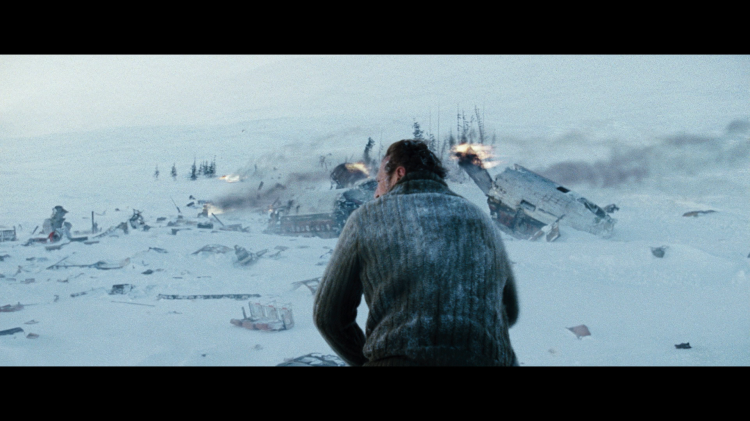
If you still haven’t seen this modern masterpiece, I suggest you stop reading at this point to avoid spoilers. Make no mistake; “The Grey” is not a slow film. It features very well constructed scenes of intense action and sheer horror. Take the plane crash for example.


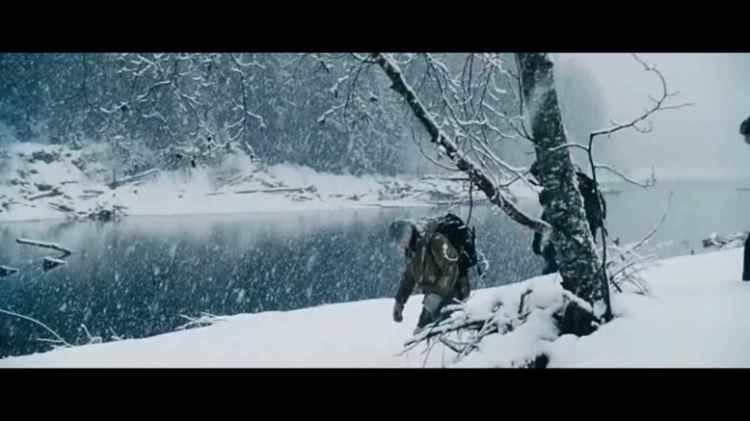
the_grey_20

It is without a doubt the most horrifying plane crash ever depicted on film. The camera pans back the dark corridor of the plane’s dim interior. We see the passenger TV flickering like there’s a loss of electricity. The passengers are silent and unnervingly asleep because of the turbulence. We see cold air exhaled from the passengers as we move all the way to our protagonist, who too is in deep sleep. A sudden drop and the disturbing sound of power failure interrupt his calm dream.

The director wisely avoids cutting to an exterior shot of the plane plunging into its demise. We’re kept in the plane, with the characters, and it’s as close as a director could get to have his audience strapped in seatbelts.

This scene is a testament to the power and importance of sound. Another impressive scene that makes good use of sound takes part much later in the film. After the plane crashes in the middle of nowhere they set out to the distant woods to avoid any more wolf attacks.


the_grey_wolf-attack-night

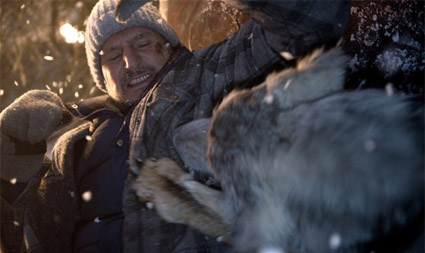
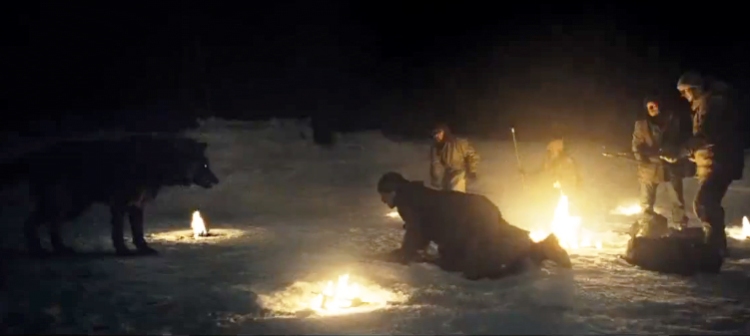
As soon as they arrive they make a quick fire to fend off the wolves chasing them. We don’t actually see the wolves, but Carnahan literally tell a story through sound. Using only growls and cries, we learn that one of the wolves tries to take on the alpha male but ultimately fails.


campfire

After repeated viewings, I noticed that there’s a lot more to this significant scene than meets the eye, or ear for that matter. The mirroring scene that follows shows tough guy Diaz (Frank Grillo) as he challenges the dominance of the alpha male of the human pack, Ottway.

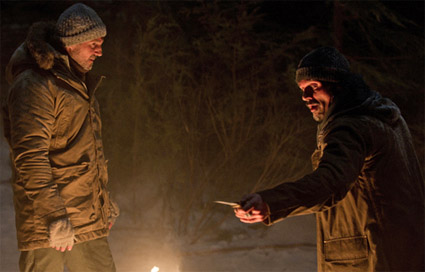
Throughout the film the tension between Ottway and Diaz builds up to this critical moment. It all starts right after the plane crashes. When Ottway notices Diaz is stealing a calfskin wallet off one of the dead bodies, he confronts him. “I’m going to start beating the shit out of you in the next five seconds. And you’re going to swallow a lot of blood for a fucking billfold.”


the_grey_neeson_grillo

With Liam Neeson’s badass delivery, Diaz wisely throws the wallet away. The next morning the verbal confrontations continue when Diaz disagrees with Ottway’s decision to leave the crash site, “Nobody nominated you shit by the way!” Frank Grillo delivers a magnificent supporting performance and seeing his character arc from beginning to end is bound to pull a few heartstrings.

The verbal duels eventually lead to a physical one which mirrors the unseen incidents happening within the wolf pack. Ottway ultimately tells him that it’s okay to be scared. Diaz takes it the wrong way and thinks he’s questioning his masculinity. One thing leads to another and the alpha wolf interrupts their brawl. The wolf takes a step forward, Diaz takes one back.

The film has a very interesting take on masculinity. Hollywood has always displayed men to be brave and fearless, and for some reason this has sunk itself into the human psyche. We now attribute real men with false characteristics. And here comes Ottway, who’s emotionally beaten up, and he’s standing up against this false image of masculinity.

Diaz: Cause I wanna live, motherfucker. Do you understand that? I don’t want some Timberwolf shittin’ me out on this mountain.
Ottway: You’re scared.
Diaz: What?
Ottway: You don’t need all that nonsense, all that chest puff bullshit. What’s wrong with being scared?
Diaz: I’m not scared.
Ottway: You’re not?
Diaz: No.
Ottway: I’m terrified.
Diaz: I can tell.
Ottway: And not an ounce of shame in saying it. I’m scared shitless.
Diaz: That’s because you’re a punk. I don’t walk through this world with fear in my heart.
Ottway: You pick that up in the pen? Somebody scribble that in the day room wall?
Diaz: You better take it easy, motherfucker.
Ottway: Talking tough means jackshit now. You’re not scared? You’re a fool. Worse, you’re a fucking liar.

It’s a beautiful confrontation and the fact that it all mirrors the previous scene adds to the metaphorical depth of “The Grey”. We’re all just animals in this world; human ego has us believing otherwise. There are so many ways to look at the film, because it’s rich with symbols and philosophical undertones.

One of the more interesting takes on the film is that John Ottoway is a lone survivor and all other characters are just facets of his personality. Think about it, the macho tough guy, the family man, the non-believer, and the believer. This theory is supported by the fact that after the crash we see him all alone in the midst of everlasting snow. At the film’s finale, he’s alone once again.

I referred to Ottway as both a believer and a nonbeliever. The truth is, he’s both. I don’t know why people like to label one another based on religion. Faith isn’t as simple as black and white. There’s grey in between and many people place themselves there. When asked whether he’s an atheist he replies, “Nope…I’m a realist. I really wish I could believe in that stuff. This is real, the cold.” He lets out a breath. “That’s real, the air in my lungs, those bastards right there in the dark stalking us. This is the world that I’m worried about not the next.”

“The Grey” explores man’s most frightening questions, the reason we’re on this planet, if there’s an afterlife or if “dead is dead”. What makes this film so scary to me aren’t the wolves, but the fact that it encapsulates so much of what we fear as human beings, our fear of heights, flights, drowning or dying alone.

The number of survivor starts declining and surprisingly most characters die from the very things I mentioned. The most memorable death to me has to be that of Diaz. The one character we thought would never give up finally gives in accepting the fact that we all die one day.

“What I got waiting for me back there? I’m gonna sit on a drill all day. Get drunk all night. That’s my life. Turn around and look at that. I feel like that’s all for me. How do I beat that. When will it ever be better? I can’t explain it.”

At his final moments, he’s alone admiring the scenery. We only hear the faint sound of footsteps getting louder as the wolves come closer. Death is approaching. Diaz’ last words are “I’m not afraid”, and unlike the first time he says those words we actually believe him.


Untitled2-r100
Eventually Ottway is left all alone. He looks up at the sky and calls for God. “Do something! Come on, prove it! Fuck faith, earn it! Show me something real. I need it now, not later, now! Show me and I’ll believe in you till the day I die. I swear. I’m calling on you. I’m calling on you!” Nothing happens. “Fuck it, I’ll do it myself.”

I’m sure I’ll quote that last line for years to come, because it rings so true. All my life I was told to pray for things I wanted, to pass an exam, to get accepted into university, to stay healthy. “Just leave it to God.” has been said to me over and over again at times of great frustration. But I never believed the world worked that way. I had to study to pass the exam, improve my grades to get accepted into university and avoid various harmful food or drugs to stay healthy. I had to earn it. I believe God helps those who help themselves.


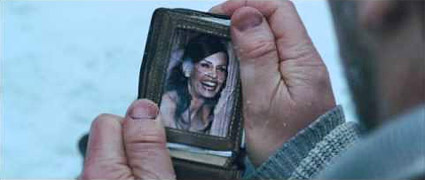
the_grey_wallet_photo

Anyway, we reach the much talked about ending. The most heartbreaking moment to me is as Ottway looks into the wallets of all his now deceased friends. He looks at family pictures and learns what each character was fighting for, family. When he flips open Diaz’ wallet, all he sees is a driver’s license and it’s utterly heart wrenching. Ottway wraps his hands on the wallet forming praying hands. He finally places it with the other wallets, all assembled to form a cross.

We learn that Ottway’s wife has died at the final moments of the film. Natasha Richardson, talented actress and wife to Liam Neeson unfortunately passed away due to an untimely skiing accident two years prior to filming. I can’t help but wonder if some of Neeson’s real emotions translated into the film’s core powerhouse performance.

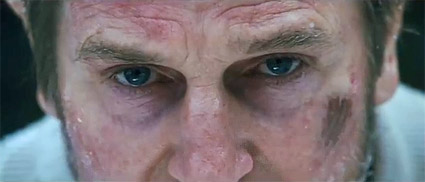
the-grey-liam-snow-wolf.jpg

Like faith movie interpretations aren’t as simple as black and white. I think “The Grey” could be interpreted both ways depending on how you look at it. One could argue that no miracle happened, he ends up surrounded by wolves, dies alone and that’s the end of it. But one could also argue that the appearance of the alpha wolf is exactly what he asked for, a sign from God. The wolves finally showing up might be seen as proof that there is a God who wants him reunited with his wife. After all, his suicide attempt was interrupted by a howl and maybe this is God’s gift to him, a way to die without having to actually kill himself.

So why was the suicidal man fighting for his life? To find the meaning to life? A reason to live? Maybe I asked the wrong question; maybe Ottway wasn’t fighting for his life but for his death, to earn it.

Film Review: “Maverick” ★★★★★ (5/5)

“Maverick” starts with the protagonist in the middle of nowhere. He helplessly sits on a horse; his neck is at the end of a noose tied to a tree branch. The men who put him in this vulnerable situation surround him. They drop a bag containing a snake and ride away. If the horse bolts, Bret Maverick dies. It is one of the most attention-grabbing opening scenes in film.

“It had just been a shitty week for me from the beginning”, he narrates as we embark on a lengthy flashback that leads to this critical point of our hero’s adventurous tale. Make no mistake, the intense opening does not encapsulate the film’s tone, for “Maverick” is the kind of old-fashioned western comedy we rarely see nowadays. The film is in the tradition of slapstick Hollywood classics set in the Old West. Despite falling under a dying subgenre, director Richard Donner of “Lethal Weapon” and writer William Goldman of “Butch Cassidy and the Sundance Kid” managed to create one of the highest grossing westerns of all time.

maverick_gibson_noose.jpg

maverick_noose2.jpg

It also happens to be one of my personal favorites. Every time I watch it, I can’t help but smile. It puts me in an upbeat mood and just plain and simply brings the best out of me. The reason I’m writing about it a good 18 years after its initial release date, is because it has become undeservingly forgotten. “Maverick” deserves the same great mentions received by other similarly molded feel-good classics like “The Sting”.

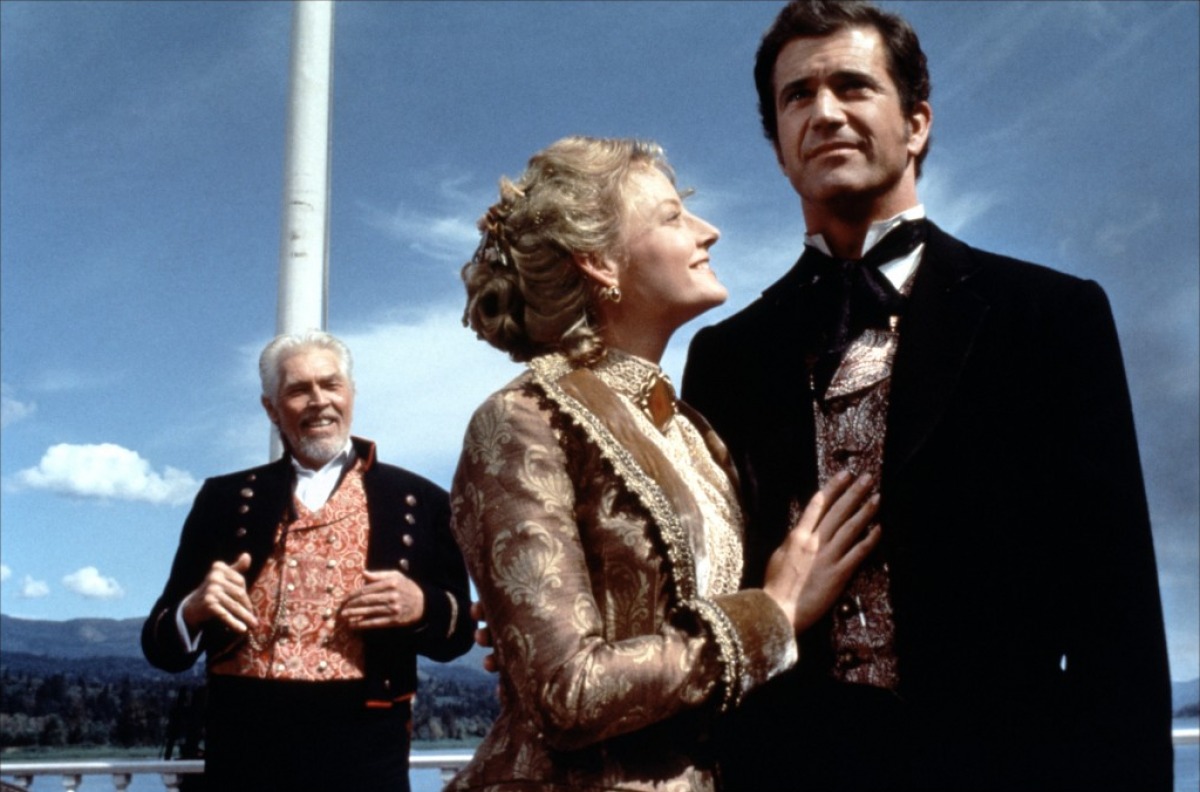
Mel Gibson was born to play this role and no matter what you think of him as a person, one must give him credit for being one the most talented actors out there. “Maverick” features a great and underrated performance unlike anything Gibson has done before. This could easily have been a flat performance had it been given to another actor, but Gibson uses a wide range of perfectly timed facial expressions completely owning the role and the audience. I think the humor feels so natural and genuine, because it seems to come out of character and situation. Frankly, it is hard to believe that the actors broke character when Donner yelled “Cut!” in between takes.

maverick_gibson_cards.jpg

maverick_gibson_gun.jpg

Jodie Foster and James Garner deliver equally entertaining performances as the flirty Annabelle Bransford and Zane Cooper, a marshal who always seems to have a trick up his sleeve. We follow all three in a serious of comedic episodes leading to the biggest poker tournament ever assembled. To enter the tournament each player is required to pitch in with $25,000. Everyone involved seems to be a little short of that, and so the threat of not stockpiling the entry fee on time always lingers.

maverick_gibson_garner_foster.jpg

maverick_highstakes_poker_game.jpg

Donner created a minor classic full of unpredictable twists thanks to a hilariously dialogued screenplay that deserves mammoth praise. “Maverick” is also one of those films rich with smooth references to everything from the original “Maverick” TV show starring Garner as the leading man to other classics such as “Stagecoach” and “Butch Cassidy and the Sundance Kid”. It also features a pleasantly surprising cameo of Danny Glover in a hysterical bank robbery where both “Lethal Weapon” stars almost recognize each other.

It is impossible for me to name a favorite scene, because “Maverick” effortlessly flows from one memorable chapter to the next. Take for example, the first poker scene in which Maverick promises to lose for a decent hour. It leads to a sidesplitting confrontation between Maverick and the intimidating villain Angel played by Alfred Molina. Molina’s priceless fearful reaction after witnessing Maverick in a brawl outside the bar always leaves me laughing in tears. Another great scene is the comedic recreation of the famous stagecoach stunt or the fake Indian sacrifice with Graham Greene.

maverick_molina.jpg

maverick_stagecoach.jpg

maverick_graham_green.jpg

maverick_Gibson_war-paint.jpg

Even though the film features few unrealistic yet engaging poker scenes, at its core, it’s a brilliant poker film. No matter what misadventure he finds himself in, Bret Maverick always seems to be in a poker mindset. He uses the rules of poker to con his way out of every incident, which makes for a smart masterpiece of pure good old times at the movies.


Film Analysis: “V for Vendetta”

During the revolution Egyptians referenced “V for Vendetta” more frequently than any other work of art. Protestors held up signs that read “Remember, remember the 25 of January.” On the internet, Photoshop was used to alter Pharaoh Tout Ankh Amoun’s face into a Fawkes smile.

Sarah Abdel Rahman, an activist who ended up on TIME magazine’s cover page during the revolution referred to scenes from the film when I discussed the revolution with her. Guy Fawkes’ bumper stickers are stuck on the back windows of dozens of cars driving through Cairo traffic; his mask painted red, white and black resembling the Egyptian flag. The list goes on and on, there’s no doubt about it, in 2011 “V for Vendetta” stirred up as much conversations in Egypt as when it first spread controversy the day it was released here.


The controversy back then was one that split opinions between critics and film fans alike. Does the film promote terrorism? Is V a terrorist or a freedom fighter? By definition a terrorist is one of two things:1. a person, usually a member of a group, who uses or advocates terrorism

2. a person who terrorizes or frightens others

V does blow up buildings, but they’re usually empty after the curfew and he does kill policemen when they attack him. V is not a typical terrorist, for he terrorizes a group that uses terror to rule the masses. By definition the government portrayed in the picture could be considered terrorists as well for they are a group that “frightens others”. The only difference is V could also be considered a freedom fighter. The same can’t be said about the members of the British government in the film.

“People should not be afraid of their governments, governments should be afraid of their people.” was tweeted endlessly during the revolution, even though I fully disagree with what it says. Fear should not be the driving factor behind anything. In fact, a government should be at peace with its people and vice versa. In other words, there has to be a mutual aspect between governments and their people and it shouldn’t be fear by rather a mutual understanding. But this isn’t why I decided to write about the film. For a film that better understands this material, I recommend the superior “The Battle of Algiers”. Granted the constant referring drove me to revisit “V for Vendetta” and when I did, it wasn’t the controversy or the dozens of similarities between both the previous Egyptian regime and the government in the film that caught my attention. I decided to write about how the film delivers its message visually.

James McTeigue’s “V for Vendetta” starts with black and white opening credits. The human eye automatically associates black and white with old. Intense military music plays in the background and the images have aged markings on them like they belong to an old film reel. These credits resemble old footage of Nazi propaganda films which plays a major role in this film as historical context is one of its themes.

A narrated voice then transported to the 17th century, 1605 A.D. to be specific. We are introduced to man by the name of Guy Fawkes. He tried to blow up the house of parliaments on November the 5th of that year. Visually we know we’re witnessing the story narrated through the costume designs of a period hundreds of years old.

Fawkes is caught and he’s about to be executed in front of the public. We get a high angle shot of an angry crowd waving their fists into the air. The fact that the shot was angled from above helps the viewer look down at these people both literally and figuratively.

v_for_vendetta_17th_century_mob.jpg

v_for_vendetta_hanging.jpg

v_for_vednetta_tear.jpg

Fawkes is wearing a white shirt symbolizing his innocence. As the noose is tied around his neck, he searches for a loved one, the only sad person in a sea of angry people. When we finally see her, the shot isn’t set up from a high angle suggesting she’s the only righteous person there. We then get an extreme close-up of her eyes as a tear slides down her cheek. The use of a close-up is very relevant as it demands and evokes an emotional response from the audience.

The man gets hanged and the camera moves slowly from his head to his struggling body all the way to his feet dangling in the air. As the camera moves down, the figure rises within the frame symbolically expressing a dying man rising to the heavens.

v_for_vendetta_logo_fire.jpg

This is considered the prologue of the story as it all happens before the title flashes on the screen. A large V sign lights up the screen, it references two culturally significant signs, the anarchist A symbol and the Z from Zorro. Both of which are very anti-establishment. This sign is hammered to the viewer throughout the picture both subliminally and consciously.

After the title flashes before the screen we are transported to contemporary times. Through careful editing inspired by Eisenstein’s theory of montage, we witness two intersecting parallel scenes carefully edited together. They complement one another and eventually both subjects merge within the same frame. V puts on his mask and we cut to Evie (Natalie Portman) stands in front of a mirror. She puts on her make-up. When she switches off her TV, he does too. The mirroring actions suggest that both are heading towards the same path. When their paths finally meet, V saves her from brutal government officers attempting to rape her.

v_for_vendetta_V-saves_evie.jpg

v_for_vendetta_tv_speech.jpg

A similar montage can be seen after V saves her from the rapists. After they are set apart, Evie goes to work which just happens to be where V is trying to broadcast a message to the country on live TV. The montage sequence mirrors and reflects the previous one with matching close-ups. Only this time when their paths meet again, it’s Evie who saves V.

More mirroring shots occur throughout the picture. Not all of them are between V and Evie. The shots of V talking on TV reflect the ones of the Chancellor addressing the nation. However, both were intentionally captured differently. When V addresses the nation, he speaks eloquently and the screen is clean and well balanced. Yet, when the Chancellor orders his people around, the shots are extreme close-ups displaying his wrinkles and worn out face which symbolizes the old and flawed regime he commands. Also, his shots are often shown from a lower angle meaning the camera was looking up at the subject. This was probably intended to give his menacing presence a sense of power and importance.

v_for_vendetta_chancellor_tv.jpg

As mentioned before, one of the themes of “V for Vendetta” is historical context. The Chancellor is portrayed similarly to Hitler, and his actions that of the Holocaust. These connotations are presented through carefully designed shots that resemble photographs of that era.

There’s also the whole concept of the government officials walking around with a badge that has a symbolic sign on it representing their regime. Costumes play an important factor in this film. Besides the military uniforms, there’s the whole concept of V’s mask. Early on in the picture, V mentions that the man behind the mask doesn’t matter; it’s the idea he tries to inject to his followers that is most important. Another clever use of costume design is when Natalie Portman is dressed as a school girl cheerleader visiting a child molesting priest. It is quite clear that Evie is a full grown woman but with through a single costume all is forgotten. Thoughts of pedophilia and sexual abuse are bound to enter the viewer’s mind.

v_for_vednetta_priest_evie.jpg

The priest brings back the whole mask concept. Because the priest only seems like a man of God on the outside but from the inside he’s nothing but a child molester. In other words like V, the priests is wearing a mask only underneath he’s hiding a much uglier soul. His disrespect for his religion is further noted upon when V enters the room to save Evie from another rape attempt. The priest reaches for his gun, which is hidden in none other than the bible.

v_for_vendetta_shaving_hair.jpg

A more pleasant religious reference is after Evie discovers V was the one imprisoning and torturing her to help overcome her fears. She walks out on the roof and stands in the rain. From this moment on, she’s reborn, the rain symbolizes her baptism. We also get a flash of V’s rebirth only instead of water it was fire that gave birth to a new man.

v_for_vendetta_evie_rain.jpg

v_for_vendetta_freedom_flames.jpg

Other memorable scenes include the sequence where we get a glimpse of Evie’s childhood. In that scene we witness as her mother is brutally beaten and gets arrested while she hides under the bed. The scene mirrors another as she watches a father like figure get beaten and arrested.

As one can clearly see, most shots in “V for Vendetta” are either close-ups, extreme-close-ups, medium shots, some two shots and three shots but rarely any wide shots. I suspect this was also intentional as most scenes take place behind bars, within brick walls of a prison cell, in rooms cramped with people. These scenes evoke a sense of claustrophobia or oppression which is what the government enforces upon its people in the film. However, after V liberates his people, we get a variety of beautifully photographed wide shots. The viewer is no longer trapped within the boundaries of the frames as the director and cinematographer liberate the audience’s eyes to deep focus wide shots. V achieves what Fawkes failed to do hundreds of years ago, and at last everyone takes of their masks. Through the collective work of editors, costume designers, musical composers, cinematographer and the director we are presented with a perfect cinematically example of consistent mise-en-scene to visually express the core of the film’s message, freedom and liberation.

v_for_vendetta_crowd_masks.jpg

v_for_vendetta_big_ben_explodes.jpg

v_for_vendetta_parliament_explosion.jpg

When I marched in Tahrir, I felt a similar sense of unity, the sense of unity can’t be described properly in words. You become part of this huge body with a single cause. The roar of the crowds alone spreads goosebumps all over your skin, you look around you and see strangers but for the time being they’re your family. You help those in need and they help you, you protect them and they protect you, there’s nothing quite like experiencing the same event in masses. It’s why we enjoy crowded parties, go the movies in theaters and so on. We tend to be more at ease when embarking on the same incident. So when I watched as thousands marched towards the house of parliaments, all these feelings came back to me. It’s a shame it had to end with a beautiful building exploding. Perhaps the V masked people should’ve continued marching into the building and taken over using foothold. After all, peaceful revolutions can be successful.

Film Analysis: “On the Waterfront”


Elia Kazan’s “On the Waterfront” has been discussed endlessly by film fans, critics and film historians. It’s easy to see why, for “On the Waterfront” can be studied from various perspectives. On the one hand the film reflects a time in history when some Americans named names before the House of Un-American Activities Committee much like Terry Malloy does in court. It has also been argued to be Kazan’s answer to Arthur Miller’s play “The Crucible” or his redemption and justification for falling victim of Joseph McCarthy’s witch-hunt of the 1950’s.

Others simply revisit the film to study its significance in film history and the impact of Brando’s method acting. Pauline Kael recognized strong Christian symbolism in the plot and looked at the film from a religious point of view. Among other things a lawsuit filed against Columbia pictures in 1955 revealed that the film was also a true story based on Anthony De Vincenzo who with the aid of waterfront priest John M. Corridan blew the whistle against the corruption imposed by real life mobster Albert Anastasia.

The way I see it, all the above facts tell the story behind the film. It’s a shame that the religious, socio-political or historical agendas that went on behind the curtains eclipse every other essay written about this great story. So I tried to strip everything I read and learned about the film from my mind and study it with fresh eyes. It’s almost impossible to do so, yet I managed to see the film in a new light. The one film essay that occupied my thoughts during my attempt to recapture a first viewing is Roger Ebert’s brilliant “Raging Bull” review. Both films are black and white motion pictures with boxers as protagonists. Another thing they share in common is the fact that in both movies gangsters cast their greedy shadows influencing and manipulating the outcome of boxing matches. Nonetheless, on a cinematic level they couldn’t be more different, or so I thought. The only direct connection they share is the referenced “I could’ve been a contender” quote, but through Roger’s essay I discovered a new angle to “On the Waterfront.”

In my personal favorite film review, Roger points out that “Raging Bull” is not about boxing at all but rather about “a man with paralyzing jealousy and sexual insecurity, for whom being punished in the ring serves as confession, penance and absolution”. In other words, the film appears to be about boxing on the surface, but on a deeper level it is about something entirely different. It is no coincidence that I kept thinking about his words during my latest “On the Waterfront” viewing, for it also is a film that hides behinds a genre–only, unlike “Raging Bull,” it’s the other way around. Think about it, “On the Waterfront” doesn’t quite fit in as a gangster picture the same way “Raging Bull” doesn’t feel like a boxing film. Even though there’s not a single scene where sluggers dance around within the confines of a ring, Kazan’s film is in fact a boxing film in disguise.

The film starts off with Terry Malloy (Marlon Brando) trying to get Joey Doyle to meet him on the roof after having found one of his lost pigeons. We learn that Joey is wanted by the mob but he goes up the roof nevertheless. We sense he trusts Terry. Unfortunately the whole act turns out to be a set-up. Gangsters throw him off the roof to his demise. We see Terry’s reaction as he stands on the sidewalk next to his brother Charley and two other gangsters. Clearly Terry is upset. “I thought they was gonna talk to him and get him to dummy up. I figured the worst they was gonna do is lean on him a little bit,” he tells his brother. We later learn that this wasn’t the first time Charley used his kid brother for his own benefit.

on-the-waterfront-brando-bird.jpg

on-the-waterfront-joey-doyle.jpg

on-the-waterfront-mob-roof.jpg

on-the-waterfront_charley_brando.jpg

Gradually we witness Terry struggling to pick a side. No other actor could better express a slow and continuing character change as Brando. When he learns about Doyle, Brando plays with his jacket zipper and we suspect something is troubling his mind. Brando’s use of body language in “On the Waterfront” is as clear as the expressive acting of the silent era. It’s hard to pinpoint when exactly he changes as several people contribute to him taking a stand against the mob. Joey’s Doyle’s sister, for one, plays an important role in this transformation for she feeds his guilt.

on-the-waterfront-brando-doubts.jpg

They first meet on what seems to be like any other day on the waterfront. Two detectives mingle in the crowd asking for Terry Malloy. When they finally spot him, one of them asks Terry about his boxing days to which Terry replies, “Ok. Ok. Without the bird seed, what do you want?”

on-the-waterfront-brando-cops-dockyard.jpg

on-the-waterfront-brando-cops-docks-hook.jpg

They start asking about Joey, since Terry was the last one to see him before his death. A longshoreman’s hook rests on Terry’s shoulder while he gives them nothing they could work with; the hook of course symbolizes being hooked in a corrupt system. Afterward Terry looks to one of his friends and says “How do you like them mutts taking me for a pigeon?” A whistle blows and the men gather up around one of the gang members who’s about to pick the workers of the day. The longshoremen are desperate. They start begging and pushing, the man finally gives up and throws the tabs on the floor. Dozens of men scramble fighting for the tabs like pigeons would react to bird seeds on the ground. Oh, the irony.

Anyway, Terry meets Edie there and after he learns that she’s Joey’s sister he gives her his tab. The more time he spends with her the guiltier he feels. Notice how during those scenes Terry is wearing a checkered wool jacket. His entire presence changes throughout the film; the costume design is deliberate with two contrasting colors representing the conflict within him. Eventually Terry wears Joey’s jacket. It’s plain because by then he has already picked a side.

on-the-waterfront-edie.jpg

on-the-waterfront-brando-edie-cafe.jpg

on-the-waterfront-brando-edie-bum.jpg

This leads me to another important character in this film, Father Barry. Father Barry (Karl Malden) pushes Terry a step further during one his speeches. He goes on and on trying to convince the longshoremen to act. Meanwhile, we see a change occurring in Terry’s eyes. When one of the mob members attempts to throw something at the priest, Terry knocks him out. The way Father Barry words his speech is almost like he indirectly wants to spark that fire in Terry. He uses words a boxer could identify with. “What they did to Joey, what they did to Nolan, they’re doing to you. And you. And YOU. And only you, with God’s help, have the power to knock ’em off for good!” Terry needs the priest like a boxer needs a trainer.

on-the-waterfront-priest-speech.jpg

on-the-waterfront-brando-needs-priest.jpg

As much as Edie and Father Barry influence Terry’s actions to finally take a stand, I believe it’s his brother Charley (Rod Steiger) who finally pushes him over. In one of the most iconic acting scenes in cinema, Terry meets his brother in a cab. Charley pulls a gun on his brother and for the third time he tries to force his own brother into doing something he’d rather not. Terry pushes the gun away in disappointment. “Charley, Charley, Charley,” he says in a heartbreaking tone. His brother, realizing what he has done, rests his head in shame. I think this is the precise moment when Terry decides to face the mob. He fiddles with a piece of dust on his leg. “Oh, Charley.”

on-the-waterfront-brando-charley-car1.jpg

on-the-waterfront-charley-gun.jpg

on-the-waterfront-charley-head-rest.jpg

Throughout the film you can sense an awkward uncomfortable chemistry between the brothers and it all comes down to this scene. Both Brando and Steiger bare their souls here. Great acting scenes rarely live up to their hype but every single time I watch this scene, the pain that pours out of both of them never fails to move me. As mentioned before this is where we learn how Charley first selfishly used his brother in the past.

“It wasn’t him, Charley, it was you. Remember that night in the Garden you came down to my dressing room and you said, ‘Kid, this ain’t your night. We’re going for the price on Wilson.’ You remember that? ‘This ain’t your night!’ My night! I coulda taken Wilson apart! So what happens? He gets the title shot outdoors on the ballpark and what do I get? A one-way ticket to Palooka-ville! You was my brother, Charley, you shoulda looked out for me a little bit. You shoulda taken care of me just a little bit so I wouldn’t have to take them dives for the short-end money.” Terry finally opens up and tells his brother how that made him feel and ends his powerful speech with “You don’t understand. I coulda had class. I coulda been a contender. I coulda been somebody, instead of a bum, which is what I am, let’s face it. It was you, Charley.”

on-the-waterfront-brando-charley-car2.jpg

on-the-waterfront-brando-charley-car3.jpg

Charley can’t even look him in the eye during all this. Both shameful and heartbroken he accepts Terry’s decision. Terry isn’t the only one who comes out of the cab incident a changed man. I always saw Charley as an overlooked character for this is his redeeming moment. Charley hands his brother a gun before dropping him off. He’s looking out for his kid brother and as we later learn, it’s more than just a “little bit”, for Charley sacrifices his own life for Terry.

on-the-waterfront-dead-charley.jpg

on-the-waterfront-fight-him.jpg

on-the-waterfront-courtroom.jpg

When Terry tries to avenge his brother’s death it’s the priest who saves him and directs him like a trainer would in a ring corner. “Don’t fight him like a hoodlum down here in the jungle. That’s just what he wants. He’ll hit you in the head and plead self-defense. Fight him tomorrow in the courtroom” Terry testifies against the mob but loses everyone. Yet, he still finds the courage to go to the waterfront the next day. He lifts the longshoreman hook on his shoulder and throws it at the closed door of Johnny Friendly’s office symbolizing his liberation. One thing leads to another and before you know it they’re fighting one another. After the other hoodlums aid their boss, it’s too much for Terry and he gets knocked down. This is the championship match he longed for. Thousands of longshoremen are watching like boxing fans gathered around a ring. It’s Terry’s only chance to prove he’s not a bum.

on-the-waterfront-brando-returns-docks.jpg

The priest comes as a trainer would at such a critical moment, “You hear that, Terry? Terry, did you hear that? You lost the battle but you have a chance to win the war. All you gotta do is walk… Johnny Friendly is layin’ odds that you won’t get up.” This is the last round in a boxing match. Everyone is tense waiting to see if he has it in him to stand back on his feet.

on-the-waterfront-brando-beaten-up.jpg

on-the-waterfront-brando-walks.jpg

on-the-waterfront-brando-class.jpg

Terry struggles to get back on his feet but eventually he manages to do it. When someone tries to help him walk, the priest yells “Leave him alone. Take your hands off him. Leave him alone.” Terry has to survive this walk on his own. Eventually Terry proves himself no bum bringing an end to the reign of corruption on the waterfront. Terry Malloy’s a contender, he’s somebody and he most certainly has class.

Film History: The Physicality of “Silent Running”

The other day I was discussing the physicality of objects with a fellow Far-Flung Correspondent), Grace Wang. We were mourning the death of physical objects. Like me, she shares this preference of actual physical books over e-books, letters over emails, photo albums on a shelf over digitalized photo albums on Facebook. There is something unique about the physicality of them all, something that will always be absent from their digital replacements. Of course recycling these objects goes without saying.

The smell of a book as you turn a soft page, or the excitement of checking the mailbox for snail mail is something many of us will always prefer over clicking a ‘Next Page’ icon in an e-book or checking an inbox full of emails. It’s why the Jimmy Stewart film “Shop Around the Corner” worked better as a romantic comedy than the Tom Hanks remake “You’ve Got Mail”. Yes, both may contain the same content but content has nothing to do with it. I would rather slam a book with anger or crumble a letter than double click a delete button. This need for physical objects is more than just an act of nostalgia; it’s a predilection.


shop around the corner.jpgI’m expressing all this because I feel the same way about movies. The full model mechanical shark in “Jaws” will always be scarier than the CGI sharks in “Deep Blue Sea.” Again, it has nothing to do with nostalgia and I’ll explain why in a moment. You see, Bruce (the shark in “Jaws”) is an actual large object. Bruce has a body and a jaw full of solid teeth. On the other hand, the sharks in “Deep Blue Sea” are computer graphics from 1999. Today, these sharks are no longer scary. The reason for that being is CGI does not date very well. Now that computer graphics are advancing in a rapid rate, the 1999 sharks look more like brightened catroonish screen misfits. The CGI is simply no longer as fresh as it once was. Yes, Bruce looks more fake but he will always be more real simply because he’ll always look the same and actually be there within the physical dimensions of a scene.

This concept applies to most movies. James Cameron recently said that if he had the technology available today back in 1997, he would never have built the life-size model of Titanic. This breaks my heart because the physicality of the ship will never feel as real no matter how advanced the technology. You simply cannot create something more realistic than reality itself. It just doesn’t happen. It saddens me that the set of “Titanic” may very well be the last of its kind (epic Hollywood set). Building the set rather than digitally creating it is more time consuming which is why CGI is taking over. Yet, time often rewards filmmakers with ideas and a better overall vision. I now realize that time has passed, paragraphs have aligned, and I still didn’t mention the film, “Silent Running”. I may not have mentioned it in the previous paragraphs but I most definitely discussed it.

silent_running_bruce_thinks.jpg

“Silent Running” looks great twenty-eight years after its making simply because of the physicality of every prop and set featured in the film. Everything from giant interiors to miniatures, to large models, to suits and props looks and feels real. After doing some research, I learned that the main freighter in the film aka the Valley Forge Space Freighter was 28 feet long (8 meters) and took six months to build from close to 800 aircraft and tank kits. The three little drones (Huey, Dewey, and Louie) also known as the three cutest robots in film history (up till Wall-E came along) are actually suits worn by double-amputees. The little CGI used back in those days was to enhance scenes not replace them. Duncan Jones recently revisited this vintage sci-fi world with his directional debut, “Moon”. In a year with CGI infested movies (“Avatar”, “District 9”, “Star Trek”, “Transformers 2”), “Moon”, the film with the least effects and most miniatures was without doubt the most impressive.

Silent-Running-people-robots.jpg

Silent-Running-fix-ship.jpg

silent-running_robots.jpg

Duncan Jones always mentions “Silent Running” when reporters ask him about the films that influenced him. I can see why; both stories are quite similar. Both involve a man dealing with loneliness thousands of miles away from Earth. “Silent Running” has an environmentalist twist though, a theme that is more relevant today than it was back in 1972. Douglas Trumbull, the special-effects supervisor of “2001 A Space Odyssey”, directed the film revolving around a future in which all plant life on Earth has been made extinct. The only remaining plant life is preserved in a fleet of space freighters that carry forests in domes.

Film Analysis: “The Terminator” and “T2: Judgment Day”

The first two “Terminator” movies were to me what “Star Wars” was to previous generations. Every kid wanted to be Eddie Furlong. The prospect of having a badass mother who didn’t freak out when you grabbed a gun was overwhelming. On top of that young John Connor had his very own Terminator to command!! When I first watched those movies it was the violence of the first film, the special effects of the second and the time travel paradox of both that kept me up most nights in awe. I must’ve watched them a hundred times and I still give them credit for kicking off my interest to science fiction and the many mind boggling philosophical ideas that come hand in hand with the genre.

Today “The Terminator” is hailed as one of the best independent horror films ever made and “T2: Judgment Day” remains to me the best action film of all time. The latter is also rightfully considered to be amongst the greatest sequels in film history along with “Star Wars: The Empire Strikes Back”, “The Godfather: Part II” and “The Dark Knight”. When I recently revisited them on Bluray, I was as impressed as I was many years ago. The special effects are far superior to what we see in movies today. The T-1000 is the coolest villain to grace the screen. Arnold Schwarzenegger’s portrayals of the T-101 (“The Terminator”) and the T-800 (“The Terminator”) remain the actor’s defining roles and with good reason.

terminator_arnie_stare.jpg

terminator2_arnie-kid.jpg

He played T-101 as a ruthless killing machine with a stare that would scare anyone into surrender. His T-800 is a much more advanced model and we can see that not only through the special effects but also thanks to Schwarzenegger’s acting. Many believe the only reason they worked is because the roles required the Austrian actor to act as little as possible, but I beg to differ. The difference in both models is made clear thanks to his recognition that they are completely different characters/models. The T-800 is less cold-blooded since he has the capability to learn. It takes a lot for an actor to pull off turning a memorable villain into a lovable hero in the sequel. This twist in character is what was missing in “Terminator 3: Rise of the Machines” and “Terminator Salvation”.

Likewise Linda Hamilton’s portrayal of Sarah Connor couldn’t be more different in both pictures. The character transformation we see unfold throughout both pictures is nothing short of remarkable and I still believe she was overdue for a Best Actress Oscar nomination. Sarah Connor is a vulnerable, weak and helpless waitress in “The Terminator” and grows into a fit strategic killing machine in “T2: Judgment Day”.

terminator_linda_bein.jpg

terminator2_linda_gun.jpg

When Kyle Reese tells her he traveled through time because “It was a chance to meet the legend. Sarah Connor, who taught her son to fight, organize, prepare from when he was a kid.” She responds: “Oh, come on. Do I look like the mother of the future? I mean am I tough, organized? I can’t even balance my checkbook.” The viewer can’t picture it either, but somehow Hamilton managed to successfully bring his description to life.

Both films qualify as popcorn flicks but they’re much more than that. Cameron is a master of filmmaking who knows his cinema. Consider the scene where the Terminator carves out its own damaged eye. When I first saw this scene it was the most gruesome scene I had ever seen. Now, I recognize a very clear reference to Luis Buneul’s “Un Chien Andalou”. Cameron wasn’t only creating a film for the masses but he was delivering a bold statement to film lovers. The reason I’m writing about these films decades after their initial release is because I truly believe that James Cameron created the perfect double feature for a film genre class.

“The lesson I learnt from Kubrick was, ‘Never do the same thing twice.” – James Cameron

The story of “T2: Judgment Day” is a continuation of “The Terminator” and in that sense it’s a sequel. Yet, it also qualifies as a stand alone cinematic retelling, since the plot follows the exact same structure as the original.

They begin with identical scenes of our hero and villain teleporting into present time. It is only made clear whom the hero and villain is the second they reach their target. In both incidences the hero cements his role with “Come with me if you want to live.” But it’s not only the structure and the dialogue that bare similarities, even some shots are identical. When the T-1000 first confronts the T-800, he throws him through a glass window. In “The Terminator”, the same initial confrontation ends with Kyle Reese blasting the T-101 through the glass window of the Tech Noir club. The shot of the terminator unaffectedly getting back on his feet much to the shock of bystanders is identical in both films.

terminator2_connor-linda-arnie.jpg

Kyle Reese is declared insane in the police station and Sarah Connor is a patient in a mental institution for the same reasons. In both films they get freed and proven right by the sudden appearance of the very machines they talk about. The similarities are endless. Even the final act are alike for they both end in chase scenes that lead to a factories. A truck of gas blows up setting the T-101 on fire, and a liquid nitrogen truck blows up freezing the T-1000. In both cases, they are believed to be dead only to continue the chase after melting to their true form.

terminator_bleak-dark.jpg

terminator_police-station.jpg

Even though they follow the same structure, they’re completely different films. “The Terminator” is a dark atmospheric horror film while “T2: Judgment Day” is an all-out action picture. Through a deep understanding of mise-en-scene, Cameron managed to retell the same plot without repeating himself. He created two very distinct films using his conventions of genre. The make-up in “The Terminator” serves the nightmarish tone of the film. Schwarzenegger is seen without eyebrows making his presence a lot more disturbing. The lighting is low-key, expressive, and non-naturalistic. We also have the helpless female protagonist that goes hand in hand with horror films like “Halloween”. But more than anything, “The Terminator” is a horror film in the tradition of the old Universal monster classics such as “Dracula”, “Frankenstein” and “Creature from the Black Lagoon”.

“T2: Judgment Day” is more light-hearted, action packed and doesn’t share the bleak ending of the first one. In fact, the ending is very uplifting with a strong message on learning the value of human life. Visually it’s less dark for Cameron uses uses a very stylistic cast of harsh blue that gives the film it’s own unique atmosphere- one that clearly influenced the look and feel of two other great action pictures- “Heat” and “The Dark Knight”. The main characters are loaded with weaponry the way protagonists in action pictures would be. The musical score is louder and the action is more epic.

terminator2_cyborg_shiny.jpg

With both those movies, James Cameron proved that one could create two different films using the same plot. I think this may be the highlight of his career, the fact that he used all the elements that go into a scene to form something different. Never has a director made that more clear than with what Cameron did with the first two Terminator films. The canvas was the same, so was the subject being painted, but the colors and brush strokes changed.

Film Analysis: “Drive”

5474_6

The Driver is the best at what he does. “You put this kid behind the wheel, there’s nothing he can’t do.” He doesn’t rely on luck and spontaneous driving; he knows what he’s doing. He studies his environment, analyzes human behavior and acts accordingly.
As he drives you can tell that every move was planned ahead of time, every turn calculated with absolute precision. His plan is unpredictable; that’s why watching it unfold in real time is so damn electrifying. He comes out of nowhere surprising his foes and disappears in plain sight just as easily. The driver is always in total control of the situation.
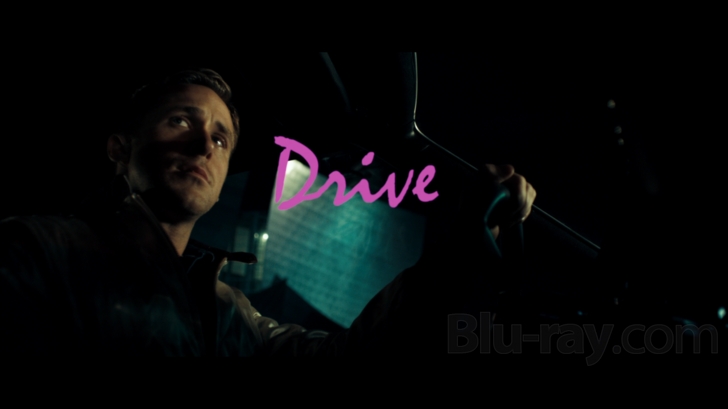
All this is projected in one of the most intense opening scenes in recent memory. The driver is a stuntman who moonlights as a getaway driver. “Drive” begins at night minutes before a getaway. Most chase scenes lack this kind of intensity, for the driver doesn’t rely on sheer speed to grab our attention.

The great adrenaline rush we get is not caused by a cheap close-up of a needle quickly circling a speedometer, but through admiration of watching the driver outsmart cops chasing him and helicopters searching for him. It’s the driver’s intellectualism behind the wheel that dazzles us. The driver doesn’t just drive skillfully; he drives in sophisticated style.

He drifts from his day job to his night job unchallenged. In fact the driver is so good at what he does, his remarkable street maneuvering and stunts seem effortlessly achieved. He must have felt the thrill of it once but at this point in his life he’s overconfident and doesn’t feel any kick to the dangerous line of work. Maybe this isolation is the reason he seems sad and unhappy. His own brilliance drove him to a state of loneliness that fueled his need to find companionship.If you read any review of Nicolas Winding Refn’s “Drive”, you’re bound to see critics and reviewers pointing out references to different movies, “Taxi Driver”, “Risky Business”, “Shane”, “Scorpio Rising”, “Bullitt”, “Collateral”, “Le Samourai”, and countless other films. While “Drive” does in fact reference a lot of films, it somehow remains fresh, unique and unlike any of the previous mentioned. Refn took a deep look at the history of film, recognized what he admired in various films and used those elements to paint his own canvas. The story of “Drive” is one that has been told numerous times but Refn reinvented the plot using hypnotic mise-en-scenethat steadily plunges the viewer into a bloody fairy tale. If you haven’t seen this instant cult classic by now, I advise you to stop reading as I’ll discuss scenes in detail.

5474_24
After the almost dialogue-free yet surprisingly involving opening scene, the screen fades to black and cuts to a beautiful nightscape view of Los Angeles reminiscent of the LA Michael Mann showed us in “Collateral” and “Heat”. There’s an 80’s vibe to the title sequence as the electro track by Kavinsky called “Nightcall” kicks in and pink-“Risky Business”-like font appears over various striking shots of our protagonist driving around the city and moving into a new apartment. Somewhere in there we see the first of four key elevator scenes that display the development of a bond between the driver and Irene (Carey Mulligan), his innocent looking neighbor.

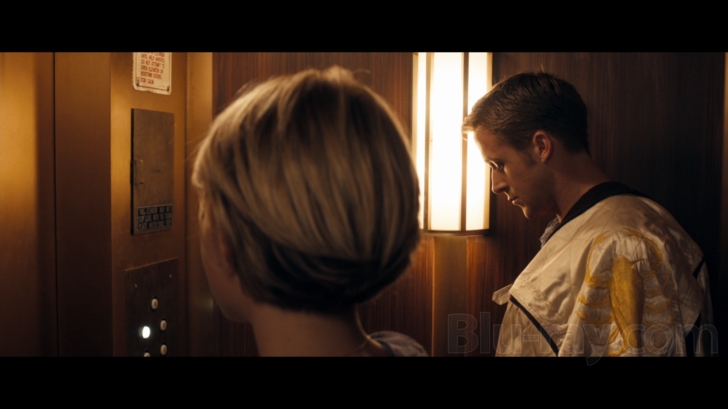
Our driver walks towards the elevator as Irene walks out of it. This is their first encounter. After they walk past one another, the scene cuts to a POV shot from within the elevator. We see Irene as she walks away when the elevator door closes between them. Not much happens here in terms of interaction, as the characters don’t know each other at this point. The second elevator scene occurs right after the title sequence. Our protagonist is on his way up when the elevator stops and Irene walks in. He asks her what floor she headed to and she replies “Four. Thanks.” He doesn’t push a button as it’s already lit. They experience an awkward silence on the way up. The driver catches Irene looking at him and smiles for a brief second and they both look away. This happens a lot throughout the film, their chemistry is delightful because it feels real and natural. By the end of that elevator journey they barely know one another but at least they know they’re neighbors living on the same floor.

5474_20

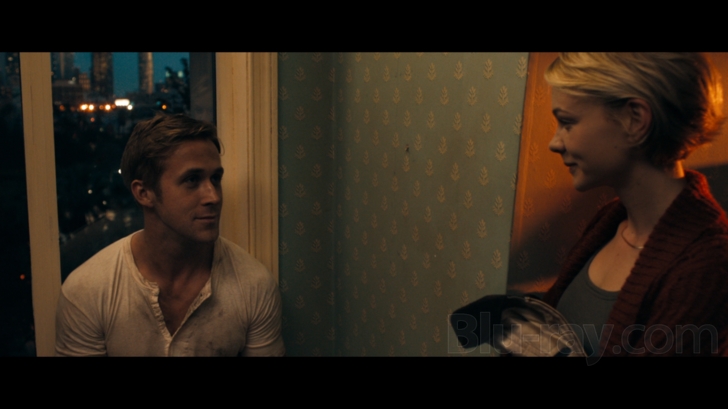
The third elevator sequence occurs after her car engine breaks down and he drives her home. This time, there’s a third party in the elevator, a young boy- her son. The boy and the driver look at one another for the duration of the ride. They’re playing the blinking game (seeing who will last longer without blinking). He wins but that’s not important. What’s important is the fact that he starts to bond with the kid. Afterwards he drops her groceries at her place and they get to know one another a bit more. He learns that her husband is in prison and she finds out he’s a stunt man. Following this proper introduction their bond strengthens. She later drops by to get her car fixed, and while fixing it he plays the blinking game with kid again. Their way back is one of my favorite scenes in the film. He asks her “Hey do you want to see something?” before taking Irene and her son on a fun ride down an empty closed down highway. Bright sunlight strikes their faces, as “A Real Hero” plays in the background. This is probably the first time we see the driver genuinely happy. By the end of the unofficial date he carries Irene’s sleeping son over his shoulder to the apartment. Irene watches this kind fatherly act and she’s almost love-struck. It’s a beautiful moment.

More scenes of the driver spending time with the family follow including one where Irene puts her hand on his, their fingers lace together as he drives. Another worth mentioning comes after the driver has a talk with Bernie Ross, a ruthless gangster played by Albert Brooks. Through their common link, the Driver’s friend and acting agent Shannon (Bryan Cranston), Ross is willing to invest thousands of dollars to back up the driver as a potential professional racer. Their dialogue is a subtle threat from the gangster to the driver. He shares a tale about how Nino (Ron Perlman) broke Shannon’s legs after being disappointed.

5474_18

The purpose of their talk is to scare the driver into giving it his all, because he wouldn’t like Ross’ right hand man when he’s angry. The driver doesn’t respond but a facial expression eclipses his face not of fear but of worry. That same expression can be seen moments later when the driver is watching a cartoon with Benicio. He asks the kid how he can tell that one of the cartoon characters is the bad guy. “Because he’s a shark.”, he assures him. “There’s no good sharks?” he asks. “No. I mean just look at him. Does he look like a good guy to you?” The same look of worry takes over his face. He’s thinking of Bernie Ross concerned about what he’s getting into.

That’s when the tone of the film begins to shift from romance to crime. The exact turning point however comes later when Irene’s husband comes home. “Drive” surprised me in many ways; the portrayal of the husband is one of those pleasant surprises. Betraying conventional cinema, the ex-con who returns home just as things seemed to get better for Irene and her son turns out to be a decent guy embarrassed of his past and willing to change. Oscar Isaac plays the husband, Standard, and while I’m probably in the minority here, I personally believe he gave the best male supporting performance in the film. His speech in the welcome back party is very tricky for it requires the performer to convince viewers that he’s not a bad person and asks the audience to forgive the fact that he’s interrupting the film’s central romance. Isaac does exactly that by delivering his lines with honesty and shame. We can’t help but forgive him and in return feel sorry for Irene’s current dilemma.

drive_talktofriend_hd

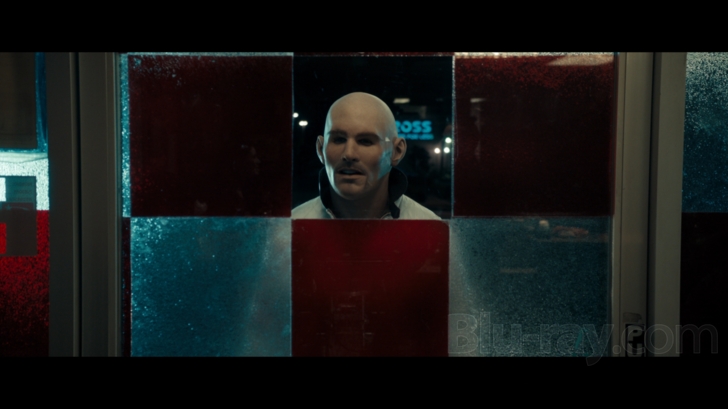
Through a series of shots cutting back and forth between them, we can see that both have the other in mind, they seem sad. The driver then does what any guy would do in a situation like this; he goes to a bar. Once there, a man recognizes the getaway driver and proposes a heist job. The driver probably upset about the husband situation, stressing on the gangster threat and unpleased by the fact that the guy is asking him to take part a second heist, flips out with a badass line fans will be quoting for years, “How ’bout this. You shut your mouth, or I’ll kick your teeth down your throat and I’ll shut it for you.” The driver releases a vicious stare and the guy backs off.

This is the first time we get to see the driver’s violent side and the violence only builds up from this point on. Refn understands how to display violence. He managed it well in his previous two pictures, “Valhallang Rising” and the excellent “Bronson” and here his approach is even more impressive. His use of violent content is relevant here for unlike most pictures it serves a purpose. Up till that point not a drop of blood has been spilled and as far as we know the driver is a romantic loner. But then he shocks us with a verbal threat that is too detailed for any set of ears. Later we see him blow Standard’s killers to pieces with a shotgun and stab a gangster’s chest with a shower curtain rod. The driver slowly moves off camera his face entirely covered in blood.
Now the audience pretty much knows how dangerous and violent the driver can get and we’re quite surprised by this sudden transformation. Right from the start we get the sense that there’s something mysterious about him, we don’t know his past and don’t need to but Refn gradually peels off layers of characterization till we get to the core of the driver, a trapped monster.

This eventually leads to the most violent scene in the picture and probably the most memorable one too, the fourth and final elevator scene. By now the driver is a wanted man, the gangsters he killed happen to be connected to Nino and Ross. After explaining how he was helping Standard pay a debt from prison resulting in his death, Irene slaps the driver. He looks at the ground in shame; “I just thought you could get out of here if you wanted. I could come with you. I could look out for you.” His almost pathetic communication skills remind me of a frustrated Travis Bickle confused of what went wrong after Betsy rejects him for taking her to a porn theater. He looks up at her and the elevator doors open. One of Nino’s hitmen is in there; unknowingly they hop in for the ride.

Notice how this is the first time we see the elevator descend, silently to inevitable doom. Most of the scene takes place in slow motion, which only adds to the building tension. When the driver spots a gun tucked in the man’s suit. All sound fades away, he extends his arm and pushes Irene to a corner, the lights dim, Cliff Martinez’ haunting score breaks the silence as the driver kisses Irene in probably the most passionate kiss I’ve seen on film in quite a while. This is the best-directed scene of the year. We see all elements of mise-en-scene poetically merge in harmony. Cinematically, this is the most visually artistic moment in “Drive”. Dimed lights light up the scene again, the music fades away and slow motion is no longer used when suddenly both males attempt to strike one another. Seconds later the driver knocks the man to the floor and stomps his head repeatedly. We see his boot smashing into the dead hitman’s face till nothing is left but bits and pieces. I love how the scene switches from utter beauty to disgusting violence in a fraction of second.
Prior to this scene, only the viewer has witnessed the driver’s violent nature yet even such aggression is bound to shock anyone. A stunned Irene moves to the corner and watches the frenzied attack in fear. The elevator door opens and she backs away. Driver turns around and looks at Irene who’s looking back at him in complete shock. Mirroring the first elevator scene the doors close between them. Only this time it does so while she looks at out protagonist. She sees him in his true form. Driver probably preferred to conceal his boiling monstrous side from Irene but when cornered and with no choice he kissed her goodbye.

The final act is upon us; a showdown between the driver and Ross is foreseeable. He calls the boss and asks, “You know the story about the scorpion of the frog?” For those of you don’t know the fable, it goes like this. A scorpion asks a frog to carry him across the river. The frog is afraid of being stung during the trip, but the scorpion insists that if it stung the frog, both would drown. The frog finally agrees to carry the scorpion across the river. Midway across the river the scorpion does indeed sting the frog, dooming them both. When asked why he did this, the scorpion point out that it’s in his nature to do so.

“Your friend Nino didn’t make it across the river.” This was symbolically expressed almost quite literally in a visually beautiful scene where the driver forces Nino’s head below the water. Erin Benach’s choice of having a big scorpion on the hero’s iconic jacket makes perfect sense now. In the fable both the scorpion and the frog meet their demise, so if familiar with the tale viewers would expect the same to happen to both protagonist and antagonist. The driver knows for Irene and Benicio to be safe, he has to go. It’s the only way.

The driver meets Bernie Ross and indeed both stab one another in broad daylight. Two shadows fall to the ground, one barely alive the other dead, we see the driver with a fatal wound to his stomach.
Hitchcock once said, “I enjoy playing the audience like a piano.” The following shot is a perfect example of a director interacting with his audience. The camera pans up revealing the bloodied and perfectly still driver sitting in the front seat of his car. We reach his head motionless on the seat’s headrest, his eyes remain ever-fixed, unblinking, piercing empty space. When I first saw this scene, I studied his face in search of the slightest proof of life, a twitch, a blink, anything. The frame remains fixed for quite some time. At this point we can’t afford to blink because we could miss the fate of our hero. Refn is directly forcing the viewer to play the blinking game with the driver. He blinks and drives.

Oscar Predictions 2012

Best Picture: THE ARTIST
Leading Actor: Jean Dujardin, THE ARTIST
Leading Actress: Viola Davis, THE HELP
Best Director: Michel Hazanavicius, THE ARTIST
Supporting Actor: Christopher Plummer, BEGINNERS
Supporting Actress: Octavia Spencer, THE HELP
Best Original Screenplay: Woody Allen, MIDNIGHT IN PARIS
Best Adapted Screenplay: Aaron Sorkin, MONEYBALL
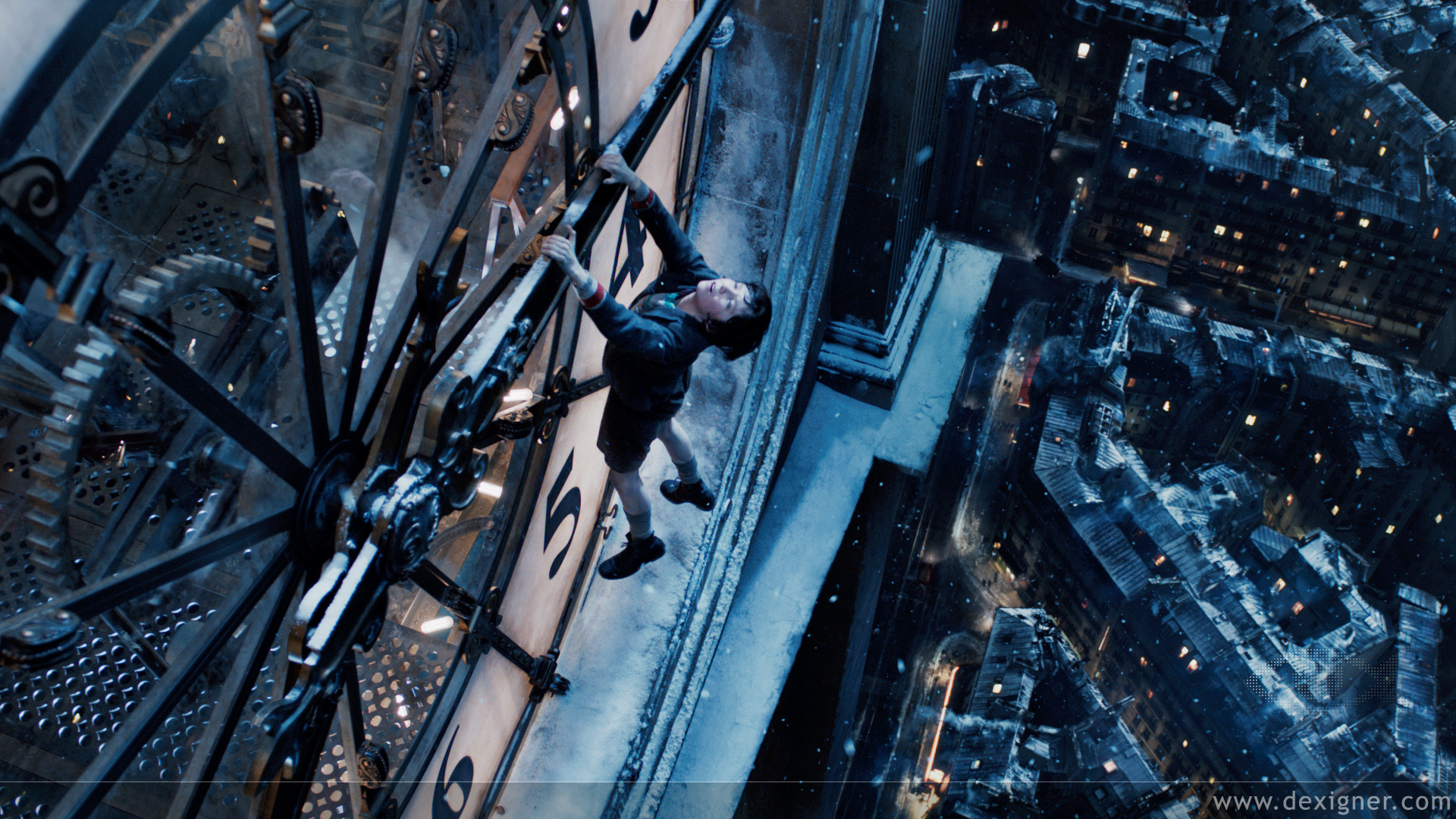
Best Art Direction: HUGO
Best Cinematography: THE TREE OF LIFE
Best Foreign Film: A SEPARATION
Best Original Score: THE ARTIST
Best Animated Film: RANGO
Best Costume Design: THE ARTIST
Best Visual Effects: RISE OF THE PLANET OF THE APES
Best Original Song: “Man or Muppet,” THE MUPPETS
Best Film Editing: THE ARTIST
Best Make Up: HARRY POTTER AND THE DEATHLY HALLOWS, PART 2
Best Sound Editing: HUGO
Best Sound Mixing: HUGO
Best Documentary Feature: HELL AND BACK AGAIN
Best Documentary Short: “God is the Bigger Elvis”
Best Short Film Animated: “La Luna”
Best Short Film Live Action: “Tuba Atlantic”

The 10 Best Films of 2011

  1. “Drive”

Image

“How about this – shut your mouth or I’ll kick your teeth down your throat and I’ll shut it for you. “

Mark my words; upon looking at posters of the driver, future generations will recognize an icon the same way we acknowledge James Dean’s Jim Stark and Marlon Brando’s Stanley Kowalski as symbols of an era. “Drive” is in my opinion the best directorial effort of the year. Nicolas Refn directs every single scene with near perfect precision and flawless lighting. If you’re a fan of Michael Mann’s visceral vision of a silent isolated Los Angeles as seen in “Heat” and “Collateral”, you’ll plunge into this moody atmosphere from the opening scene till the end. Speaking of opening scenes, “Drive” contains the coolest opening scene of the past two decades. I’ve seen this film six times within a month and can’t wait to see it again. I’m fighting my urge to write about everything I love in this movie. I’ll save my words for an in-depth analysis on Roger Ebert’s blog.

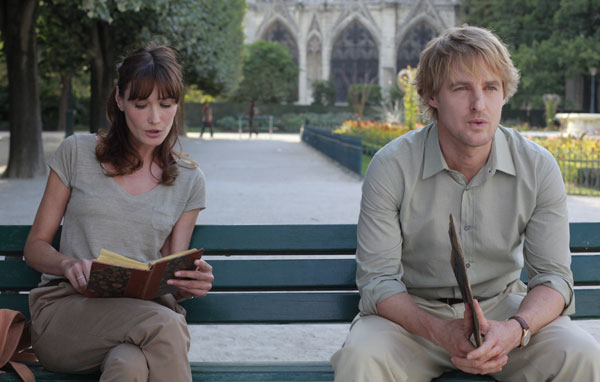
2. Midnight in Paris

Image

“Nostalgia is denial – denial of the painful present… the name for this denial is golden age thinking – the erroneous notion that a different time period is better than the one ones living in – its a flaw in the romantic imagination of those people who find it difficult to cope with the present.”

The current era is a future’s generation’s golden age; yet we can’t help but look at the past with envious eyes. Woody Allen’s best film in years captures the beauty of Paris and everything we love about the city’s past and present with passion and dedication. “Midnight in Paris” is a film I’ll watch whenever I feel the need to time travel to a better time. Or was it really a better time? Are we bound to admire the past and miss the present when it’s over? The fact that the film poses the question and encourages discussion through a neat balance of comedy and intellectual dialogue makes it worthy of any film fans time.

3. Shame

Image

“Your hard drive is filthy, right? We got your computer back, I mean it is…it is dirrrty! You think it was your intern?”

“Shame” reminded me of the in-depth character studies of the 70’s. Like “Taxi Driver” and “Last Tango in Paris”, it’s a fearless film that exposes the true nature of a sex addict like none before. Michael Fassbender and Carey Mulligan deliver great performances as dysfunctional siblings living in a bleak New York. We can’t help but feel sorry for the main character and his incapability to care for someone else. Little happens in terms of action but so much change happens within this character. “Shame” is the best character study of the year.

4. Hugo

Image

“If you ever wonder where your dreams come from, look around: this is where they’re made.”

As we disappointingly walk towards a three dimensional era of film, Martin Scorsese embraces it by reminding us of a simple time in film history when audiences walked into movie palaces to escape reality. “Hugo” is an adventure to thrill the younger audiences and a Georges Melies tribute that will excite any film historian.

5. “Take Shelter”

Image

“You think I’m crazy? Well, listen up, there’s a storm coming like nothing you’ve ever seen, and not a one of you is prepared for it.”

Michael Shannon is one of the best actor’s working today and his powerhouse performance here will take your breath away. “Take Shelter” tells the story of a man with a family history of mental illness. When apocalyptic dreams trouble his sleep and the line between reality and hallucinations fades away he begins to question his sanity. For some reason the fact the he questioned his insanity made me think of that quote about how insane people are not aware of their insanity. This is a thinking man’s film. It’s been almost two weeks since I’ve seen this masterpiece and I still think about its depth and themes. One thing is for sure, I will never forget that last scene or shot and neither will you.

6. “ The Artist”

Image

“The Artist” comes out in a year that seems to pay tribute to the past. We visited decades of Paris in “Midnight in Paris”, witnessed the birth of fantasy films in “Hugo”, reminisced about earlier Spielberg films in “Super 8”  and remembered John Hughes while watching “Drive”. Now, a film shot entirely in black and white and mostly silent comes out reminding us of why we love silent cinema. My twin brother never sat through a black and white film in his life and after seeing “The Artist” he decided to start watching the real classics that inspired this heartwarming tale of fame and love. The film is set around a time when studios encouraged talkies over silent movies. I think “Singing in the Rain” will always be my favorite representation of that time period, but “The Artist” is still a fun and passionate work of art.

7. “Tyrannosaur”

Image

“That is a beautiful dog.”

A self-destructive man with uncontrollable rage finds himself frustrated and lost till he meets a sad yet hopeful shop worker. Peter Mullen delivers the best performance of the year and he probably won’t even get nominated for an Oscar. The same can be said about his female costar, Olivia Colman, in a role that couldn’t have been performed any better. “Tyrannosaur” is the most brutal film of the year. A film so real and ruthless, you won’t be able to look away even though you will want to.

8. “Carnage”

Image

“Why are we still in this house!”

Kate Winslet, Jodie Foster, John C. Reilly and Christoph Waltz are parents discussing a bullying incident involving their sons. I have not seen the play this was based on and maybe that’s why I enjoyed it so much. Out of all four A-list actors I have to give it to Jodie Foster for stealing the show as the uptight, emotionally over reacting mother of a “disfigured” young boy. “Carnage” relies primarily on it’s four central performances and an extremely humorous screenplay and you know what? It works. This is the satirical comedy of the year.

9. “Tree of Life”

Image

“The nuns taught us there were two ways through life – the way of nature and the way of grace. You have to choose which one you’ll follow.”

Terrence Malick always comes out of nowhere with a film that is simply breath taking and when we see his films it’s as relaxing as listening to ocean waves crashing against the shore. His films are different, and almost always seem to be about everything. His last effort is nothing short of a masterpiece of epic proportions. Though not his best film to date, it’s still a trip from the dawn of time to modern day civilization you’ll want to take.

10. “Attack the Block”

Image

“Well, ‘ere, lads, you’ve discovered a species hitherto unknown to science, quite possibly non-terrestrial in origin, and you kicked its fuckin’ head in! “

Fans of “Shaun of the Dead” will love this horror comedy about an alien invasion set in South London. It’s up to a gang of young lads to save the world. As silly as this may sound, “Attack the Block” had me laughing all the way through. With a killer dubstep soundtrack “Attack the Block” is filled with memorable and instantly quotable lines. Although some of the lines dare to cross the line of what many might consider offensive, it works because of the hilarious nature in which those lines are delivered. This is as much fun as you’ll have at the movies.

Best Documentary: “Senna”

Best Foreign Film: “A Separation”

Honorable Mentions:

Warrior
We Need to Talk About Kevin
Bridesmaids
Ride Of the Planet of the Apes
The Guard
Harry Potter and the Deathly Hallows Part 2
Source Code
Super 8
Submarine
The Help
Insidious