Film Analysis: Martin McDonagh’s “In Bruges”


When a great influential film comes out, we usually get a backlash of cheap knock-offs. After James Cameron’s “Titanic” we suffered through Michael Bay’s “Pearl Harbor.” When “Pulp Fiction” came out people praised its genius but its influence drove the genre to a creative blockage. Everybody wanted to be the next Tarantino. Directors probably asked themselves “What would Tarantino do?” before violating their own originality. Like most imitations, of Rolex watches or anything else, they look the same but don’t work the same.

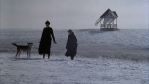
With “In Bruges.” it feels like Martin McDonagh opened a window in a room where the air has been recycled endlessly. For his directional debut is a true work of originality. It strikes a balance between humor and drama and adds a rare layer of philosophical undertones to the genre. It has something new to say and so the experience is a rewarding one.


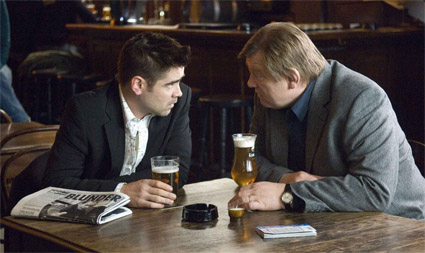
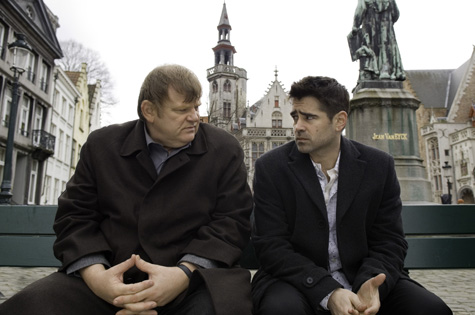
The films begins with Ray (Collin Farrell) and Ken (Brendan Gleeson) walking in Bruges, “the most well preserved medieval city in the whole of Belgium.” We quickly learn that both are hitmen who are hiding out. Bruges is the last place you would go to look for somebody. Heck, I never heard of this beautiful place before watching the film. Anyway, this is where where you stop reading if you haven’t seen this film yet.


Ken is the wiser of the two; he’s quiet, well mannered and smart. He is also fascinated by the old buildings, the architecture and the history of the city. Ray, on the other hand, is bored out of his wits. He can’t wait to go back to Dublin and is frustrated that he isn’t hiding out in London. We later learn that the reason they are hiding out is because Ray accidentally killed a young boy on his first job.

McDonagh says the inspiration to make the film came from when he was stranded in Bruges. He thought the city was beautiful with a fascinating history, but he couldn’t stand the boredom. This split opinion is what gave birth to both characters in writing and it is simply brilliant how their views differ on everything from life to death. “In Bruges” is one of those films instantly elevated to cult status through countless quotable lines. The one-liners don’t feel scripted, the delivery is hysterically natural.


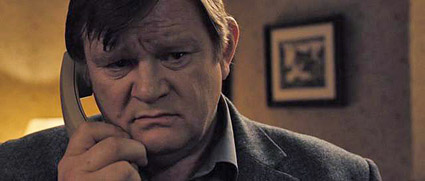
The brilliant humor makes the film an easy read but if you look past the laughs, you’ll find a film rich with symbolism and ideas. Ray and Ken remind me of two characters from another Irish work of art, “Waiting for Godot.” Like Vladimir and Estragon they’re waiting for something. The wait is meant to be torturous, only they’re not waiting for Godot, they’re waiting for a phone call from Harry (Ralph Fiennes), their boss. The arrival of the phone call is the film’s climatic moment.


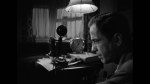
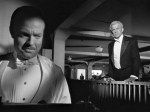
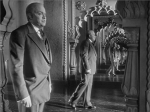
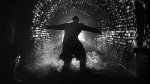
The scene comes in the form of a six minute long take. Ken is sitting in his hotel room and the famous opening shots of “Touch of Evil” can be seen on television in a nice reference. He answers the call and it’s Harry. After some humorous chit chat involving an imaginary Ray leaving the room to go bowling, Harry asks him if they’re having a good time. At first Ken answers him honestly saying that he is but it’s not really Ray’s cup of tea. A moment of silence later Harry flips out and shouts “How can a fairytale town not be somebody’s fucking thing?” Ken then retracts his words to save his friend. He even goes a step further as we see him smile and hear him making up a story involving Ray describing how he loves Bruges. “You know what he said to me the other day? I know I’m awake but it feels like I’m in a dream.” Harry buys it and cuts the chat by instructing him to kill Ray for what he’s done.


At the beginning of the film it looked as if Ken and Ray couldn’t stand one another, but by the time the phone call arrives their friendship has developed into brotherhood. Ken’s smile fades away and his face goes blank upon hearing the order. Afterward, Harry asks Ken to repeat to him what Ray said about the swans in Bruges. The words are the same but the delivery is different. The first time he said those words, there was humor in them, but now he actually means it. “I know I’m awake but it feels like I’m in a dream.” McDonagh’s original screenplay was deservedly nominated for an Academy Award.

I never thought I could sympathize with a child murderer. Even though the child’s death was an accident, it’s still extremely difficult to feel compassion and empathize with an adult who has committed such a terrible crime. What distinguishes Ray from psychopaths is the fact that he doesn’t attempt to rationalize his sins. Instead, he plunges into a state of depression and a torturous emotional experience, guilt. He knows he violated moral standard and understands that only punishment might cure his guilt. In a touching scene that demonstrates Farrell’s true acting ability he wipes off tears from his eyes and says “He’s dead because of me. And I’m trying to… been trying to get me head around it, but I can’t. I will have always have killed that little boy. That ain’t ever going away. Ever. Unless… maybe I go away.”


The characters in this movie are as human and fully fleshed out as it gets. McDonagh is a student of human nature, his writing is sublime. Ray occasionally seems like he’s happy. For the briefest of moments you see him laugh smile or enjoy himself but then guilt pulls him back to his depressive state. Before going out on a date he looks at himself in the mirror. A sad facial expression forms as he studies himself. It almost looks like Ray doesn’t think he deserve to enjoy this night. After a wild night involving hookers, booze, and cocaine, he wakes up the next morning sunken into misery. Laying in his bed a tear slowly forms in the corner of his eye and trickles across his face.


I can’t imagine how it must feel to carry guilt of this magnitude around every second of one’s life. Imagine the guiltiest you’ve felt in your life and multiply that by a hundred. That’s what it does to you. It eclipses your life as you know it, paralyzing and putting a stop to everyday pleasures. Eventually, nothing is left but a single desire. Ray is left with a choice; he can either continue living this devastating life or put an end to it. Ray chooses the latter. That very morning he gives all the money he has left to the pregnant receptionist and sits in front of a playground to feed his guilt, sink deeper into depression and find courage to commit the inevitable.


“In Bruges” is a film that evokes the feeling of guilt better than most motion pictures. It knows that it brings out the humanity in us and recognizes that guilt can drive us to the darkest corners of the mind. Each time I watch this film I ask myself the same questions. Is punishment the solution to getting rid of guilt? Can guilt change us for the better? If so, wouldn’t it be a form of rehabilitation? Does Ray really deserve to die for what he has done?


That last question is the conflict that turns two friends against one another. Both Harry and Ken have different principles and are dedicated to what they believe in. Harry believes Ray should die and Ken believes he has the capacity to change and deserves a second chance. I couldn’t help but admire how McDonagh put Ray’s life in the hands of both of these wise characters. It’s almost as if Ray doesn’t have a say in this, he even fails to take his own life. Ken is his guardian angel, Harry is a grim reaper like figure seeking justice and all three are in purgatory.

For some reason the idea of waiting for judgment in an unknown land is a common theme in philosophical Irish literature. Like in “Waiting for Godot” these characters are in a place they’re not familiar with and all three are waiting for the moment of truth. Bruges is symbolic of purgatory. They’re trapped in the city waiting for their inevitable fate. This is hinted upon several times during the film. 

When Ray and Ken visit a museum they stumble upon “The Last Judgment” painting by Hieronymous Bosch. “Purgatory’s kind of like the in-betweeny one. You weren’t really shit, but you weren’t all that great either.” Notice how similar Bruges is portrayed throughout the picture. On the one hand it’s a “fairytale town.” On the other it’s a shit-hole. Maybe it’s in-betweeny.

Fiennes never fails to mesmerize me in villainous roles. His portrayal of Harry is so different from the iconic Voldemort in “Harry Potter” and the ruthless Amon Goeth in “Schindler’s List.” Here he’s like a loaded gun always a tick away from losing it, but he’s also an honorable family man with principles. Ken’s death is more ironic. After constantly convincing Ray not to commit suicide, he jumps off a tower, only he does it to save Ray’s life. It’s too late to save himself but here’s still a chance to die doing one last good deed. When his body splashes all over the sidewalk, Ray rushes to him and cries upon realizing it’s his friend. “Take me gun,” he utters. I’ve seen thousands of people dying in a lot of movies, but I’ve never quite see anyone capture that last moment as perfectly as Gleeson does here. Notice his eyes. They stare, struggle to roll, and then return to their original position, the pupils dilate and all his facial muscles relax instantaneously. Gleeson’s acting is Oscar worthy. As for Ray, we never find out what happens to him. He walks into a surreal filming location that resembles the Bosch painting we’ve seen earlier and gets shot several times before dropping to the ground. 

It’s an open ending and you can look at it either way. I know that the last shot is fixed on bright neon lights in the ambulance and then the screen fades to black. I’m sure this was a symbolic choice but viewers who complain about the open ending miss the point of the movie. For me, “In Bruges” is one of those rare movies that end at the perfect moment. One can easily miss the real conclusion here. It’s not whether Ray lives or dies. The last words of narration are as follows, “I really really hoped I wouldn’t die I really really hoped I wouldn’t die.” Ray is no longer suicidal and finally found the will to live. That is what’s important here, Ken didn’t die for a lost cause.


Film Review: “Thor” ★★★★ (4/5)

The golden age of superhero movies is upon us. With “Batman Begins”, “The Dark Knight”, “Iron Man”, “Spider Man”, “Spider Man 2”, “The Incredibles” and “Watchmen” flourishing the genre, it is hard to argue otherwise. The latest addition to the genre is Kenneth Branagh’s “Thor”. Make no mistake there are subgenres within the superhero genre and “Thor” belongs to the same category as “Iron Man” and the “Hellboy” films. It lacks the philosophical themes behind “Watchmen”, the gritty atmosphere of Nolan’s Batman films, and the realism of Shyamalan’s “Unbreakable”,  but make no mistake “Thor” seeks neither this nor that. The film succeeds purely through entertainment. Like its subgenre counterparts it relies on the mixture of action sequences, special effects and carefully timed humor.

Marvel’s “Thor” universe is based on mythologies of a time when men fought supernatural beings to rise as gods and the film predictably opens with a brief history of two civilizations clashing to get their hands on a powerful glowing stone of some sort. We then get transported to the floating kingdom of Asgard. Meanwhile, the Frost Giants of Jotunheim break the peace treaty by sending a couple of icy villains to steal the stone. Their mission fails and sets off the first act. I’ll do this in keywords, one king, two sons, jealousy, you get the idea. One incident leads to another and before you know it the brothers are off to Jotunheim without the consent of their father or ruling god Odin played by Anthony Hopkins in a role identical to the one he tackled in “Beowulf”.

Jotunheim is cold, bleak, dark, silent and empty as you would expect from an evil place. It is right there and then that we learn that our superhero Thor (Chris Hemsworth) has great strength thanks to his giant mystical hammer. We also learn his weakness. Thor is egotistical, overconfident, and arrogant, in other words he’s full of himself. Naturally, the viewer doesn’t identify with him right away which isn’t an issue for the whole concept is to make room for some character development. The peace is broken and war is declared. Odin sends Thor to Earth to punish him for his weak traits. Meanwhile his evil brother cracks an evil smile and takes over the throne.  

The second act is where both the character development and humor finds their way into a fairly predictable script. Thor stripped from powers learns to rid his soul from its self-centered flaw.  Branagh uses the” former god in a land of equality” concept for comic relief. Thor smashes a mug in a coffee shop and orders “ANOTHER” or walks into a pet store and demands a horse. He also finds love and learns from the innocence of Earthlings. The third act is where all the action breaks loose. I won’t go into details but like I said before the plot unfolds in a predictably.
However, this didn’t bother me at all. Predictability works both ways. It can waste the audience’s time with boredom and formulaic scenes or have us anticipate the inevitable; “Thor” fits with the latter. I suspect Branagh knows we know where the story is headed and smoothly leads us to the expected outcome by amusing the audience with one scene after the other. Natalie Portman righteously never tries to overshadow the hero with her strong presence as Thor’s love interest and Tom Hiddleston nails his part as the wicked brother Loki.

The S.H.I.E.L.D unit makes another appearance in the genre and a few Stark Industries or Iron Man references are thrown here and there. This also happened in “The Incredible Hulk”, and will likely happen again with the sure to be upcoming blockbuster “Captain America”. The past few years will be looked upon by future generations as the time of great superhero films. Part of the reason is because of the unification of the worlds our beloved super human inhabit. Each film references and acknowledges the presence of the other. It works because like in the original comics the occasional situations of heroes bumping into one another broadens the magical alternative universe we so often tend to visit.  I recommend “Thor” to those who were disappointed by “Iron Man 2” expecting the same degree of lighthearted fun of the original film.

Film Review: “Das Boot”-The Most Authentic War Film Ever Made

Wolfgang Peterson’s “Das Boot” is a tense psychological drama with a powerful anti-war message and enough nerve-wracking suspense to make your heart pound against your chest like depth charges rupturing a submarine’s hull. But before I get into why “Das Boot” is possibly the most authentic war film ever made, I’ll try to clarify which version to go for as each is almost completely different from the other.

The original theatrical version that came out in 1982 is a trimmed down version of a six-hour mini-series that aired on German television the year before. This heavily edited version is the worst version available and yet it earned the film six Academy Award nominations. Watching the 145 minute original theatrical version is the equivalent of watching game highlights when you miss a ninety minute sports match. You get all the action sequences but don’t see what leads to them, which is a shame because “Das Boot” is about the journey leading up to the destination. It was never meant to be seen as an all out action flick but rather a long epic voyage into torturous warfare. So in short, avoid the original theatrical release at all costs.

In 1997, Peterson revisited the film and released a Director’s Cut clocking in at 3 hours and 20 minutes. The Director’s Cut also features improved sound and better picture quality. The additional footage before and after the key battle scenes perks up the previous release with more fully realized character development. This version is far superior to the original theatrical version and the result is nothing short of a great film. I recommend the Director’s Cut to viewers who are yet to embark on this brilliant drive. Depending on whether you like it or not, I would go for the ultimate and last version of the film.

With the introduction of DVD technology, Peterson quickly released the film “as it was originally intended to be seen.” (Peterson) The original uncut version runs at 4 hours and 42 minutes in length and is the most complete version available yet. Peterson basically cut out the opening and closing credits of the TV series and stitched all the footage together into a humongous continuous feature film. Peterson once said that “the fully restored mini-series will be even more shocking and affecting for audiences” and while it does enriches the experience to a whole new level, it is not for everyone.

The uncut “Das Boot” adds more waiting and forces the viewer to endure the daily trauma and monotony of the crew members. We get more background information about the characters and get to know them better through their conversations and boredom spent in silence as they eagerly await orders for anything to happen at all. I prefer this fully restored uncut version because it makes the mounting tension and sudden plunge into terrifying action all the more surprising and shocking.  I also like the added narration as it makes the experience more personal.

Wolfgang Peterson doesn’t go into any politics or waste time with the horrors of Nazi ideologies. We’ve been bombarded with films taking this angle several times and had he used the available material to portray a bunch of villains taking orders from an evil leader we wouldn’t be discussing the film thirty years later. He was wise in taking the risk to avoid such an approach and even wiser for not resorting to Nazi propaganda for “Das Boot” is simply a detailed account of single patrol mission and nothing more. The viewer has no choice and there’s no room for judgments as Peterson effectively places us amongst the cramped hulls so that the viewer is more of a crewmember than an outside observer.

According to IMDB, “the producer greeted the first American showing of the film at the Los Angeles Film Festival with great trepidation. They weren’t sure how a former enemy nation in that war would react to the film, especially in a city with a large Jewish population, and their fears were reinforced when the audience applauded the opening caption saying 30,000 of 40,000 German submariners were lost in the war. However, when the film ended, the audience gave the film a standing ovation in appreciation of the artistry of the filmmakers.” (IMDB)

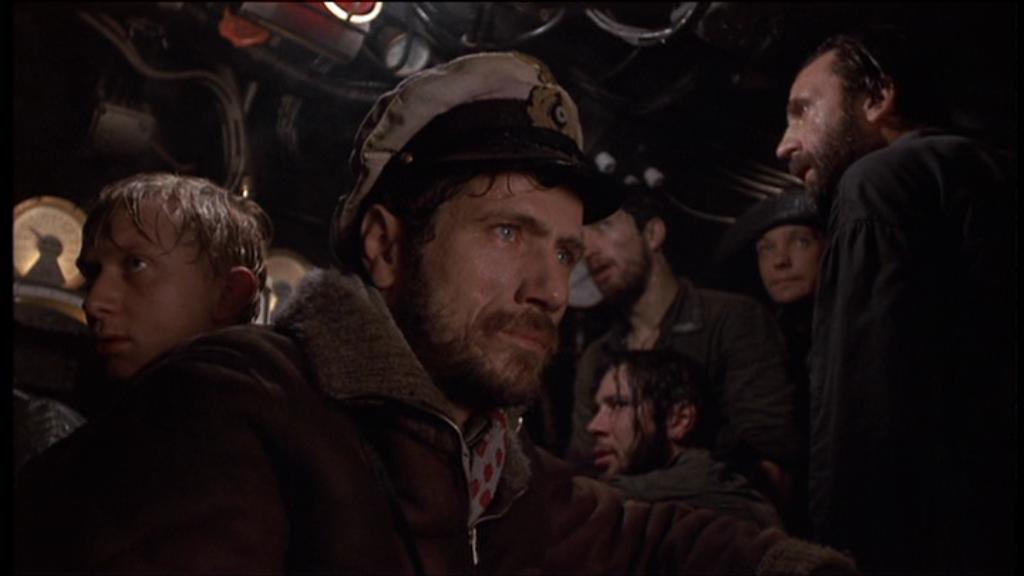
Cinematographer Jost Vacano shot the film by maneuvering within tight quarters using a handheld camera. It amazes me that he maintained steady shots when dealing with actors rushing in and out of a frequently shaking cramped confinement. It is through his unconventional approach of filming such material that we learn how a submarine works. Handling a submarine relies on team work more than anything and Cacano makes sure we don’t miss any of the collective labor efforts. When destroyers start dropping depth charges on the grey wolves that submerge in a desperate attempt for survival, some are attempting to wedge spraying water from adding weight to the iron ship, others attend to the wounded and the captain through constant damage reports guides them with specific orders towards a hopeful escape of death.

Following emergency dives, the unit gathers in the control room patiently playing the wait game. Exhausted pale eyes face the depth gauge with both hope and fear. Scenes of this kind will keep you on the edge of your seat. Through the superb use of sound the tension keeps mounting resulting in moments as intense as the Russian roulette scenes in “The Deer Hunter”. Sonar pings echo within the iron coffin. As they are forced to take the submarine deeper pushing the boundaries of its capabilities; we hear the lingering sound of steel crushing under severe water pressure. The utilization of sound in “Das Boot” should be studies in film classes as an example of the importance of cinematic audio.   

Through both sight and sound, “Das Boot” manages to put the viewer closer to the realities of war than ever before. Every great war film excels in its field in a different way. “Apocalypse Now” does it through philosophy, “The Deer Hunter” through intimacy, and “Das Boot” stands out for making the viewer experience naval warfare. It can’t be explained any other way; I gasped for air when the submarine surfaced, I held my breath when the sound of propellers marked the presence of a faceless threat above, and I was relieved after the crew barely survived sudden attacks. 

By the end of the film we feel like we have literally gone through war. At the beginning of the film a supposedly legendary u-boat captain by the name of Thomsen remarks that the young enlisted recruits have the “belief in our Fuhrer in their eyes” and then verbally delivers the essence of the movie “they will know in time.” Like many others, when I first watched “Das Boot” I thought looking at the war through Nazi eyes would be a waste of my time. When the credits rolled at the end, the words of Thomsen ringed louder, for like the now long bearded recruits, I knew. I knew that no war is worth the psychological torment. I knew the painful suffering that lead tens of thousands to their deaths. I knew the truth about life on a submarine. And I knew why Wolfgang Peterson worked two years to film such heavy material. Do yourself a favor watch the four hour version and in time you’ll know too.   

The official trailer of the much awaited Bluray release:

Film Analysis: Michael Mann’s “HEAT”

****SPOILER ALERT: THIS 15th ANIVERSARY ANALYSIS OF “HEAT” CONTAINS STRONG SPOILERS****

Michael Mann’s “Heat” ranks right up there with the best of the crime genre from “Rififi” to “The Godfather”. In fact, it is in my opinion the single greatest Los Angeles crime epic of all time, for it encompasses themes and visuals rarely achieved by productions.  “Heat” is very ambitious and the end result is nothing short of a larger-than-life epic grandeur of a film.

Much of the film is based on a real life confrontation between a Chicago detective by the name of Chuck Adamson and the real Neil McCauley. Adamson worked with Mann as an advisor in many of his films including “Thief”. When this detective friend of his told Mann about his once obsession to catch McCauley and how both Adamson and McCauley met under non-violent circumstances, Mann was inspired. Besides the scene between Vincent Hanna and Neil McCauley in the coffee shop, the real life tale of McCauley inspired many other parts of the film.  The warehouse sting where McCauley calls it off when one of the cops makes a noise actually happened in real life.

Mann was bowled over by this story and the fact that a criminal was intelligent enough to pull back even after investing tens of thousands of dollars in a heist – risk versus reward. The duality and respect Adamson had for this criminal as well as the question of what if it was the other way around and Adamson was the criminal hit a note with the director. The real Neil McCauley was killed during a heist by Adamson’s team who like in the film were tipped off to the robbery. However, Michael Mann didn’t want to stick to the simplicity of this true story and went for a bigger more ambitious project.

He combined this storyline with other unrelated real life characters such as Waingro who ratted out a crew of criminals and was later found dead. Nate played by Jon Voight is based on career criminal Edward Bunker. Even though Mann first directed this material in “L.A. Takedown”, it was only a rough draft with less than half the content of the much more polished remake, “Heat”. Michael Mann is probably the most knowledgeable director when it comes to crime. Most of his body of work revolves around the crime world. His connections and friendships with real life police detectives helped him develop a real understanding of true crime. And “Heat” is the result of twenty years of research. Everything that interests him and us about the dark human nature of criminals and cops is encapsulated in this three hour contemporary classic.

What makes “Heat” great isn’t the reality of it, but how Mann handled the material to express the loneliness of cops and criminals through their personal lives (or the lack of). Any man or woman dedicated to their job can and most probably will relate to this theme. Mann essentially brings that to life by bringing the best out of his working crew. Everyone involved from the cinematographer, the actors, writers and producers did their job with precision and through this desired understanding of material, the audience ends up with a perfect example of faultless mise-en-scene.

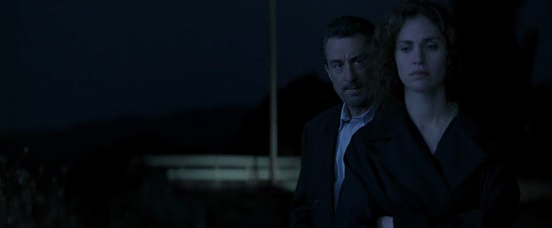
Some films are great primarily because of the visuals, others we appreciate for the rich characters, good dialogue or entertaining story. Rarely do we get a combination of textual and visceral elements fitting the same grand theme of a film, which in this case is loneliness. Both Neil and Vincent are lonely even though they interact with people on a daily basis. The same goes for Mann’s portrayal of Los Angeles. Los Angeles is an overpopulated city, yet it’s depicted as a silent milieu of isolation. Cinematographer Dante Spinotti provides us with a canvas of the great city, only one we’ve never laid eyes on before. A car driving in an empty highway, flickering city lights of a silent night, an empty apartment reflecting an endless ocean, airport runway lights fading to complete darkness, it’s all there to inject the viewer with a mood much similar to what the characters feel throughout this tragic journey.

Visually, “Heat” is treated like a film noir and so we wind up with a neo-noir. The conventions and elements of that genre are crystal clear from the hard-boiled detective to the urban setting, the interplay of lights and shadows in the final scene to the neon lights of the dark corners of the city. However, there’s certain uniqueness to the mood and feel of the film due to the icy-blue palette apparent in the atmospheric tone. Michael Mann used many paintings as inspirations to the look of the film, most notably with the shot of Neil facing the ocean in the background with a gun on a table in the foreground which is strikingly identical to Alex Colville’s 1967 painting “Pacific”.

This striking style is accompanied by depth of content, because “Heat” is more of a sad opera set up as a chess game than a flat-out action picture. When I say it’s like a chess game, I mean every move the soldiers on the board make has a cause and effect pattern to it. All the characters are decision makers in “Heat”. Each and every character of this large ‘Robert Altman’ like cast gets his own little storyline and somehow all the threads tie up in the end contributing to a bigger scope of this Greek tragedy like tale of ethics, morals, and principles. It all starts with Waingro, a last minute replacement in Neil’s crew, who kills a cop during their initial robbery, leaving behind a track of evidence. We later learn that he’s a prostitute killer; again his sloppy work is apparent in the matching semen mentioned during the investigation. Thanks to his careless method of crime, Vincent fixes his eyes on the crew.

Another storyline is that of Van Zandt. In the armored car robbery, Neil’s crew steals an envelope of bearer bonds. Since Van Zandt already has insurance on these bonds, Neil attempts to sell him the bonds for 60% of its value which would result in a gain both ways. Later, Van Zandt sends his henchmen to kill McCauley. The deal goes wrong and McCauley’s gang walks out of the shoot-out with a bag full of paper. Neil’s following phone call to Van Zandt triggers a series of events.

Van Zant: What are you doing?

Neil McCauley: What am I doing? I’m talking to an empty telephone.

Van Zant: I don’t understand.

Neil McCauley: ‘Cause there is a dead man on the other end of this fuckin’ line!

This threat eventually leads to the scared business man trying to kill before getting killed and so he unites with another enemy of Neil McCauley, Waingro. Together they follow Trejo, torture him and get the details of the big heist. They tip the clueless cops with the time and bank location, and the shootout is the result. I’ll mention the shootout after I lay out how all these threads or story lines eventually merge. Trejo’s last minute no-show is when Donald Breedan’s heartbreaking struggle to adapt to a normal life ties in. After, the Waingro situation, Neil no longer trusts the inclusion of strangers and after spotting Breedan, a former cell mate, he proposes the job offer. Breedan’s storyline is both heartbreaking and sad in that we witness how life after prison isn’t that easy. The system is corrupt, which leads to many criminals sticking to what they know best rather than being treated like animals in a normal life. Breedan ends up dead driving in the getaway car.

Vincent’s step daughter, Lauren Gustafson, is in a depressive state leading to a suicide attempt. She chooses to end her life and more importantly chooses to do it in Vincent’s bathtub after the parent separation. This is when Vincent first realizes that he should focus on his family not just his job for life and death situations are not limited to crime.

Through Michael Cheritto aka “Slick” we learn how close and “tight” Neil’s crew really is. Instead of taking advantage of his skills, Neil tells him “I got plans. I’m going away after. So for me the reward is maybe worth the stretch. But Elaine takes good care of you. You got plenty put away. You got T-bonds, real estate. If I were you, I would be smart. I would cut loose of this.” To which Slick replies “Well, you know, to me the action is the juice”.  He’s addicted to adrenaline rush, the same way Chris is hooked on gambling, and Vincent and Neil are obsessed with their tasks.

When all these storylines connect, it all explodes in the shoot-out scene. Everything leads up to that scene and when we finally reach the climax, the result is one of the most well executed heist scenes of all time. Many have called it the best shoot-out scene in film history and the truth is there isn’t much I can say that hasn’t been said already. The fact that real life criminals once imitated the robbery and that new Marines recruits are required to study it speaks for itself.

When Vincent gets tipped by Van Zandt’s people, Neil is in the midst of the heist. Elliot Goldenthal magnificent avant-garde score kicks in, and then Mann builds up the tension through Dov Hoenig’s editing. While Neil and Chris slowly walk out of the bank carrying bags full of cash, we simultaneously get shots of Vincent running out of the police department and his team preparing weapons in a speeding car. This use of montage editing between slow pace, in conjunction with fast pace, builds up the viewer’s tension and eventually the stored intensity is released through the shoot-out. Masterful editing.

We then enter the final act of the epic. Both Neil and Vincent are frustrated and angry by the outcome of the heist, for both were unprepared for the shoot-out resulting in many deaths in both sides of the law. Vincent releases his anger by going to the “fucking rat” and beating up the guys who gave him the big heist heads up. Neil releases his anger by killing Van Zandt even though he initially thought of the task as a “luxury”.  The Waingro murder bears more significance as it marks the only time Neil breaking his own rule.

“Don’t let yourself get attached to anything you are not willing to walk out on in 30 seconds flat if you feel the heat around the corner.”

Through Neil’s actions, we learn how his entire life is dedicated to that rule. He lives by it and in return is successful at what he does. Neil mentions the “30 seconds” rule twice. Once to Chris and a second time to Vincent, the two characters he cares for most. However, we see him apply this rule in three key scenes. The first is when he hears a suspicious noise during a robbery. His facial reaction is concentrated as Vincent’s crew wait for his reaction. It literally takes him less than 30 seconds to walk out of the job.

 The second time is when he gets the call about Waingro’s whereabouts. As he drives through a white tunnel, we see through De Niro’s excellent acting another decision making process. Without any dialogue, in less than thirty seconds, he breaks his own rule and takes a turn. This thirst for revenge eventually leads to his death. When he breaks his rule, he carries the consequences, and even though Vincent put three bullets in him, Neil was dying the moment he ventured off his philosophy of life. The third and last “30 seconds” scene comes after he kills Waingro. He walks to Eady when suddenly his eyes are fixed on those of Vincent running against the panicking crowd. Same as the other two scenes, no dialogue is used, “Heat” features some of De Niro’s best work. Like great silent actors facial expressions is all that is needed. He looks at Eady, then at Vincent and back at Eady. Thirty seconds later he lets go and runs to keep his girl out of the mess. This is probably De Niro’s most romantic moment in film. He’s back to his senses and follows his rule, but it’s too late.

 Robert De Niro manages to portray Nail McCauley with such intensity; we can’t help but root for him. He’s smart, successful, hard working, and always researches everything before planning ahead using a business-like approach with a clear head. In other words, he’s everything a man aspires to be. In fact, Neil would have been successful at pretty much anything in any other line of work.

One scene is a testament to how good both Neil and Vincent are at what they do. Since the cops keep McCauley’s crew under 24 hour surveillance, they follow them to an isolated area. Neil points to key escape routes of their supposed plan. After they leave, Vincent and his men stand at the same place trying to figure out what the thieves will go after. While McCauley takes pictures of Vincent on one of the surrounding roofs. The situation is reversed, as the man under the microscope becomes the observer. One aspect that is often overlooked is how Vincent responds. Yes, Neil is a mastermind, but so is Vincent. While the rest of the cops stand there clueless of the situation, Vincent finally gets it. “I mean – is this guy something, or is he something?” He laughs hysterically as he tells his men that they are being watched. The scene cuts to Neil taking pictures and smiling. Both men are enjoying the cat-and-mouse game.

Another smile curves Neil’s face when his boss tells him this dedicated detective has taken a liking of him. “He thinks you’re some kind of star. You do this sharp, you do that sharp.Look how sharp this guy is to figure that…the man is one of those guys out there prowling around all night, dedicated.” Vincent is no different than Neil. The genius of Mann’s literate screenplay is the developing chemistry between both main characters without the sharing of screen-time.

 With most films the criminal and the cop is all there is to the opposing main characters. “Heat” isn’t “most film”. It’s a film that takes its time to develop each and every character. The criminal and the cop are just labels, professions or the surface on multilayered individuals.

We get three key scenes that give us glimpses at the men behind the professions. Mann structures these scenes as dinner conversations. The first of which is Neil enjoying a night out at a classy restaurant with the rest of his crew and their families. If you observe the interplay between Den Niro’s acting and the camera movement, you’ll understand the purpose of that scene. The camera shows mostly fake reactions of De Niro smiling in conjunction with eye-lining shots of his friends or co-workers interacting with their wives and children. Suddenly, it’s like a sudden wave of sadness eclipses De Niro’s face. He realizes that these people aren’t as lonely as him. He longs for what they have- the sharing of happiness and glory.

Moments later, Neil excuses himself and calls Eady. What was at first a one-night stand is no longer and becomes a more serious relationship. Dinner scene #2 mirrors the first dinner scene in that this time, Vincent and his crew are out partying. They seem to be enjoying the night when like in the other scene a phone call concludes the social gathering. Only now, Vincent receives the call as opposed to Neil making the call. Vincent then pardons himself for his job requires his expertise. While Neil moves closer to his woman drifting away from his focused attitude of life, Vincent glides away from his personal life to focus on his profession.

The third dinner scene or the third exposure to the men behind the professions scene is the intimate scene when Neil and Vincent lay it all out on the table. Through the sharing of emotions, feelings and dreams, they realize that both are very much alike. In another life and under different circumstances, they could’ve been as close as brothers. The importance of that scene is the fact that now they know what us viewers knew all along, the overlapping similarity of the first two dinner scenes. The common ground between both professionals is finally out in the open. “I do what I do best, I take scores. You do what you do best, try to stop guys like me.”

It gets to the point that Vincent attempts to talk him out of taking down scores:

Vincent: So you never wanted a regular type life?Neil: What the fuck is that? Barbecues and ballgames?

“Barbecues and ballgames” Michael Mann is an auteur for his Kubrick like control over everything from the dialogue to the visuals. Later on, during the downtown shoot-out, Neil rescues Chris who is shot. As Neil desperately tries to shoot his way out of the chaos, we get shots of Vincent and his police force under fire. In the background, barbecue grills and bags of coal get showered with bullets.

This detailed approach is manifested in another line from that scene “You see me doing thrill-seeker liquor store holdups with a ‘Born to Lose’ tattoo on my chest?” Neil does have a tattoo, only it’s a Marine Corps logo on his left shoulder. Slick, on the other hand, does have somewhat a ‘Born to Lose’ like sleeve of tattoos, which explains why he didn’t make it out of the ambush. Neil and Chris are professionals, we see them work together in the heist using a tactical approach; therefore, they survive. Another tattooed character is Waingro. Michael Mann attention to detail is marvelous, for he uses tattoos as body art to express who these people are. On Waingro’s chest there’s a Nazi symbol tattoo. If Waingro is the black, and Vincent is the white, then Neil is the shade of grey in between.

“I have one where I’m drowning. And I gotta wake myself up and start breathing or I’ll die in my sleep.” Neil says in sharing a recurring dream. When Vincent asks him what he thinks it means, he tells him it’s about “having enough time”. In the final act of the film, Neil makes time to kill Waingro. He shoots him in the chest, causing him to desperately gasp for air. He finishes him off, after a few seconds of “drowning”. Unfortunately the fact that he broke his own rule doesn’t provide him with “enough time” and he ends up dead.

This final showdown between Vincent Hannah and Neil McCauley is something the audience subconsciously expects. In the key dinner scene Vincent says: “You know, we are sitting here, you and I, like a couple of regular fellas. You do what you do, and I do what I gotta do. And now that we’ve been face to face, if I’m there and I gotta put you away, I won’t like it. But I tell you, if it’s between you and some poor bastard whose wife you’re gonna turn into a widow, brother, you are going down.”

“I won’t like it”. He talked the talk and at the end we see him walk the walk. After shooting down the only man he respects, admires, and understands, he isn’t happy about it and it’s beautifully heartbreaking. “Told you I’m never going back…” Vincent slowly moves over “Yeah.”, they hold hands, it cuts to a close-up shot of Vincent mournfully looking into the night. It’s a great moment for Pacino as a simple look into his eyes injects us with his sad emotions. This isn’t what he wanted. Vincent Hannah wanted to catch Neil McCauley not kill him. But Neil would rather die than go back to prison. It’s a tragic ending for both characters. The final two-shot of them holding hands at the center of the frame is so deep, it’s as close as you’ll ever get to witnessing visual poetry.

Film Review: “Enter the Void” ★★★★★ (5/5)

Every year we are graced with a number of great films, some stay with you till the day you die most fade away in a couple of years, Gaspar Noé’s “Enter the Void” belongs to the former category. Thousands of films get releases every year. To count how many films actually exist is an impossible task, but according to The Internet Movie Database, it’s an estimate of over a million. The point I’m trying make is, with so many films in existence, it’s becoming rare for us to see something we’ve never seen before. “Enter the Void” is just that, it’s the most original film of the year and unlike anything you have ever and most likely will ever see.

The film has been in the making for nearly fifteen years and it is all there onscreen. The number of talented contributors to this film is above the average number of crew members. Just like Noé’s previous film “Irreversible”, “Enter the Void” is unsettling, disturbing and not for everyone. From the start second, you know right away that you’re not simply watching a film, you’re stepping into a psychological experience. Not since my viewings of “Apocalypse Now” and “2001: A Space Odyssey” have I walked out of a movie with a sense of awakening. You’ll either hate this film or love it but one thing is for sure, you’ll come out of it changed with a better understanding of life and death. Notice how I still haven’t mentioned what the film is about, it’s nearly impossible to describe a film with such ambition. “Enter the Void” is about life, death, tragedy, the afterlife, family, friendship, sex, drugs, and most importantly existence. Noé uses a subjective camera to slip you into the shoes of an amateur drug dealer by the name of Oscar.

We step into a journey inspired by ‘The Tibetan Book of the Dead’. The first ten or so minutes are presented in a sequence of eye lining shots. We only see the world through Oscar’s eyes, it’s a subjective view on life. The screen goes black for split seconds when he blinks. When he injects drugs into his system we plunge into a psychedelic state of mind with mind bending visuals much similar to the star gate sequence in “2001: A Space Odyssey”. We then meet his friend, Alex who tells him to wait until he dies for the ultimate mind trip. He further explains how according to ‘The Tibetan Book of the Dead’ when you die “your spirit leaves your body. At first you see all your life reflected in a magic mirror and then you start floating like a ghost. You can see everything around you, you can hear everything but you can’t communicate with the world of the living. You see lights, different lights of all different colors.” Not much later, we helplessly embark on the out of body experience Alex just put in plain words. Noé was spot on in setting the film in the neon flickering Tokyo. The moody city is part of the story and helps detaching us from reality, all thanks to the artistry behind all the visually soothing cinematography.

The film’s climax takes place in the erotic Hotel Love, it ends with what is without doubt the most accurate, detailed and internal sex scene in the history of film. Let’s just say that when it comes to sex scenes, close-up have never gone this close, not even in pornography. Watching it is probably what being on acid feels like. There’s no escaping it. “Enter the Void” captures your consciousness for at least a couple of hours after watching it. You’ll have to occupy your mind elsewhere to rid it from your system, but much like a drug eventually you’ll want to experience it again, and again and again. Many viewers have described this film as a religious experience, I think of it as a visually bizarre and hypnotic psychosexual trip.

Film Review: “The Ghost Writer” ★★★★★ (5/5)


The most intelligent mystery of the year comes from legendary director, Roman Polanski. I believe “The Ghost Writer” is his best film since “Chinatown”. Similar to his 1974 masterpiece is the way he tells his story, through atmosphere. I was completely captivated from the very first shot to the haunting and creepy closing scene. This isn’t another conventional suspense thriller, for Polanski manages to keep the suspense without the use of action or explosions, he simply relies on serenity, calmness and silence. The result is the most near perfect thriller since Hitchcock.

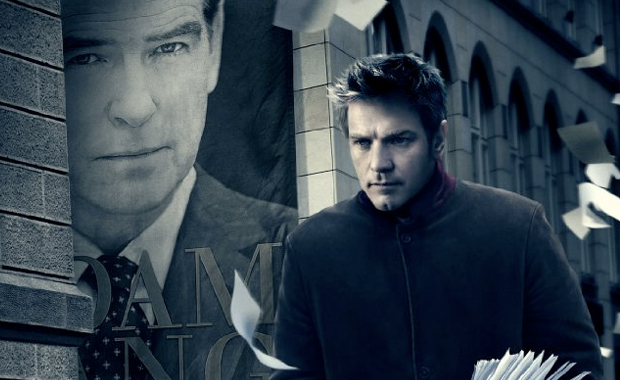
Based on the book by Robert Harris, the film centers on an unnamed ghost writer (McGregor) hired to finish the memoirs of a former UK Prime Minister, Alan Lang (Brosnan).  Lang is retired and living in the United States with his wife (Williams). We learn from the very beginning that the previous ghost writer died in mysterious circumstances. We sense something fishy about all this and so does the ghost writer. Soon after arriving the former Minister is caught up in a scandal that arises from his controversial past.

When he goes to Washington leaving the Ghost alone to finish the memoirs, the Ghost gets more than he bargained for. As we dig deeper into the memoirs, and the details of the death of the former ghost writer, paranoia takes over as we slowly learn the hazardous truth and the highly sensitive material that will all go into the book. The ghost writer’s life is in jeopardy,and danger is slowly creeping in like the misty fog in the atmosphere.

The film isn’t heavy on the politics, at least not too heavy. There’s enough a minimal dose of politics as to not bore you, and enough suspense, twists and turns to keep you guessing up to the very end. The cinematography is one of the year’s best with imagery that will stick with you long after the credits start rolling.

“The Ghost Writer” is sophisticated yet simple, haunting yet beautiful, shocking yet subtle, clever yet fun, a rare treasure, a thriller that will stay with you and remind you that some directors still know how to deliver a superb thriller. I’ve mentioned before that the film is near perfect. Yes, the script, direction cinematography, performances, and musical score are almost flawlessly executed. The suspense builds up slowly and reaches its peak at the very end with one of the most haunting endings of recent memory. “The Ghost Writer” is pure cinema.

Film Review: “Monsters” ★★★★★ (5/5)

Gareth Edwards worked with an estimated budget of $15,000 and managed to reach a certain level of epicness that most monster movies fail to achieve with all the fancy digital effects and millions of dollars in budget. The film was apparently made with a crew consisting of only two members. “Monsters” is a spectacular motion picture achievement.  In fact it’s probably the best monster movie I’ve seen in over a decade.

The events of the film take place six years after NASA discovered life in another solar system. The samples they brought back never arrived due to a crash that set the alien species free. Giant squid like creatures have been terrorizing Mexico and the United States for years. Areas have been evacuated and even though the world suddenly became less safe, it has reached a point where co-existence is the only option human beings have.

Andrew a photographer hired by a wealthy father is sent to Mexico to bring back the employer’s daughter, Samantha. However, the route back home isn’t as easy as it first seems to be Time is running out and after a series of misfortunate events, the only way to cross the border is to by going through the infected zone or the area the giant squids have made their home. The cinematography is remarkably artistic with shots of wrecked planes, ships and other man made machines in the midst of a naturalistic habitat. In many ways, we are the monsters in this man vs. nature epic. “You can’t fight nature.” Andrew says at one point. Nature evolves in a faster pace than technology. We are reminded of how powerful nature is and how easily it can overshadow all of man’s technical and technological achievements through these images. We think we control our planet when in fact we are merely one of many populated inhabitants.

 Both Whitney Able and Scoot McNairy deliver natural performances. You can tell that the film was shot opportunistically. According to IMDB, the film was shot with “little to no outline of scenes and their direction” and both actors had to interact spontaneously. Much like “The Wrath of God”, this style of filmmaking often results in realistic chemistry. Edwards doesn’t rush into any scenes giving his actors the room to breathe and sink into their roles.

Don’t walk into this expecting “War of the Worlds”, “Godzilla”, or even “Cloverfield”, for “Monsters” is an art-house film in every respect. It takes it’s time. Nothing much happens in terms of monster attacks and so on, which is why when they actually occur it’s so much more terrifying. The tension is subtle but the horror is always there. What we don’t see often scares us more than what is we do see. Edwards knows that and takes advantage of this using bloodcurdling sound effects and brief yet strikingly memorable digital effects filled images. “Monsters” has one of the most unexpected endings of the year. The last shots are breathtaking and beautiful, but then you realize that the real ending is much more disturbing than what the closing shots suggest. Pay close attention to the opening and closing shots, there’s a link between them. When you discover what it is, you’ll be thinking of this unsettling ending for days.