Dutch director Anton Corbijn’s “The American” is like a Shakespearean Bond film. It’s a character driven visual mood piece with minimal dialogue and layers of emotion. The previews and posters of the film will have you believe it’s another mindless ‘last job before I call it quits’ action flick. Don’t be fooled for “The American” has more in common with European art films than the former subgenre; in fact the film has a very un-American pace. I’m sure you’re all aware of the “don’t judge a book by its cover” saying and here is proof that we can’t judge a film by its trailer.
George Clooney is Jack a craftsman who designs weapons for hitmen. He is professional, precise, and efficient at what he does. Unfortunately, old age is getting to him and he is no longer the talent he once was. In his room he does his daily Travis Bickle workouts. The viewer witnesses his loneliness through beautifully set up shots filmed in complete silence. Corbijn’s photography is so effective; blinking may result in missing the perfection of his cinematography. When Jack befriends an old priest and a prostitute, which is against the rules, the man begins to realize what the job doesn’t offer, a meaningful life. He knows he’s getting sloppy but he doesn’t stop himself. He’s helpless in that deep down inside Jack longs for a way out.
The film substitutes cheap car chases and out of this world stunts with thought provoking imagery and believable chemistry. A white butterfly lands on a woman and both our protagonist and his love interest watch the delicate wings flag subtly before taking off. There is meaning behind every shot and for once sex scenes are not written for the sake of eye-candy but instead provide explanatory characteristics to the personalities of this tragic tale of love and loneliness.
I was reminded of the crime films once made by French and Italian directors of the 60’s and 70’s. Like the butterfly featured in this film, such well crafted films are a rarity and near extinct. Another film “The American” reminded me of was the excellent and slightly superior “In Bruges”. Similarly, “In Bruges” was also about a hitman stuck in a foreign land. Although, one is humorous and the other is gloomy in tone, both films are clever little masterpieces with philosophical undertones.
The performances are impressive, particularly Violante Placido as Clara and George Clooney in another moving lead role. One of the most remarkable feats the film pulls off is relying on the intensity of complete utter silence. Dialogue is only spoken when necessary and credit has to be given to Rowan Joffe’s low key writing and Corbijn’s tightly controlled directing. “The American” is truly a work of art.
“If it depends on me, you can stay forever.”_ Syracuse (Colin Ferrell)
“Ondine” is in many ways a modern day retelling of an old folklore about a lonely out of his luck Irish fisherman who one day catches a beautiful woman who claims to be a selkie, a type of seal much like a mermaid and upon discovery brings the man good luck. Neil Jordan blends realism and the harsh cruelty of real life with a hint of magical fantasy. Surprisingly, the mix works and by the end of the film you’ll be touched by the simplicity and subtlety of this honest tale.
“Ondine” is a heartwarming film for the entire family, one that is both suitable for kids and grownups despite the brief scenes of nudity. In many ways the film reminded me a lot of “I Capture the Castle” for its pure enchanted realistic approach in an age when good family films are a rarity. However, “Ondine” has a much darker tone and as with most fairy tales, the darker the tone the more desperate the need for hopeful change. This also makes Colin Farrell’s brief humorous confessions to the local priest (Stephen Rea) all the more enjoyable.
Lately, I’ve been very impressed by Colin Farrell’s choice of movies. The once rising star often associated with brainless blockbusters has somehow shifted to mature independent films. I suspect his Golden Globe win for the excellent “In Bruges” and the general positive critical praise he received encouraged him to seek good scripts instead of big paychecks. Few actors are wise enough to pursue good cinema instead of money, and Ferrell proved that he’s capable of so much more than what has been offered to him.
In “Ondine” Ferrell delivers a true and deep performance as Syracuse, a fisherman nicknamed “Circus” for his foolish behavior back in his drinking days. The events of the story unfold with a sober Syracuse who quit drinking for the sake of his sick daughter. “One of us had to be sober”, he says at one point referring to his ex-wife who remains an alcoholic. The lonely fisherman spends most of his time out at sea and returns with empty nets. Till one day a beautiful woman by the name of Ondine is caught in his net and everything changes for the better. Ondine is played by Alicja Bachleda an attractive talented actress with the voice of a Disney heroine.
Every once in a while Syracuse passes by his daughter, Annie (Alison Bary), who is in a wheelchair and tells her about his secret. The young daughter starts feeling “curious and curiouser” about the reality of the strange girl who came out of nowhere and soon suspects Ondine is a selkie. As time passes Syracuse finds it harder to figure out the truth about who exactly Ondine is, but when trouble arrives all is made clear-truth is stranger than fiction.
I have to give it to Neil Jordon for taking the risk of a potential silly story and turning it into a warm, touching and gripping story. The film was brilliantly photographed by Christopher Doyle (“Hero”); the captured beauty of Ireland greenery is a feast to the eye. Films like “Ondine” don’t come that often and like “Bridge to Terabithia” another sensitive little film with a big heart; they sadly get overlooked by the general public. I strongly recommend seeking out this warm tale – watch it on a cold and windy night.
There was a moment in “Winter’s Bone” when I felt sheer horror triggering my heart to thump in loud heavy beats. A moment more haunting and terrifying than anything I’ve seen all year. Not since the gas station scene in “No Country for Old Men” and the French vanilla ice-cream desert in “Inglourious Basterds” have I held my breath for so long. It is what I like to call a pulse raiser scene, one of those moments when you really want to look away but you simply can’t because you care too much for the victim on-screen.
It’s not because of violence or the overused silence before a jump-out-of-your seat moment; it’s when you actually fear for the character on screen, it’s when the horror of a situation feels so real we are transported through time and space to share the moment of dreadfulness with our unfortunate protagonist. Such moments are rare for they require everything from the performances, the shots, the music and composition to be in perfect synchronization. When such a scene comes along every two three years, for the briefest of moments the viewer becomes so involved, it’s like the director went beyond film projection and injects the viewer with the streaming high pressured blood cells of the subject at risk. Without spoiling the scene for you, it’s the shot after our heroine gets dragged into an old barn and we helplessly watch the garage door slowly shutting down. At that particular moment, hope felt nonexistent.
Director Debra Granik follows in the footsteps of great female directors like Sofia Coppola (“Lost in Translation”) and Kathryn Bigelow (“The Hurt Locker”) to prove the capabilities of the new age of fearless directors and to reassure us cinephiles that the dancing flame that is pure cinema still flickers. “Winter’s Bone” is a dead serious southern tale with enough bleakness in the atmosphere to cast a big huge shadow over the little hope we have for our struggling-to-get-back-on-her-feet heroine.
Jennifer Lawrence delivers an Oscar worthy performance as Ree Dolly, a 17 year old girl struggling to survive on poverty stricken soil. The lonely young girl is wise, smart and mature for her age. Evident in her eyes, motionless gestures and heartrending postures is a sad beaten down soul trying to keep her family intact. After her meth cooking father disappears and misses the court date of a drug arrest, a police officer pays her a visit to inform her that unless he doesn’t show up soon, the house which is also the thin thread keeping the scarred family together will be taken away from her. The dangerous search begins as Dolly goes around town asking both friends and foes for the whereabouts of her father.
As time flies, Dolly finds it harder to feed her siblings. In one particular memorable scene they go hunting for a deer and end up catching two squirrels instead. After they skin the first squirrel and Dolly asks her younger brother Sonny to stick his fingers in it to empty the insides of the rodent, he asks her “Do we eat these parts?” and her heartbreaking response gives us the reality of her situation- “Not yet.” She replies.
“Winter’s Bone” is one of those rare cases when the entire cast delivers above average performances. Besides Lawrences’s strong female lead performance, the two other performances that stood out for me as award worthy are John Hawkes as her tough skinny uncle, Teardrop and Dale Dickey as Merab, a woman who despite roughening Dolly up shows compassion, I couldn’t help but notice how she felt sorry for our protagonist. There’s no room for paper-thin characters for the individuals in this gritty tale are real human beings with layers of emotions and character.
Midway through the picture, Granik went for a very artistic black and white scene in which squirrels run up and down trees while the sound of a thundering chainsaw threatens their habitat. The symbolism is very clear as the situation mirrors Dolly’s probable loss of her house. The next time we hear the noisy screeching of a chainsaw is during a final scene that will most probably linger with you long after the end credits roll. Waste no time and watch “Winter’s Bone”, one of the best and most haunting films of the year.
Most action films do the mistake of placing the action in the foreground, the storyline in the middle-ground and the major minor and side characters barely visible in the background. “Salt” is different in that character development comes first and everything else ties up neatly around Angelina Jolie’s Evelyn Salt, a role she was born to play.
The best of action films are always about human beings who over the course of the picture undergo change. Linda Hamilton’s Sarah Connor in “Terminator 2: Judgment Day”, Robert De Niro’s Neil McCauley in “Heat”, Jason Bourne in the Bourne trilogy and now Angelina Jolie as Evelyn Salt are not one dimensional characters labeled as either hero or villain before the opening credits start. Instead, we are treated with characters that change for the better or worse throughout the shocking and devastating events surrounding them. The stories of the previously mentioned films are all based on the emotional and physical development of well thought out characters rather than the other way around.
“Salt” revolves around a government agent who suddenly becomes the main suspect of an upcoming assassination confirmed by a captured Russian spy. Even though the story clearly pays tribute to Cold War paranoia films of the 60’s and 70’s, it is not outdated but rather fresh considering Muslims have dominated the bad boy club for far too long. Vassily Orlov (Daniel Olbrychski) also accuses the soon to be on the run agent of being a Russian spy. According to director Phillip Noyce, the Russian mole within a US-government-agency hysteria still exists and most CIA agents believe that high ranking Russians still lurk within the agency. This fear of what is or is not there usually drives people into a paranoid state of mind and it never heals completely. This is probably what initially attracted the director to the project.
Like with Jason Bourne, we are constantly trying to figure out who the main spy is, and the character’s sure to be interesting background. However, unlike the Bourne films, Salt is not out there chasing her identity but knows exactly who she is and on which side she’s on. The audience is left clueless and in desperation. This makes “Salt” more of a cross genre in that it’s both a non-stop intense action film, and a thrilling mystery with a “North By Northwest” like fugitive touch at the center. I found myself constantly fearing the dark secrets meant to be revealed by plot twist and turns. You won’t be sitting on the edge of your seat; you’ll more likely slide off the edge and question whether you want to sit back up in fear that you won’t be able to handle the truth.
Noyce was spot-on in not exploiting Angelina Jolie’s sex symbol image. He chose to display her as a tough gritty explosive hand to hand bone-breaking combat weapon and surprisingly the result is a female spy unlike any other. Not since Ingrid Bergman as Alicia Huberman in Alfred Hitchcock’s “Notorious” has espionage looked so good and felt so human.
The most interesting relationship is not the clichéd bond between a clueless husband and wife but between Salt and her partner Ted Winter played by the very talented and underrated Liev Schreiber. To reveal more is unnecessary for your viewing pleasure but play close attention to how much of their chemistry adds to the strength of the overall experience. By the end of the gripping final scene, one thing is for sure you’ll be counting the days till director Noyce passes us more salt.
“Exit Through the Gift Shop”, the first film directed by graffiti artist Banksy, is a unique documentary that more or less commercializes street art like we have never seen before. The film traces the journey of an amateur filmmaker, Thierry Guetta, who went from filming street artists in action to becoming a self established graffiti artists now known as MBW or Mr. Brain Wash. It’s the first film to include exclusive footage of some of the world’s most infamous underground artists talking about their passion, adventures and misadventures.
Banksy never quite takes the documentary seriously and uses humor to tell his story, or more specifically MBW’s story. “Exit Through the Gift Shop” would make a perfect double-bill with “Man on Wire” another documentary about people committing illegal acts for both the thrill of it and to showcase their art. However, while “Man on Wire” was a suspenseful tight and focused story with moments of beautiful imagery that had me sitting in the theater in awe, “Exit Through the Gift Shop” never quite measures up to what it’s going after.
Part of the reason is because it lacked focus. At times, I wondered whether the film was about Banksy, at others it seemed to be about Guetta chasing and trying to befriend Banksy and at the very end, Guetta himself becomes the subject. This constant shift of focus is what kept the film from reaching potential greatness. Banksy is fully aware of this flaw as the tagline of the film reads “The incredible true story of how the world’s greatest Street Art movie was never made…” but for some reason I did not get the point of it all.
That said, the film is very entertaining in that it was a lot of fun witnessing rare footage of the outlaws at work. Another thing I loved was how the film touched upon the concept of how there’s a thin line separating art from junk and what gives art works aesthetic and value. While I do think of Mr. Guetta as a very interesting personality, his work seemed unoriginal and dare I say a scam. Earlier in the picture the Frenchman mentioned how he used to operate a vintage store and put extremely overpriced labels on cheap clothes. People bought into it and he used the same method at the end when he pulled off a last minute art gallery and made over a million pounds selling hurried art pieces that Banksy once refers to as art that “looks like everyone else’s”- maybe that’s the underlining theme of MBW’s( artwork?).
Had Banksy handled the material from a different angle instead of confusing the viewer with how much of it all is real and fiction, this could have been the ultimate graffiti motion picture. Unfortunately, the bar isn’t set too high for future filmmakers who may consider tackling the interesting life-style of artistic risk-takers. In other words, “Exit Through the Gift Shop” is a good and entertaining documentary partly incomplete in becoming the ultimate study of a specific counterculture. Then again, that was the point of it all, to film an unfilmable account. Wait, maybe I did get the point after all.
*WARNING: THIS PIECE CONTAINS STRONG SPOILERS TO DUNCAN JONES” “MOON” *
With “Star Trek”, “Avatar”, and “District 9” coming out within a year, there’s no question about it; 2009 was a great year for scifi. However, the one I admire most is also the most underrated, Duncan Jones’ “Moon”. Here’s a film that appears to be simple, yet the more I think about and discuss it both online and offline, the deeper and more complex it becomes. On the surface there’s the simple story of a man working alone on the far side of the moon. He interacts with pods similar to what we’ve seen in “Silent Running” – which the director often cites as an inspiration. “2001: A Space Odyssey” is obviously another inspiration for Gerty talks a lot like Hal 9000. However, “Moon” isn’t another scifi ripoff, it’s a film packed with homage references yet maintains originality delivering a fresh meal for hungry scifi geeks. While “2001: A Space Odyssey” relies on the cold performances of the main characters, “Moon” relies on the emotional states of the central character. Hal 9000 is a villain, whereas Gerty is a hero. All of this has a startling effect on a first time viewer as we expect one thing and end up with another.
In any case, I thought it would be interesting to explore the many ideas and themes “Moon” touches upon. When we go to the movies, we bring our memories, experiences, and beliefs with us. One way or another they contribute to our understanding and occasionally preference of a film. Therefore, when you watch a film, the film remains the same for both you and the guy sitting next to you, but the experience can be very different. I say that because more often than not, people tend to overanalyze films to an extent that it no longer becomes the vision of the director but that of the viewer. What we end up discussing is what we want the film to be about rather than what it actually is about. While conversations and debates about the meaning of a certain film are fun and often intellectual in nature, at the end of the day, it isn’t fair and no matter what you come up with, it can never be definitive.
“I would not think of quarreling with your interpretation nor offering any other, as I have found it always the best policy to allow the film to speak for itself.” _ Stanley Kubrick
The following interpretation is one that I do not support nor approve; nevertheless I find it quite intriguing and will therefore share it with you. While discussing the film online, an anonymous fan explained how “Moon” is against organized religion. His theory is farfetched, yet fascinates me. The way he saw it, Sam’s term on the moon stands for our time on Earth. The implanted memories and recorded videos with his wife signify religion being imposed and forced on us. He further explained how in the film Sam has to be behave accordingly and if he does his job well then after his time on the moon (our time on Earth), he is promised to travel to an after-life of joy and happiness (Earth for him, heaven for us). Sam serves Lunar Industries, an unseen corporation in the distant sky symbolizing God. He sends out messages and assumes they are being listened to (as in daily prayers), when in fact, they were probably never delivered at all. He backed up his interpretation with further support mentioned how at the end of the Sam(s) time on the “Moon”, they lie down in a box which is similar in shape to a coffin and instead of being sent to the promised land, their body is cremated to ashes. Therefore the clones represent generations of humans who are told the same lie in order to preserve order.
I have to admit, his theory did grab my attention. Then I realized that as Kubrick complained, the fellow wasn’t letting the film speak for itself. Nope, he did most of the talking. Besides, Sam does end up reaching the “promised land” or Earth, so how can it be against religion if the ending is proof that the “promised land” exists and can be reached. Were the mining pods named after the four apostles (Mathew, Mark, Luke and John) to bear religious significance? According to one of the special features on the DVD or bluray, the answer is no. In the Sundance Film Festival Q & A featurette, someone asked the writer if the naming of the pods has any religious subtext, he replied saying that nothing was implied by the naming.
So theories, subliminal messages, and personal interpretations aside, what was “Moon” really about? The posters of the film have two taglines plastered on them. One reads “The last place you’d ever expect to find yourself.” The other read “250,000 miles from home, the hardest thing to face…is yourself” I think it’s fair to say that “Moon” is about facing yourself. After watching the film a few times and reading those lines I was reminded of something the fictional character Red said in “The Shawshank Redemption”. In a key scene Red wishfully expresses: “I look back on the way I was then: a young, stupid kid who committed that terrible crime. I want to talk to him. I want to try and talk some sense to him, tell him the way things are. But I can’t.” In “Moon” Sam can and he does. After a series of accidental events occur, Sam faces another clone. To avoid confusion I’ll try to number the Sam(s). Doing so requires breaking up how many Sam Bell exist or existed. By allowing the film “to speak for itself” we can figure this out.
I’ll refer to the original Sam who is back home with his daughter as Sam 0. We know that when Sam left for the moon, his wife was still pregnant with his child. When the Sam we are first introduced to finally contacts her, we see that she’s actually fifteen years old. Therefore, fifteen divided by the life span of a single clone (3 years) is five. This means that the dying Sam is actually the fifth one to be awakened. The other “new” Sam we see in the film is Sam 6, and later in the film they bring Sam 7 into the picture.
Anyway, Sam 5 ends up facing Sam 6. They both realize that they’re clones and the plot starts to unfold. Jones doesn’t treat the “twist” (he’s a clone) as a twist but rather as a plot device to move the story forward. For the remainder of the runtime, Sam 5 and 6 try to confirm the reality of their being by searching for evidence to support the fact that they are in fact clones. Through their interaction we realize how different Sam 5 is from Sam 6. Sam 5 is calm, wise, and mature while Sam 6 has an anger problem and often bursts into violent behavior. Thanks to well thought-out writing and a power-horse performance by Rockwell, the genius of the situation is as follows. Sam 5 spent three years alone, during that long term he dealt with loneliness and this helped him become a better person. In one of the recorded videos, his wife tells him that three years is a long time but it’s good for their relationship and important for him to change.
Sam 5 describes himself as a “peaceful warrior” before Sam 6 starts a fight- a very cleverly filmed scene. After the fight, Sam 5 realizes what his wife meant. “He’s got a problem. He scares me, Gerty…he flies off the handle. I see it now. I see what Tess was talking about.”,he tells Gerty. Sam Rockwell’s performance is more than just two performances put together using technical effects, Rockwell displays a before-and-after arc of Sam’s personality change. Credit has to be given to the excellent writing and direction too.
So while both Sam 5 and Sam 6 search for evidence, they interact with each other, and through their interaction they learn more and more about who they truly are. It’s not all ugly, there’s one particular moving scene when both Sam(s) sit in a rover remembering how “they” first met Eve. Midway through the conversation Sam 6 looks at Sam 5 and sees him dozing off and the scene switches from touching to heartbreaking instantly. By then both characters are two different individuals yet remain the same. It’s like watching the same person interacting with one another but each is trapped in a different time zone. The question of what would it be like to actually meet yourself is definitely one theme. Another obvious theme is big industry exploitation on innocent people. Jones also keeps mentioning in interviews that long distance relationships and how we cope with the isolation is one of the aspects he tried to express as he went through that face in the writing process. Besides the universal concept of inner loneliness, the film plays with some interesting ethical and philosophical questions.
Jones was a philosophy major before dropping out and going to film school. The questions he asks in his stunning masterpiece of a debut are both thought-provoking and interesting conversation starters. What if you woke up and found out that everything you know and remember was implanted and memories were never your own? What if you discover you’re a newborn with only three years to go when in fact you it feels you’ve been around a lifetime? Would time feel short or does the implanted memories make it seem like you’ve been around a lifetime? How can Sam see the girl in the yellow dress (his daughter) before even actually seeing her? Would clones have some kind of a mental connection deeper than that shared by twins? After all, they share(d) the same thoughts and experiences. Is the original Sam oblivious to the Lunar Industries cloning scheme? How painful is it to discover that you’re just a clone and have absolutely no purpose in life whatsoever? “Moon” is the type of film you watch over and over again only to discover details you missed the first/second/third time around (Sam 6 looking at an empty space suit hanger before heading out and finding out who’s wearing it./ The wiped out smiley faces./ The list goes on) So while the film is rich with philosophical ideas grandeur in scope, it presents them in a tightly focused and efficiently structured psychological thriller. My conclusion is that “Moon” like most think pieces is a cult classic that presents us with many questions about humanity, philosophy, religion and ethics. The second we fill out the answer sheet with interpretations we breach the one way flow of information.
The Official Trailer:
My favorite track on Clint Mansell’s haunting score:
Every once in a while a film comes along and stirs up, arouses and awakens my imagination. Christopher Nolan’s “Inception” came very close to pulling this off but never quite hit the mark. I longed for it to be an addition to my list of film experiences that reached that level of awe-inspiring intellectual harmony but never landed on satisfactory results. “2001:A Space Odyssey”, “Persona”, “The Exterminating Angel”, “Last Year at Marienbad”, “Synecdoche, New York” came to mind. Yet, the main reason I wasn’t blown away by this still very great thriller is because it reminded me of another film I loved, perhaps a bit too much. This brought back memories of when I first saw “The Matrix”. In the dinner party that followed I kept thinking of “Dark City”.
Like “The Matrix”, “Inception” reminded me of another underrated film. While it was “Dark City” for the former, the latter reminded me of Tarsem Singh’s visionary masterpiece, “The Cell”. Entering the mind of another to retrieve vital information, losing grip of reality and ending up stuck in a dream world, physical motion to be pulled back to reality, visiting memories of a painful past, should I go on? How about the similarity of some of the scripted lines? Here’s a line from “The Cell” that could’ve easily been said by a character in “Inception” –“Do you believe there is a part of yourself, deep inside in your mind, with things you don’t want other people to see? During a session when I’m inside, I get to see those things.” More? “My world (/dream), my rules!” I can go on but this piece would only dwell away from being a review.
The twisting of the originality of another film can be justified if the end product feels different or better yet improves upon the former film. I’m probably, heck I am in the minority here but I thought visuals of “The Cell” were staggering, memorable, haunting and inconceivable whereas the images in “Inception” were less ambitious and lost potential. In my opinion, it’s because Nolan presents dreams that feet real rather than surreal (most of the time). That doesn’t mean the cinematography wasn’t breathtaking. Compared to most films “Inception” is a rarity and it’s only fair to applaud the depth of Nolan’s grand visualization of dreams within dreams. “Inception” is best described as a treasure chest with less gold than silver.
The gold here is how Nolan presents the story. It’s been a while since I watched a film that challenged me to work hard in order to keep up with a cerebral storyline.
The best way to understand the story is to watch or experience it rather than read about it, which is why I’ll try and keep it short. Leonardo Dicaprio is Dom Cobb a specialist hired to “extract” information from sleeping subjects. When hired by Saito (Ken Watanabe), Cobb finds himself in the midst of a much more difficult task- to impose an idea rather than steal one. The task “has never been done before” and so he assembles a team of experts to help him. Ariadne (Ellen Page) is an architect, Eames (Tom Hardy) is an identity forger, Youssef (Dileep Rao) is a pharmacist and Arthur (Joseph Gordon Levitt) is his partner. The target is Fischer (Cillain Murphy), the son of a buissiness tycoon.
While it is a thinker’s film, the more I think of it, the more I discover flaws. To discuss the flaws here is to spoil the movie and there’s no point in further describing the plot as it will only have you scratching your head. I find myself in a similar position writing the review of “Shutter Island” earlier this year, another film where DiCaprio deals with the loss of a loved one and the reality of his being- purely coincidence though. In my “Shutter Island” review I described the experience as follows:
‘You will start out a tiny fish swimming in a pond. As the plot thickens, you evolve into the angler who keeps an eye on the confused fish. By the end of the film, the viewer becomes the person standing on the rock studying the angler who himself is studying the fish.’
With “Inception”, it’s the other way around. You start out as the man on the rock, and go deeper jumping into the world of the angler, only this time you’re aware of the man on the rock and the fish underneath. There’s more than one world in this film and each time the viewer is exposed to a different environment, it becomes harder to grasp the scope of it all and that’s the fun of it and what I essentially mean by the gold in the treasure. “Inception” will be (already is) the subject of many debate, I wouldn’t want to miss any such conversation and neither should you. I highly recommend this film to everyone, if not for the cinematography than for the puzzling first-time experience.
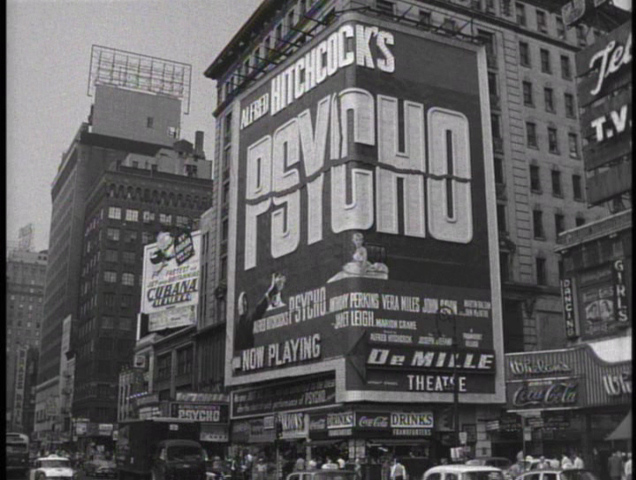
It’s quite easy for someone to enjoy film. Loving film is completely different. For those who see film enjoy them, yet only those who can read film truly love it and understand it as an art form. Hitchcock is probably the most well known director of all time. There is no absolute answer to what his crowning achievement is. A lot of critics prefer “Vertigo”. Taste varies from one film lover to the other. “North by Northwest”, “Notorious”, “Vertigo”, “Rear Window”, “The Birds”, “Shadow of a Doubt”, “Strangers on a Train”, “Rebecca”, “Suspicion”, “The 39 Steps” and “Psycho” are among his most loved. The truth is there is no such thing as one ultimate Hitchcock masterpiece, there are only favorites.
Every month or so, I tend to invite a close group of film professors, directors, editors, writers, and critics to my living room. We watch some of the greatest films together. The screenings always end with insightful conversations, debates and arguments. We cite critics like Roger Ebert, Pauline Kael, and Robin Wood to back up our claims but to what end? Cinephiles tend to be stubborn. It’s almost impossible to convince a real lover of film that this scene is better than that one or this director is more talented than the other, etc. At the end, all you get is a fueled argument that does not lead to any absolute conclusion. I learn a great deal about film at these gatherings. During the past few weeks we watched about fifteen Hitchcock films. We studied them shot for shot. After the last screening, I asked the room full of film lovers about their favorite Alfred Hitchcock film. All of the above as well as others were mentioned and the room went into complete utter silence. “How strange” said a senior professor. “For the first time we’re not arguing with one another”.
Such is the case with the greatest of artists. We all have our favorite Shakespeare play or Mozart symphony. There is no need to argue for them and against the rest, for all are truly great in their own right. Hitchcock fans don’t dispute one another; they simply nod in respect, for unlike lesser directors, he doesn’t have one obvious masterpiece but an entire body of them. My favorite Hitchcock is “Psycho”. However, I respect almost all of his films equally. To me watching “Psycho” is like listening to the best of Mozart or Beethoven. The way Hitchcock uses the conventions of films is beyond words. Don’t expect to feel that way from one viewing. The first time I saw “Psycho”, all I could see was a horror film with a great twist and wonderful performances. I watched it a second time in my first film class, another time in a different film class, and several times after that. Today, I lost count of how many times I watched it, and how many times I studied it (there’s a difference). As my understanding of film grew, so did my appreciation for the brilliance of Hitchcock’s groundbreaking 1960 masterpiece, “Psycho”.
I mentioned at the beginning that it is one thing to see a film and another to have the ability to read a film. Many fans of film claim to love the movies but fail to understand this concept. One learns how to read film by learning about the medium and everything that constitutes the making of a great picture. It is only through the understanding of film that true love for movies sparks giving the ability to read films. Take for example, Mozart’s darkest opera “Don Giovanni”. It is one thing to listen to it and admire the flow of his music; it is another thing to listen to it knowing that his father died shortly before it was conducted. With that knowledge in combination with the music itself one can feel Mozart’s sorrow and grief. Through knowledge we open our hearts and emotions to the greatest works of literature, music, and film.
This year marks the 50th anniversary of “Psycho”. Therefore as a tribute, I’ll do my best to read this masterpiece and document it in written form. Hitchcock once said that he enjoys “playing the audience like a piano”. With “Psycho” he manipulates our expectations. Today about everyone knows what happens during the shower scene and the truth about Norman’s mother. (If you don’t stop reading and do yourself a favor, watch the film) Still, even with that knowledge, the joy is in observing how Hitchcock manipulates his audience. He often used diversions to misguide the audience. A simple example of this is placing a growling dog to block the stairway in “Strangers on a Train”. The dog is meant to distract the audience from guessing the surprise in the next scene. Hitchcock worked that way; he didn’t only control his cast and crew but his audience as well. With “Psycho”, the entire first act is a diversion.
I can only imagine the horror of sitting in a movie palace when “Psycho” first premiered. The audience must have felt excited having booked their tickets in advance and making it on time for the film. Hitchcock didn’t allow late entrances. So there they are sitting, excited about the next Hitchcock masterpiece. The lights dim, the black and white “A Paramount Release” logo appears on the big screen, and then total darkness as the logo fades to solid black. Suddenly, the first wave of Bernard Herrmann’s score fills the theater, the most horrifying music in film history. The black screen is split into stripes of grey during the opening credits. The audience doesn’t know it yet but this split bares significance.
There’s a dark side to every human being. We’re not 100% good. Occasionally we slip into that dark side. If you’re lucky and smart you can save yourself from letting the darkness overcome you. Here lies the true horror of “Psycho”, the dark side of the psyche. Our main character is Marion. She’s a young everyday working woman. Unfortunately she acts foolishly and tries to steal a lot of money from one of her customers. However, before meeting her fate –getting stabbed while cleaning off her sins in a shower – the guilt she feels deep down in her stomach pulls her out of the dark and back to normality. The film takes a turn there as we’re introduced to a much worse case of – the split. Norman plunged into madness and embraced darkness long before Hitchcock introduces us to him. Hitchcock’s choice to film in black and white was clearly not only to give the film a darker theme or to escape the sharp scissors of the censors; the black and white fits the theme of the picture.
“I enjoy playing the audience like a piano.”_Alfred Hitchcock
The movie starts one afternoon, as the camera moves from the outside of a city through a window into an apartment. Note Hitchcock opens the film by panning through a large city (Phoenix Arizona), the choice is random, so is the date (Friday, December the Eleventh), as well as the time (Two Forty-Three P.M.) The camera then moves through a random window of one of the many buildings. Hitchcock strikes the first note on his piano. Through these random choices, Hitchcock subliminally tells the audience that this tale can happen to anyone, anywhere, at any time.
We get our first glimpse of the main character. Or is he? She’s a blond, which is a Hitchcock trademark, so she must be – at that moment so it seems. Marion Crane (Janet Leigh) is wearing a white bra and cuddles with her secret lover. Hitchcock picked that white bra at the beginning to signify her innocence. Later on, after she steals the money, we see Marion in a black bra, signifying her darker side. At one point, her boyfriend, Sam Loomis (John Gavin) suddenly releases the arms so passionately holding on to the love of his life. This is the exchange of words that follows:
Sam: “I’m tired of sweating for people who aren’t there. I sweat to pay off my father’s debts, and he’s in his grave. I sweat to pay my ex-wife alimony, and she’s living on the other side of the world somewhere.”
Marion: “I pay, too. They also pay who meet in hotel rooms.”
Sam: “A couple of years and my debts will be paid off. If she remarries, the alimony stops.”
Marion: “I haven’t even been married once yet.”
Sam: “Yah, but when you do, you’ll swing.”
Marion: “Oh, Sam, let’s get married.”
Sam: “Yeah. And live with me in a storeroom behind a hardware store in Fairvale? We’ll have lots of laughs. I’ll tell you what. When I send my ex-wife her alimony, you can lick the stamps.”
Marion: “I’ll lick the stamps”
Through this dialogue we learn that they can’t get married for financial reason, but what Hitchcock is doing on a deeper level is somewhat justifying the heroine’s future actions. That way we don’t despise Marion for committing theft. Instead, we understand her troubles and feel for her. In other words, she has a reason for stealing the money. Another example of Hitchcock trying to justify her theft is evident in the next scene. We meet Mr. Cassidy, a man who sprays his money everywhere to “buy happiness”. We don’t regard Marion as a villain because the man she steals from is portrayed as a very rich disgusting beast who doesn’t know how to hold his tongue. He speaks his mind with no manners whatsoever flirting with Marion and embarrassing the boss (“where’s that bottle you said was in your desk?”). After the theft, no real harm is done, at least not enough to make Marion a villain. We simply see her dark side. Again, this is expressed visually when we see her staring at the open envelope wearing her black bra. The $40,000 in the envelope serves as the ‘MacGuffin’ of the film. The term ‘MacGuffin’ refers to an object that bares much importance to the characters but to the audience it’s only a vehicle to drive the plot to the next level. A ‘MacGuffin’ is dropped once it serves its purpose.
Between the first justification scene and the second one, there’s the famous shot of Hitchcock’s trademark cameo. He stands outside a sidewalk, when the camera leaves the frame following the entrance of our main character. This is simply a visual signature. Hitchcock was well known at the time, not just by the name stamped on the previous “North by Northwest” posters but by introducing the episodes of “Alfred Hitchcock Presents” on television. The same crew that worked for the TV series worked with him to deliver his small budget project to the big screen. Anyway, his appearance is a visual signature and a reminder that things will turn ugly. It’s Hitchcock.
“Psycho” revolutionized cinema, both technically and in terms of content. A perfect film to study various uses of editing, the rhythm in “Psycho” can be observed in how Hitchcock handles the passage of time very efficiently. When Marion leaves the room, we realize that it’s still that same day. She goes to work, collects some money she’s supposed to put into the bank and goes back home. All that happens in one particular afternoon, and the time frame doesn’t change. Janet Leigh’s performance shines in the next scenes. We return to her room. There is no need for dialogue; we know what she’s thinking when her desperate eyes land on the envelope. Like the greatest of silent performers, Leigh expresses more through facial reactions than words. Few actresses can pull this off, she does. After she decides to run away with the money, the editing becomes more and more interesting.
Hitchcock uses a medium shot of the main character, Marion Crane, as she drives away from her hometown. The shot shows her face, part of the steering wheel, and the background, which includes the sky. The shot then changes from that particular medium shot to what is regarded as an eye-line matching shot, in which we as the audience see the highway through her eyes. This is the second time Hitchcock uses this shot (the first being her staring at the envelope repeatedly). The minute she steps into her car, the narration starts.
The narration serves as the voice in her head. At first, we hear what she suspects Sam will react like upon seeing her with the money. Hitchcock just slipped us into her shoes. He doesn’t only establish her as the main character, he confirms it. We see what she sees (eye-line matching shots), we feel what she feels (the urge to steal the open envelope full of cash), and now Hitchcock makes her share her thoughts with us. She bites her finger in a traffic light stop. After that we get the eye-line matching shot. People cross the street in a hurry. Their hurry is nothing compared to that of Marion, especially when her eyes meet those of her employer’s. We get a close up shot of her smiling at him. Her boss smiles back, then stops realizing she’s supposed to be sick at home or on her way to a bank. He looks back at her, only this time more suspiciously. Enter Herrmann’s score, the plot thickens.
At first Marion’s expression suggests fear. Then we get a couple of night shots with bright lights striking our eyes. Her facial expression is more relaxed now. The following morning, Hitchcock is generous enough to provide a beautiful deep focus shot. On the lower left corner of the screen the trunk of Marion’s car, behind it, a police officer’s car, on the right, the long endless highway and in the background empty hills. It’s a feast to the eye. The officer walks up to the car, we see Marion sleeping in her. A few knocks on the window later, she wakes up in a hurry. We see the same look in her eyes as when she saw her employer crossing the street. The next shot serves as both an eye-line matching shot and a close-up of the expressionless police officer. By now, like Marion, the viewer suspects she’s been caught. It turns out, he’s just checking if something’s wrong. Marion acts “like something is wrong” and so he asks for her driver’s license. As soon as he leaves and Marion drives off, the horrifying orchestra starts again.
We get a few rear-view mirror shots as she tries to lose the officer till he takes a turn and leaves her alone. Shortly after, Marion trades her car for another one. Both the viewer and Marion see that the police officer is back. He studies her from across the street like a suspicious stalker. Hitchcock’s fear of cops tightens the tension. More importantly, we are introduced to the third suspicious character, the car salesman, the first being the boss, and the second, the police officer. Marion is doing a terrible job of getting away with crime. Afterall, she’s no professional, just an everyday woman.
We rarely get to see scenes like that in thrillers; scenes that serve little purpose to the story but are there to put us on the edge of our seats driving the plot forwards. These short scenes are a rarity and a treasure. Hitchcock is simply playing piano with the audiences’ nerves. By now the viewer is in the midst of a getaway thriller. Keep in mind that all these tiny scenes are a distraction of the bigger picture. After, the high-pressured car salesman scenes, we move forward to more medium shots of the steering wheel, Marion, and the fading city in the background. This time, she bites on her lower lip as we hear the narration or an imagination of a conversation between the suspicious police officer and the doubtful salesman. Hitchcock knew that people generally do most of their thinking when they’re alone. Like before we sleep or when we drive alone in an empty highway. These scenes are very psychological in that for the briefest of moments the viewer becomes Marion.
Gradually, her facial expression changes from scared to confident. Scared when imagining the discovery of her crime in a narrated conversation between her boss and her co-worker (played by the excellent Patricia Hitchcock) and confident when we hear Mr. Cassidy cursing her. A creepy smirk curves her lips. Marion still wants to go through it.
The viewer notices that the bright sky turn darker and darker, and eventually it starts to rain. Marion pulls over to sleep it off at some motel, the Bates motel. The first half of the movie takes place in two days, a continuous moment-to-moment spectrum of events. The pace and movement through time changes afterwards and is well defined through editing.
Marion pulls up in the rain to the Bates motel and sees the moving silhouette of an old woman in the upstairs window of the mansion. Hitchcock often features familiar landmarks in his films. In “Psycho”, he creates one with the Bates mansion. The gothic mansion stands on top of a haunting hill like “it’s hiding from the world”. The Bates mansion is now one of the most famous film sets around the world, the presence of the mansion is so powerful, it’s like a main character. Anyway, Marion honks the horn of her new car. Seconds later, Norman appears on the stairs in front of the haunting mansion up the hill. He then runs towards the motel to serve his only customer of the night. What follows are some of the most humorous Hitchcock moments of all time. (*Humorous only on repeated viewings of the film)
Norman Bates – cinema’s most famous villain. Anthony Perkins pulls it off right from the start. They check in and we are first introduced to Norman. Perkins plays the role in an oddly chilling loose and naturalistic manner. Marion signs as ‘Marie Samuels’. Again, the alias signature is pathetic as it’s proof of her not doing a good job of hiding her real identity. Marie is too close to her real name, Samuels is her boyfriend’s name. Norman asks her to write her home address as well. She looks at the newspaper that reads ‘Los Angeles Times’ and chooses that city rather than Arizona. “Los Angeles” she says. Meanwhile Norman chooses something else, a key to the room she’ll be spending the night in. Unlike the three suspicious men prior to that scene, Norman doesn’t suspect a thing. Why? – Because he’s hiding something himself. Norman picks room number one. “Cabin 1. It’s closer in case you want anything” Both character’s suspicious actions cancel each other out. A perfect scene as only the audience is aware of the humor in their interaction.
Consciously the first time viewer is not aware of it, but what Hitchcock is doing is something no filmmaker dared to pull off before. He’s slowly switching main characters through the only characteristic both Marion and Norman share. Hitchcock often referred to “Psycho” as pure film. The change of viewer’s attention and leading characters through the overlapping personality trait in a single scene is indeed an example of pure cinema. Of all my years as a film critic, I’ve never seen anything quite like this, except maybe in the scene that follows.
Norman shows Marion to her room. “Boy, it’s stuffy in here.”- A tongue-in-cheek remark. Norman goes on with a tour of the cabin. “Well, the mattress is soft and there’s hangers in the closet and stationery with Bates Motel printed on it in case you wanna make your friends back home feel envious. And the…” he switches the light of the bathroom on and struggles with the word. “Over there”. Marion helps him out: “The bathroom.” The awkward moment between them suggests that we should pay attention to any scene that’ll take place in the..over there.
Norman insists that they have dinner together. “nothing special, just sandwiches and milk. But I’d like it very much if you’d come up to the house” Another diversion by Hitchcock. Norman offers his hospitality. Contrary to what the viewer knows at the moment, Norman has a stuffed body up there. The last thing he’d want is for it to be discovered. The young man leaves, Marion wraps the money in newspaper. “NO I TELL YOU NO!”,an angry old woman shouts from the mansion. Marion stops her unpacking to eavesdrop.
Angry Old Woman: “I won’t have you bringing strange young girls in for supper! By candlelight, I suppose, in the cheap, erotic fashion of young men with cheap erotic minds!”
Norman: “Mother, please!”
We now know the angry old lady is his mother.
Mother: “And then what, after supper? Music? Whispers?”
Norman: “Mother, she’s just a stranger. She’s hungry and it’s raining out.”
Mother: “Mother, she’s just a stranger. As if men don’t desire strangers. As if….(shuddering) I refuse to speak of disgusting things, because they disgust me!”
What follows is a dim and haunting wide-shot of the house in complete obscurity with creepy tree branches on both sides and dark clouds lingering in the sky. Like a house on a haunted hill, the cinematography is simply breathtaking and needs to be seen to be believed. Only one light shines, the window of the room where the shadow of an old woman roamed earlier.
Mother: “You understand, boy? Go on. Go tell her she’ll not be appeasing her ugly appetite with my food or my son! Or do I have to tell her cause you don’t have the guts? Huh, boy? You have the guts, boy?”
A radio actress by the name of Virginia Gregg perfected that spine-chilling voice of mother. In fact, it is done so well, there’s no way the audience would suspect she’s just Norman fulfilling his disorder. Not only that but the fact that mother offers to go tell the visitor herself only personifies her leaving the viewer with no hints to guess the twisted reality.
A few seconds later, my all time favorite two-shot arises. Holding a tray with the milk and sandwich, Norman stands to the left in front of a window. Marion is on the right in front of the door. Both are standing outside in front of the cabin. “I’ve caused you some trouble”, Marion says implying that she heard their conversation. To which he replies: “No…mother…my mother…what is the phrase? She isn’t quite herself today.” Freeze the frame at that precise moment and observe the richness of the moment. Visually this shot speaks volumes of Hitchcock’s famous wit. In crisp clarity we see the reflection of Norman’s face on the outside window. Indeed “she isn’t quite herself today”, the answer is there visually. This may either be a coincidence or a stroke of genius. I like to think it’s the latter, for the blinds are half drawn providing the possibility of the reflection. It had to be intentional.
They move to the parlor because “eating in an office is just too officious”. Marion’s eyes study the furniture of the room. Stuffed birds make up most of the furniture. Hitchcock often used birds as symbols. Most famously in “The Birds” where at the beginning of the picture we witness birds trapped in their cages. By the end of the film it’s the other way around with humans trapped in a house and the birds outside. The purpose of stuffed birds in “Psycho” has been interpreted several times. Norman explains that stuffing birds is his hobby; we later learn that he stuffed his own mother. One of the birds is an owl waving her wings symbolizing the furious side of his split personality (or his mother side); the calm crow is his calmer side (Norman side), or maybe they’re just there to disturb the viewer and place them in an uncomfortable surrounding.
After learning more about Norman’s taxidermy hobby, the conversation takes us deeper into his personality. Taxidermy is supposed to “pass the time not fill it” I can imagine the work, stuffing birds, and his own mother over and over using expensive chemicals. Poor Norman. One of the most disturbing lines follows expressing the oddness of this disturbed character: “Well, a boy’s best friend is his mother.” Moments later, Norman asks Marion where she’s heading. “I didn’t mean to pry”, he utters apologetically. Another humorous line, for Norman does pry in the scene that follows, not verbally though; he does it physically through a peephole.
During the course of this scene, the viewer is exposed to Psycho’s finest moment, a priceless exchange of dialogue. Through their connection we slowly remove our feet from Marion’s shoes and step into Norman’s shoes. The focus now is on Norman and his mother. After, Norman expressing the courses of his daily life with no friends and him putting up with his mother, Marion suggests he send her to a madhouse. A medium shot of Norman changes to a close up, not through a cut but by him moving forward to face the lens. He snaps at her. “We all go a little mad sometimes.”
At the end of the scene we learn that Marion changes her mind and decides to return the money the next morning. In other words, the getaway plot is no longer. The scene ends. Hitchcock just brought an end to his story; in the next scene he brings an end to his protagonist.
Norman takes a peak through the peephole and watches Marion undress. He then walks out of his office, up the stairs to the mansion. Once inside, he takes a step up the stairs and suddenly changes his mind and goes to the kitchen. As the audience, we know that Mrs. Bates is upstairs. It’s a simple scene the purpose of which is to distract the viewer from outguessing the master.
Meanwhile Marion calculates how much cash she’ll have to return out of her own pockets. ($700) After tearing the note to pieces she looks around and can’t find a bin and so she flushes it down the toilette. This was the first time the flushing of a toilette was seen on screen. The audience must have felt shocked at the sight. Yet it’s only a warm up to the major shock that follows. Hitchcock once said that the toilet shot is a “vital component to the plot”. My guess is it foreshadows the shower scene. After the brutal murder, we get a close-up of Marion’s blood flushing down the bathtub hole.
In probably the most famous, and well edited scene in all of cinema, also known as the shower scene, Hitchcock uses editing and sound as cinematic manipulation to create a carefully thought out horrific murder scene. Perfection is the result. In less than one minute, we witness a combination of 78 shots, in relation to the sound of a knife slashing against skin. We never actually see the knife enter the woman’s flesh, yet we’re convince we do through the sight of stabbing (hand motion), sound effects, the musical score (horrible animalistic screeching), and of course the careful editing. Celluloid cuts replace flesh cuts. When Hitchcock told Francois Truffaut that “Psycho” belongs to filmmakers, he wasn’t joking.
By exposing the audience to forty-five seconds of nonstop violence without actually showing any, Hitchcock leaves it up to our imagination. (Truffaut) Imagination has no limits which is why the scene is timeless and just as shocking half a century later. The shock is not only the sudden bombardment of cuts but the fact that he killed off his leading lady. We looked through her eyes, listened to her thoughts and witnessed her actions only to see her naked body slashed to an ugly death. With more than an hour to go, anything is possible. The viewer waits for the sound of Hitchcock’s next note on his piano.
Norman hurries in to clean up his “mother’s” mess. So not only do we witness the death of the leading lady, we watch Norman wipe the blood off the walls, the floor, the bathtub, and the sink after washing his bloody hands. After that, he wraps Marion’s dead body in the torn curtain. This mirrors the scene of Marion wrapping the newspaper around the $39,300 in cash. He then gathers her stuff puts it in the trunk of her car, along with the wrapped body and the wrapped “MacGuffin”.
The car slowly sinks into the darkness of the swamp. For a moment it stops. Here’s Hitchcock playing with his audience again. Even though we just witnessed our hero chopped and wrapped like a piece of meat, we somehow want the car to fully sink. It does. Fade to black.
Fade into the inside of a hardware store, Sam’s working place. One of the customers studies a can of poison “Let’s say see what they say about this one. They tell you what its ingredients are and how it’s guaranteed to exterminate every insect in the world, but they do not tell you whether or not it’s painless. And I say, insect or man, death should always be painless.” The viewer agrees. Afterall, the customer is always right. Enter Lila, Marion’s sister.
She’s worried and asks about the whereabouts of her sister. Sam is clueless. He tells his eavesdropping co-worker to go have his lunch. The co-worker leaves. Yet, the scene remains a three-shot with the entrance of a private investigator, Arbogast. All three ask questions, and eventually they’re all up to date. They realize that they’re all on the same side. Arbogast wants to find the missing money, Lila wants her sister, and Sam wants his girlfriend back. A new story unfolds.
As the story takes a different turn, so does the editing. The first half of the picture was edited to look like the events took place within two days. After, watching the story of the first half end, George Tomasini, the editor of the movie, speeds up the pace. In the scene that follows, Arbogast starts checking different hotels for any information on a missing Marion. The scene is a montage of a sequence of shots showing Arbogast in different hotels, which suggests the passage of time. Finally, Arbogast reaches the Bates motel.
Arbogast investigates right away. He makes the purpose of his visit clear and shows Norman a picture of Marion. Naturally, Norman is scared and tries to end their conversation as soon as humanly possible. “Well, no one’s stopped here for a couple of weeks.” Arbogast insists he take a look at the picture before “committing” himself. This is acting at its best. At first, Norman is relaxed offering his candy. Gradually as the pressure build up, Perkins’s performance intensifies. Arbogast catches a lie when Norman mentions a couple visiting “last week” and asks to take a look at the register. Perkins chews faster and harder on the candy (the candy was his idea). Norman takes another look at the picture and admits she was here but he didn’t recognize the picture at first because her hair was all wet. The showering of questions heightens the pressure and Perkins drives his performance into iconic status. We get it all complete with facial tics and stuttering words.
Being the great private detective that he is, Arbogast gets a more complete story by cornering Norman with questions. Moments later he spots the shadowy old woman in the upstairs mansion window. More of Norman’s lies are fished out and Arbogast takes another direction. He pressures Norman with the “let’s assume” method. To which, Norman mistakenly slips the words “Let’s put it this way. She may have fooled me but she didn’t fool my mother.” Now, Arbogast wants to meet the mother. To Norman that’s crossing the line, and so he asks him to leave.
A phone call later, the private-eye returns to the motel to fulfill his satisfaction. The sequence leading up to his murder mirrors that of Marion since both enter Norman’s patrol prior to their deaths. We also get the stuffed birds shots, only for some reason Hitchcock reverses them with the crow shot first and the owl afterwards. Nevertheless, the viewer is put in the same uncomfortable mood.
Arbogast goes up to the mansion, and step by step climbs the stairway. Hitchcock manages to pull off another shocking scene with a sudden jump-out-of-your seat appearance of mother stabbing the detective once he reaches the top. Blood splatters on his face, and we follow the fall with the camera fixed on Arbogast’s face. The same use of screeching noise is set by Herrmann. Once he lands, Mrs. Bates continues the stabbing, the detective screams in horror and the scene fades to black.
The Arbogast scene is the second and last onscreen kill. Today, Hitchcock is often credited with creating the slasher sub-genre. Unfortunately, this triggered a chain of terrible motion pictures with the exception of the original “Halloween”. Most of the slasher pictures of the 70’s, 80’s, 90’s and 00’s overdo it with frequent kills every other scene instead of building up the murder scenes with character development. Therefore, we end up with a bunch of characters we don’t much care for getting chopped to pieces. In “Psycho” it was never about the violence, it was always about the tension leading up to the violence.
Fade in, Sam and Lila sit worried in a smoky room “Sam he said an hour or less”. Sam: “Yeah, It’s been three.” As I said before the pace is much faster in the second half. Hitchcock directs this half like it’s a sequel requiring different editing methods. Likewise, time passes faster at Norman’s place. A medium shot of Norman standing in front of the clear black swamp. He’s already done cleaning the mess. Sam arrives and looks for “Arbogast”. He calls his name a few times with no luck. The medium shot becomes a close up, again not through a cut but by Sam walking up to the lens. He curves his hands around his mouth and gives it his all. The call for Arbogast echoes into the next and same shot of Norman in front of the swamp. We move closer to him. As his head turn to the right facing the camera, the camera pans to the left towards him. A very well executed shot is the result as we end with a close up on a chilling expression on Norman’s shadowy face. He’s looking at his motel.
A transition directs us to a deep shot of the storeroom. Lila is sitting at the center all the way in a lighted room in the back. The store itself is dark. She hears a car approaching stands up and runs through the dark store. We end up with a silhouette of her head in a close up. Without moving the camera, and with careful lighting, a simple scene becomes a memorable one. The movement is inside the frame as Lila breaks the depth of field of the shot. Previously Hitchcock created a close-up out of a medium shot, this time the task is difficult and much more impressive as he turns a deep focus shot into a close-up, without any cuts.
In a two-shot, the dark figures of Sam and Lila decide to see the deputy sheriff, Al Chambers. A transition leads to the deputy walking down the stairs. The camera slightly pans to the left and the camera is fixed on a four-shot (Sam, Lila, Mrs. Chambers, and Mr. Chamber). As Sam updates the sheriff with the story, we switch to a three-shot. Only this time they aren’t standing next to each other. The side of Al Chambers face is in the foreground and his wife, on the left, is in the background. When Sam mentions Norman’s mother the facial expression of Mrs. Chambers transforms to a look of panic and wonder. This shot is used to show the emotional reaction between the sheriff and his wife. After that we switch to a three-shot of Sam in the foreground, Lila in the middle-ground, and Mrs. Chambers in the background. Finally after constant switching from the two-shot to the three shot and gradually to one-shots, we end up with a low-angle shot of the sheriff and the spine-chilling line: “Well, if the woman up there is Mrs. Bates, who’s that woman buried out in Green Lawn Cemetery?” Hitchcock is involving the audience, moving us closer, building to more intimacy between the viewer and the characters. I like to call it the 4,3,2,1 scene.
The last line makes one question the existence of mother. Hitchcock is misguiding the audience. I bet a lot of the viewers were predicting a ghost story. The haunted mansion would fit that storyline, or maybe mother and Norman killed someone and made it look like mother died. The audience is in the dark.
Norman delicately walks up the stairway. He walks to mother’s room, and the camera slowly pans up closer to the door and eventually the long shot ends with an overhead view of Norman carrying his mother to the fruit cellar. This beautifully photographed shot meant to hide the face of Norman’s mother is an example of how Hitchcock uses cinematography to guide our eyes in whichever direction he pleases supporting the story.
Next, Sam and Lila decide to search every inch of the motel. To do so, they split up. Sam is to distract and keep Norman occupied while Lila goes up the mansion to get to the old woman. Two things happening at once builds the tension as the relation between both incidents eventually merge into the famous Norman in his wig scene.
Inside the office, Sam shoots accusations at Norman. He’s not as smooth as Arbogast which leads to trouble. They say an animal is most dangerous when cornered. The second time Norman is put in that situation, he breaks loose by striking Sam’s head with a souvenir. Meanwhile Lila after touring the house looks through a window and sees Norman running towards her from the Bates Motel. Space is all that was needed to keep us on the edge of our seats.
Moments later, Lila is hiding in the cellar room. She sees mother facing the wall in her rocking chair. A tap in the back later, the truth surfaces- mother is a corpse. Lila screams and hits a hanging light-bulb. Shadows dance. Enter Norman smiling like a creep with a kitchen knife high up in the air. More importantly the screeching noise makes another visit; the two previous times the audience listened to that horrible noise they witnessed murder scenes. Subconsciously the audience thinks it’ll happen again, only Sam comes to the rescue. The wig falls off Norman’s head.
The final scene is the famous psychiatry explanation. Like Roger Ebert, this scene always bothered me, for like the opening narration in “Dark City”, the full explanation underestimates the intelligence of the viewer. In his Great Movie essay, Roger provides a perfect cut: “If I were bold enough to reedit Hitchcock’s film, I would include only the doctor’s first explanation of Norman’s dual personality: ‘Norman Bates no longer exists. He only half existed to begin with. And now, the other half has taken over, probably for all time.’ Then I would cut out everything else the psychiatrist says, and cut to the shots of Norman wrapped in the blanket while his mother’s voice speaks (‘It’s sad when a mother has to speak the words that condemn her own son…’). Those edits, I submit, would have made ‘Psycho’ very nearly perfect.” (Ebert)
Even though the scene is not necessary, it’s not that much of a burden and doesn’t ruin the entire picture like the spoiler filled opening of “Dark City”. In the first half, we became so intimate with Marion, Hitchcock let us into her thoughts. In the final scene Norman, now the main character, shares his thoughts with the audience. Only his thoughts are those of his mother confirming the schizophrenic split personality disorder. “They’re probably watching me. Well, let them. Let them see what kind of a person I am. I’m not even gonna swat that fly. I hope they are watching. They’ll see. They’ll see and they’ll know, and they’ll say, ‘Why, she wouldn’t even harm a fly.’” A disturbing smile curves his face and a hint of mother’s skeleton appears as the transition escorts us the Marion’s car getting pulled out of the swamp. A perfect bloodcurdling last shot. The End.
Toys. The definition of which always remains the same, however, the meaning changes over time. Children see them as characters, actors in their little adventures, but as we grow up, sooner or later the phrase “It’s just a toy” slips out. Even though toys may just be toys, pieces of plastic glued together or beans in a piece of cloth, they encapsulate childhood. Looking at a toy one used to play with is looking into childhood. Because toys generate this nostalgia, they’re much like pictures or home videos. Upon glancing at them, for the briefest of moments, we are transported through time.
“Toy Story 3” rounds up the trilogy with a conclusion. The first two animated films are right up there with the best of animated films. This equally great installment is spectacular to infinity and beyond. A joy for the entire family has been overused by critics, in saying so I will add that I mean it now more than ever. Kids will enjoy the cutting edge prison break storyline, for them it’s Buzz Lightyear and Woody in another great adventure.
Yes, “Toy Story 3” is about Buzzlightyear and Woody but on a much deeper level, it’s the story of every toy, hence the perfect and simple franchise title. Kids become teenagers and long for being children again, middle aged men/women, look at the teens with envious eyes, grown-ups embark mid-life crisis; we long for the past instead of embracing the present. “Toy Story 3” is a reminder to enjoy life as it is, not as it was or will be. The message, there’s nothing wrong with moving on.
Right from the start, the magical musical theme of the greatest animated trilogy of all time, warms our hearts. There is no need to judge the quality of the animation, for the simple reason that it’s Pixar and they never let us down. The key is to focus on the story, which in this case is just as impressive. Andy is all grown up and already moving out for college. This causes panic among the toys as they’re not sure what fate this will bring them to. Due to unfortunate circumstances, they end up in a day care center. At first it seems like they landed on toy heaven but once they’re stationed at the two to three year olds section, all hell breaks loose.
New toys rule the day care and provide no mercy upon new arrivals. They want to remain at the five to ten year old section and the only way to stay there is to keep the heroes of our story locked up. For the remainder of the film, the audience embark on a nonstop action prison break, or shall I say day-care break. We are introduced to new toys, some are very pleasant and nice (the telephone and of course the Totoro cameo), others are extremely creepy and villainous. To shine light on who the villain will only spoil the fun for you. Just keep in mind that it (it’s a toy) is pitch perfect. John Lasseter and Michael Arndt’s screenplay bursts with humorous moments and memorable lines. As for Lee Unkrich, the director who also penned “Toy Story 2”, “Monster Inc.”, and “Finding Nemo”, BRAVO!-he did it again!
The Motion Picture Patents Company was the result of the patent wars that started when W.K.L. Dickson started his own company, the Biograph. Prior to that moment Edison and his company had nothing to worry about, for they were successful at dominating the motion picture field. When the Lumiere brothers came to the U.S. with their cinematograph, Edison found a way to lure them away. However, Dickson knowing the ways of Edison having previously worked for him creating the kinetograph, a 35mm camera, knew how to challenge the entrepreneur. He basically created an entirely different camera that shot 70mm films known as the mutoscope to avoid getting sued.
With the demand exceeding the supply in the film industry, another competition emerged, J. Stauart Blackon and his vitagraph and by 1898 there were three major studios, Edison, Biograph and Vitagraph. Edison reacted to these challenges by filing over twenty lawsuits in a matter of years. While sometimes he would succeed, he would more often fail to bring an end to these new companies. Edison would file lawsuits especially on Biograph since Dickson was his former employer and a great threat to his company. Still with Biograph having a patent to its camera the matter seemed rather impossible.
1893- Edison Introduces the Dickson Kinetoscope
Eventually smaller companies started to emerge including Selig, Essany, Lubin, Kleine, Kalem, Melie’s Star, and Pathe. Edison’s need to dominate did not end yet and his only hope was to introduce the MPPC and get top billing. After a few months of disagreements between Edison and Dickson, the MPPC was finally established in 1908 with Biograph earning the second most profits followed by the rest.
With Edison and Dickson pleased with the result of a legal monopoly, they no longer had to fear competition. It was officially illegal to distribute or show any films without permission of the MPPC. They had the rights to every film and camera in the market and there for a while there was no one to stop them. Unfortunate for them, many parties were displeased with the total control over costs and prices, and with more demand than “the Trust” could provide, a second generation calling themselves Independents appeared. The Motion Picture Patents Company called them outlaws for they did not submit themselves to the monopoly.
Homer Edison aka Thomas Simpson
The independents movement stayed away from New York and Edison’s monopoly to avoid lawsuits. In 1909, the Independent Motion Picture Company formed and used illegal equipment to strengthen their underground market. When stars started signing contracts to IMP, the Motion Picture Patents Company started losing control of the business and reacted by creating the General Film Company to block the distribution of independents without a license. It was then that the MPPC had effectively regained its monopoly. The monopoly would not last and the MPPC would soon meet its end.
William Fox, the owner of a film rental company didn’t want to sell his company to Edison who would constantly offer him deals, and Edison found himself facing another challenge. Soon the Fox Film Corporation started making movies and even after losing his license, he still defied the MPPC with a lawsuit that would lead to the decline of the Motion Picture Patents Company. The government was already not pleased with all the monopolies forming around the country and so Fox used this in his favor and it helped him win them over in a lawsuit that would bring an end to the patents trust formed by Edison and Dickson.










 The Cinephile Fix