MY OSCAR PREDICTIONS

BEST PICTURE
 
Predicted Winner: The Hurt Locker


Why? Simply because it deserves it more than any other movie this year. ‘Avatar’ was a tremendous achievement. It may revolutionize cinema for its technical achievements. However, the “Best Picture” belongs to the best film of the year. ‘The Hurt Locker’ was exactly that.

Threats: Most people think ‘Avatar’ is the only threat, yet ‘Inglorious Basterds’ may pull a ‘Shakespeare in Love’ win with ‘The Hurt Locker’ may end up as this year’s ‘Saving Private Ryan’. For one thing it has Harvey Weinstein backing it up. It also has the SAG award and actors make up the largest chunk of voters in the Academy. The recent DVD release will also help boost the vote since Tarantino only gets better with repeated viewings. The race is not between ‘The Hurt Locker’ and ‘Avatar’. It’s between ‘The Hurt Locker’, ‘Avatar’, and ‘Inglorious Basterds’.
__________________________________________________________________________
BEST DIRECTOR

Predicted Winner: Kathryn Bigelow


Why? She put her heart and soul into every single shot in this movie. Bigelow will make history being the first female Best Director winner.

Threats: None. There’s no stopping her.

__________________________________________________________________________
BEST ACTOR


Predicted Winner:
Jeff Bridges in ‘Crazy Heart’

Why? He’s long overdue, this may be the Academy’s only chance to redeem previous snubs. The Dude delivers one of his best performances here. A peak in a great career.

Threats: More like a minor threat but still a threat nonetheless, Colin Firth in ‘A Single Man’ . His performance was great but he will most likely end up empty handed. The nomination was his reward. A welcome to the club gesture.

__________________________________________________________________________

BEST ACTRESS


Predicted Winner: Sandra Bullock in ‘The Blind Side’


Why? Why not? It’s a big year for her with two box office hits and a good performance in a weak year of female performances.

Threats: Meryl Streep in ‘Julia & Julia’. It’s Streep’s 16th Oscar nomination but it has been decades since her last win. Meryl Streep nominations is becoming more of a tradition for The Academy but a 3rd win is unlikely..at least not for this performance.
__________________________________________________________________________

BEST SUPPORTING ACTOR


Predicted Winner: Christoph Waltz in ‘Inglorious Basterds’

Why? Over the past 3 years, the Best Supporting Actor award went to the best villain of the year. With Javier winning for ‘No Country for Old Men’ and Heath Ledger winning for ‘The Dark Knight’. How do you measure up with the past two great villains?  Waltz managed to pull it off with a chilling performance.

Threats: None. He’s a lock.

__________________________________________________________________________
BEST SUPPORTING ACTRESS

Predicted Winner: Mo’Nique

Why? She gave a splendid performance and has a very powerful “Oscar” scene.

Threats: None

__________________________________________________________________________
BEST ORIGINAL SCREENPLAY


Predicted Winner: Quentin Tarantino ‘Inglorious Basterds’

Why? Tarantino’s screenplay is a work of art. This will be his second win.

Threats: Mark Boal ‘The Hurt Locker’

__________________________________________________________________________
BEST ADAPTED SCREENPLAY


Predicted Winner: Jason Reitman ‘Up in the Air’

Why? Simple. It was the best screenplay of the year, original or adpated. A perfect screenplay with great one liners and philosophies of life.

Threats: None. They may as well mail it to him now.

__________________________________________________________________________
BEST  FILM EDITING
Predicted Winner: ‘The Hurt Locker’


__________________________________________________________________________
BEST FOREIGN MOVIE


Predicted Winner: ‘The White Ribbon’

Why? The best foreign movie of the year and one of the best of 2009 regardless of any labels. This should win.

Threats: ‘A Prophet’ is the only threat here.

__________________________________________________________________________
BEST CINEMATOGRAPHY


Predicted Winner: Christian Berger ‘The White Ribbon’

Why? The toughest category to predict. Any of the nominated could end up winning.  Foreign movies rarely get a nomination here but this beautiful looking movie managed to get in. I’m still confused about ‘Avatar’ being eligible with all the CGI and ‘Inglorious Basterds’ was great but not groundbreaking. You could freeze any frame of ‘The White Ribbon’ and it’ll be as beautiful as a great painting.

Threats: ‘Avatar’ obviously and ‘Inglorious Basterds’.

__________________________________________________________________________
BEST COSTUME DESIGN


Predicted Winner: ‘The Young Victoria’

Why? No idea. This is a wild guess but since it got more nominations the others competing in the category, why not?

__________________________________________________________________________
BEST MAKEUP
Predicted Winner: ‘Star Trek’


Why? See picture above.

__________________________________________________________________________
BEST ORIGINAL SCORE
Predicted Winner: Up


__________________________________________________________________________
BEST ORIGINAL SONG
Predicted Winner: “The Weary Kind”, ‘Crazy Heart’


__________________________________________________________________________
BEST SOUND MIXING
Predicted Winner: ‘The Hurt Locker’
Why? Because the explosion scenes were magnificently mixed in relation to the sound.


__________________________________________________________________________
BEST SOUND EDITING
Predicted Winner: ‘Avatar’


__________________________________________________________________________
BEST VISUAL EFFECTS
Predicted Winner: ‘Avatar’ DUH!


__________________________________________________________________________
BEST DOCUMENTARY
Predicted Winner: ‘The Cove’


__________________________________________________________________________
BEST ART DIRECTION
Predicted Winner: ‘Avatar’


__________________________________________________________________________
BEST ANIMATED FEATURE
Predicted Winner: ‘Up’


__________________________________________________________________________
BEST DOCUMENTARY SHORT

Predicted Winner: China’s Unnatural Disaster
__________________________________________________________________________
BEST ANIMATED SHORT

Predicted Winner: A Matter of Loaf and Death (Wallace & Gromit)
__________________________________________________________________________
BEST LIVE ACTION SHORT

Predicted Winner: KAVI


Film Genres, Actors and their Choices “Would Would You Ask a Heart Surgeon to Operate on Your Teeth?”

To read my article regarding genres, actors and their choices. Go to the excellent ‘Touching From a Distance’ website where I wrote a blog post as a guest. Link to the article:   http://www.touchingfromadistance.co.uk/2010/02/would-you-ask-a-heart-surgeon-to-operate-on-your-teeth/

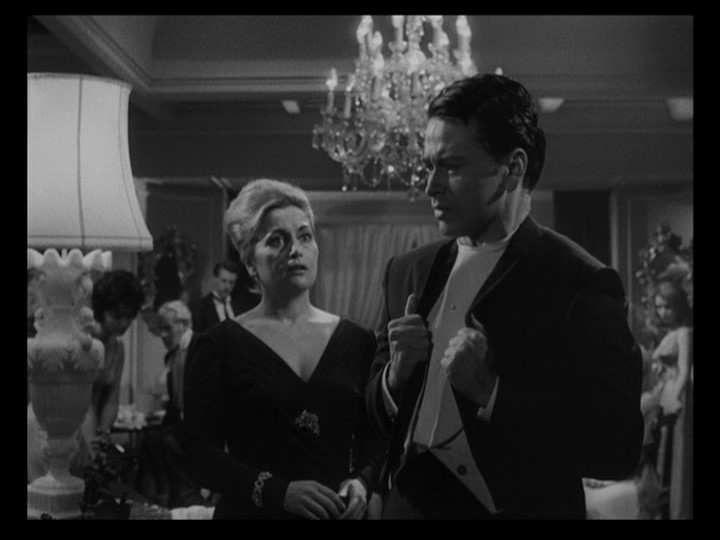
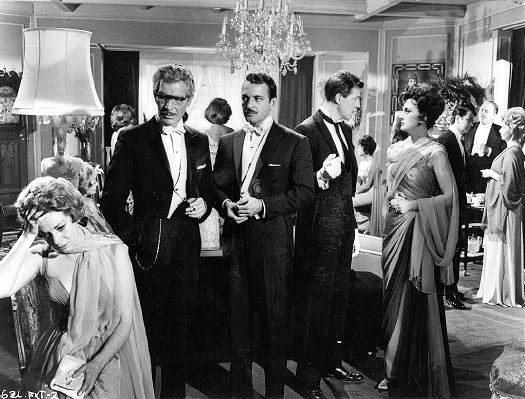
European Art Film: An Analysis of Luis Bunuel’s “The Exterminating Angel”

 
     Whenever people utter the word ‘movie’, the first thing that pops into the listener’s mind is a narrative fictional movie, be it horror, thriller, crime, romance, comedy, or so on. However, there’s an entire genre dedicated to art movies, and the reason why they aren’t as popular is because they are targeted to a limited audience, rather than the typical mass audience. Most people go watch a movie, to kill time or escape the harsh reality yet in order to fully understand an art film one should keep an eye on the highly symbolic content within the movie, and try to makes sense out of the movie, even though it might seem impossible to do so. The Golden Age for art films was the sixties, for it was when rebellious European movies broke most of the rules of the traditional classical cinema established by Hollywood. Movies suddenly appeared without having a satisfying ending, in addition to that, the characters within the European art films would often go through a serious of events that they have no control over, and unlike in narrative fictional movies, they have no choice. In the midst of that age, a director by the name of Luis Bunuel reached his peak, and at the age of 60 through 70, he directed probably the greatest surreal European art films of all time, for he is to art films what Hitchcock is to suspense movies. 

In 1962, Bunuel directed probably his most analyzed and controversial movie, “The Exterminating Angel”. The plot revolves around a dinner party that takes place in a mansion. At the beginning of the party the servants escape for no apparent reason leaving only the head servant to serve the guests. Later on the guests arrive and even though they have finished eating knowing it is time to leave, they cannot get themselves to leave the salon. Bunuel does not use a score for the movie; for he doesn’t need it in this particular movie because it would not serve any purpose. As for mise-en-scene, the only aspect that seems consistant throughout the movie is the surreal environment. There isn’t just one true explanation or meaning to the movie, for each and everyone will most probably interpret it differently. The following argument is not fact or truth behind the movie; for it is simply a series of interpretations, that one viewer (me) went through during and after watching the movie a few times.

Statue of The Exterminating Angel in Comillas, Spain

The first reaction was that the entire movie was part of a dream; however, this could not possibly be true because even though the surreal aspects in the movie convey the feeling of experiencing a dream, it could not possibly be one since it isn’t told through the perspective of one character. It’s more like a presentation of surrealistic events taking place within a salon. The second affect it may have on a viewer is from a religious point of view. The title of the movie, refers to the exterminating angel who killed the first born child of Egypt, and so in order to make some sense of the movie, one could consider the fact that same angel may be punishing those high class guests. The exterminating angel does so by trapping them in an environment that forces them to deal with reality. Therefore, they snap out of their trapped world of mannerism. The angel punishes two lovers for having sexual intercourse in a small room with angel pictures displayed on the wallpapers by forcing them to commit suicide. At the same time, he forces the guests outside of the room to go through barbaric like behavior to show them the harsh reality of our human nature. After they escape, the guests end up trapped once again in a church, which implies that the angel now wants them to break free of their religious habits now that he succeded at breaking hem free of their high class manners.  In both, the salon and church traps, the angel sends them sheep so they could eat and survive. Both location are perfect for the angel’s tasks. Luis Bunuel was probably attacking both the high class of society and religion. The first viewing of, “The Exterminating Angel” is a very challenging one, and it is almost impossible for the viewer to understand the full meaning, still by concentrating on the details within the movie, one can at least interpret a meaning to the movie, even though it might not necessarily make sense.

    
Luis Bunuel movies are timeless in the sense that they force the average movie goer to think for a change. Instead of feeding the audience a basic story, Bunuel allows us as the audience to figure it out on our own leaving an impression that may last for hours after the movie’s credits have rolled. With “The Exterminating Angel”, the viewers are lucky enough to receive a statement by the director at the beginning of the movie. Therefore using that statement as a guide to make sense of the movie would be a very wise choice. The statement reads as follows “The best explanation of this film is that, from the standpoint of pure reason, there is no explanation.” He also warns that the some might find the movie “disturbing”, and that it may not make sense at all. Besides the obvious message of Bunuel, that there shouldn’t be a reason for anything happening and his obvious destruction of casuality where cause and effect is not a feature in his movie, Bunuel might have given the viewer a hint to understanding the movie through his opening statement. He mentions that the movie might not make sense, that viewers may find it “disturbing”, and that “from the standpoint of pure reason, there is no explanation”. Maybe Bunuel was trying to show that through picture and sound he expressed the strange and unexplainable aspects of life, the very things that we find “disturbing” and have “no explanation” for. There are two scenes where the dinner guests arrive, so they basically arrive twice in the movie, which might be considered a presentation of deja-vu by Bunuel better yet maybe he was touching on the whole history repeats itself concept. Either way, both fit into the categories of “disturbing” and are also one of the aspects of life that we have “no explanation” for. The movie is full of such material that made me think Bunuel’s movie may be symbolizing life; for life is like a salon, there is no escaping it.

Within that salon all kinds of disturbing and unexplainable incidents occur. One unexplainable behavior of our human nature is why people commit suicide, presented to us through the two lovers who commit suicide in a small room. The concept of dreaming is another thing that has no logic explanation, and Bunuel again touches upon it through the scene where a girl dreams and stabs a young woman’s hand while sleepwalking. In the repeated scenes where all the guests go to sleep, Bunuel might have also tried to express that at the end of the day, we all just go to sleep and accept the day as it was. Another unexplainable question is why people often choose to solve their problems using violence whether it’s war between two countries or a duel between two characters. The attraction humans tend to have towards violence is also evident  in the scene where the guests gather around the two dead lovers as a crowd trying to get a peak at what happened. The fact that at a time of crisis human beings tend to forget about manners and turn against each other is shown in the scene involving water  desperatley accessed through one of the pipes in a wall. These scenes all fit under the category of the unexplainable aspects of life and human behavior.

     The movie is definitely a study of human behavior in the sense that it includes a variety of characters with different characteristics, the judging ones, the perverted guy who tries to sexually abuse a woman in her sleep, a whiny childish man who still can’t let go of his mother, the two men who are addicted to gossip and talk about a girl who they assume is a virgin, the dying woman who looks forward to death, the list goes on and on.  Through those characters, Bunuel displays the negative aspects that are present in almost every society. In less than two hours, Luis Bunuel managed to touch all those various unexplainable and disturbing aspects of life, human behavior, and society. Throughout the duration and stay within the salon, a sense of a lifetime is conveyed, for just like by the end of most people’s lives, by the end of the guest’s stay inside the salon, the people are looking forward to death, one of them even yells “Doctor, why don’t you kill me already!” As the guests are finally able to leave the salon or “life”, a light appears at the outside of the building, just like “the light that we are supposed to see before death”, and the guests are back to reality. In the streets, soldiers are hitting rebels and the crowd, which was another subliminal message in the movie. Spain was probably under strict military rule and a closed society during that time, and the people were controlled by the military just like the guests were controlled by the salon being unable to leave. The entire movie is filled with unexpected events taking place, just like in reality, life is full of events that occur out of nowhere. We don’t know why they happen, they just do for no apparent reason. There’s only one cause and effect in the movie, the plot or material displayed on screen and the effect it has on the viewer. Luis Bunuel created a work of art with his masterpiece, “The Exterminating Angel”. It shouldn’t only be regarded as one of the greatest foreign movies or art films of all time, but one of the greatest movies period. Each viewing might cause an entirely different interpretation from the previous viewing, which is why the movie stand the test of time as a timeless masterpiece that demands to be viewed repeatedly.

Film Review: “Avatar” ★ ★ ★ ★ ★ (5/5)

James Cameron's long awaited "Avatar"

So I just came back from a screening of the groundbreaking new James Cameron movie, “Avatar”, and I can’t wait to go back a few days from now. The movie lives up to its gigantic hype. I went in with very high expectations and they were met and exceeded.

Here’s a movie that has something for everyone; from a great love story, to epic battle scenes, to a magnificent score, the greatest special effects to date, and on top of all that an environmental message. Movie geeks will be mentioning “Avatar” whenever there’s the classic “Star Wars” vs “Lord of the Rings” debate, for it is a movie that stands its ground against both of those excellent trilogies. “”Avatar” is simply a masterpiece of movie magic. James Cameron knows how to plug you into a world that you will not want to leave.

I won’t go into the plot but I will say that Cameron’s new movie is like a combination of all of his previous works. It revolves around creatures as cool as “Aliens”, it has battle scenes that make the scenes in his Terminator movies look small, and a powerful love story similar to that of “Titanic”. Now that I’ve mentioned “Titanic”, I would like to point out the similar structure of the screenplay Cameron used with both movies. Remember the times when the “Titanic” story would get interrupted by Old Rose and we as viewers were begging inside for more scenes on the ship. The same happens with “Avatar” only this time we beg to spend more time on Pandora whenever we’re pulled off.

The Na’vi tribe is very interesting and one of the most well developed and original species in film history. It’s been a very strong year for scifi fans with movies like “District 9”, “Star Trek” and “Moon” coming out at the end of the decade. While I consider “Moon” to be the best scifi of the year by far, still “Avatar” is a  fantasy epic that will most likely have a strong fan following. All I can say is believe the hype for “Avatar” has it all.

The Roots and History of the Horror Film


Linda Blair in "The Exorcist"
"The Exorcist"

                Each genre has a specific effect on the viewer. When it comes to the horror genre, that effect is fear. The horror genre has a very unique history, for unlike genres like the film noir or the gangster genre, the horror genre originated in Germany with the expressionistic movement. World War I affected numerous lives. The decade following the war was crucial for the horror film genre. It was in the 1920’s that saw German Expressionism develop into full form. Prior to that period (during World War I), all studios were controlled by the German government in order t produce propaganda films. Foreign movies were banned till 1916 but this ended in 1921 and German cinema benefited a lot from the situation. The reason for that being is, after the First World War UFA (Germany’s major studio at the time) was fully capitalized and hired the most talented German filmmakers to put cinema back on its feet. From that moment on, the horror genre was changed forever.

"The Cabinet of Dr. Caligari"

  It was the decade that saw German Expressionism in the form of film (it was already dominant in many other art forms). German Expressionism was a movement that had movies focusing on the mood and atmosphere of a movie which would be central and crucial to the future horror film. “The Cabinet of Dr. Caligari” was the first horror film and the first step triggering the movement. The movie which came out in the formative period (period when genres are formed) of the genre had a huge influence and impact on world cinema. Unique angle shots, exaggerated sets, theater like acting, and unusual makeup were the main elements that defined the expressionistic movement. For the first time in cinema history, these elements combined, or the mise en scene in general was there to reflect the psychological state of mind of the characters. The movie was basically expressing the pain and confusion Germany was going through at the time. It reflected the times and the state of confusion Germans felt following the war. According to film historian, Rick Worland, Dr. Caligari represented authority as he ordered his companion to go on a killing spree. Just like the Germans a few years back were ordered by authority to go and kill the enemy. All the elements and conventions associated with the genre can be traced to that crucial moment in horror history, the moment when “The Cabinet of Dr. Caligari” first hit theaters.

A creepy score, dark atmosphere, haunting mood and the fact that the movie reflected its time were the main conventions that triggered what would in the future be considered a horror film. The success of the movie inspired more of the same, movies like “The Golem, “M”, “Metropolis”, and “Nosferatu” followed. However with the start of Nazi Germany and the end of the 20’s, many of these revolutionary German filmmakers fled to the United States. Once there, these same filmmakers did what they did before, they changed cinema forever, only this time it was in America.

John Carpenter's "Halloween"

Universal Studios saw great success in the early 30’s, with “Dracula” and “Frankenstein” coming out in 1931. Again, the most obvious reason for the success of these horror films in the US was the times. It was the era of the Great Depression and fear was spread across the nations. Many viewers could identify with that emotion when sitting through a horror film. What’s most fascinating is how similar to German Expressionism both movies were. The shared the mood, the score, the idea of the other (a person different from everyone else in society, in this case the monster), and of course the element of fear mirroring that period. The horror genre soon became the most controversial and argued over genre in film. Especially with Cracaur’s first book on the horror genre ever released, “From Caligari to Hitler” being published in the 1940’s. He argued that German Expressionism was a way to promote and encourage fascism. The basis of his argument was that it was a way for the audience to escape reality yet mock it at the same time. “From Caligari to Hitler” had a huge message behind it and from that moment on, horror films were always associated with the ideological or political status of the period.

"Night of the Living Dead"

  Robin Wood was also very important in the periodic development of the genre. His theory was that there were two aspects underneath ever horror film. The first was Freudism and how we as viewers have certain things in our subconscious that we tend to block or repress due to what society taught us. What made horror films scary was that these aspects were forced upon the viewers and the spotlight was on the strange and “un-talked” about.  The second element under Wood’s theory was the Marxist idea of how each society had a ruling class. This ruling class had an ideology that was applied on the entire society. (I’ll give an example later on how this can be applied on horror films such as “Night of the Living Dead”) In order to fully understand his theory we have to break the horror genre into periods, and so while “The Cabinet of Dr. Caligari” came out in the formative period, horror films such as “Dracula” and “Frankenstein are considered to have come out in the golden age of horror film or the classical period (the period when horror films and their conventions were all set and not tested upon, people knew what they were in for when watching a horror film). It is movies like “Blood for Dracula”, and “Night of the Living Dead” that are considered to be part of the revisionist period (the period when people played with the horror conventions and toyed with where they could go with the genre). Anyway the idea of the working class being presented as zombies attacking the higher class in “Night of the Living Dead”, “Dawn of the Dead”, and many other George Romero films are perfect examples of Wood’s theory. Wood’s argument of basically “revenge of the repressed” was proven to be very much true. The idea of “the other” was argued over and Wood believed that how the issue in the plot of the horror film was resolved established the movie’s ideological message. For example if by the end of the movie, the zombies or “the repressed” take over the city then that’s exactly what the message the filmmaker is sending to the world.

"The Others"

To this day with the many phases of the horror genre from the slaughter phase to the slasher phase in the 70’s and 80’s, the horror film was never the same again. Instead of being there to primarily scare audiences, they were taken seriously for the themes and messages they expressed. In “Halloween”, teenagers are the victims for there was a sudden explosion of unsafe sex and drug use with the under aged which explains how most of them are killed while committing any of these two acts or taboos. After the birth of the slasher genre in 1960 with Alfred Hitchcock’s “Psycho”, it was “Halloween” that influenced and triggered the movement and “Friday the 13th”, “Nightmare on Elm Street” and their many sequels followed. By the nineties, the phase was dead till Wes Craven came out with a mocking of the subgenre in 1997’s blockbuster “Scream”. During the second half of the nineties there was a brief shift and focus on supernatural ghost stories with movies like “The Sixth Sense”, The Others”, and “Stir of Echoes” dominating the period. The decade ended with the huge success of “Blair Witch Project” which triggered the handheld documentary like horror film. Movies like “Open Water”, “Quarantine”, “Cloverfield” and this year’s “Paranormal Activities” shared the same idea as their sub genre creator. Unfortunately, the shift the horror genre is taking is what many would consider the downfall of the genre. There only seems to be two types of horror movies, remakes (“Texas Chainsaw massacre”, “The Hills Have Eyes”, “Halloween”, “Friday the 13th”, “Halloween”, the upcoming “Birds” remake, etc.) By remakes, Japanese remakes are included as well (“The Grudge”, “The Rings”, their sequels, etc.); the second type being the documentary handheld horror film which only proves to be worth our time once every twenty failures. A genre that was once respected and hailed for its brilliance (ex. “The Exorcist”) is going downhill faster than any other genre in film. The conventions are still there, the horror isn’t. Back then the idea of the movie was what scared us all, now “the idea” has been replaced with “jump out of your seat” moments. Hopefully this will change in the future. Who knows, maybe the great Martin Scorsese will put the genre back on its feet with his upcoming original horror mystery, “Shutter Island”. There is still reason to hope. 


A Study of Celebrity Worship

A Great Film Tackling the Subject of Celebrity Worship, Robert De Niro as Rupert Pupkin in The King of Comedy

There are several types of obsessions, from war veterans obsessed with the act of battle to over religious terrorists obsessed with the act of violence, the list goes on and on; however, the most widely spread type of obsession is most commonly known as celebrity worship. As time passed celebrating celebrities has become more and more active. It started since the dawn of time when someone who was regarded as superior than the average human being was idolized by his fans. Sportsmen, actors, actresses, artists and singers are just some of the people that could be regarded or labeled as celebrities. Since the media nowadays is more than focused on celebrities, we live in the age where celebrity worship is most widely spread, for never before has the concept of celebrity worship reached the standard it lays at today. Since it has become of today’s main factors of life, many researches have been developed studying this form of obsession. Some researches study the aspect of why people tend to lean towards celebrity worship, while others study whether it’s a good habit or a bad habit. The truth is the only way to fully understand celebrity worship is to take all theories and opinions into consideration and drawing up conclusions.

Cartoon Sketch of Celebrity Worship

 A question that pops up in everyone’s mind is, why do we worship celebrities as if they were superiors? There are several theories and answers to that question. One of those so called theories is the American Dream Theory. To fully understand this theory one has to fully understand the meaning of the American Dream. The American dream is best known as having a happy hard working family, owning a modest home, and living the simple life.  However, the American dream has changed with time. Now the American dream seems to involve “mansions, plastic surgery, designer children, and teeth made of gold.”(Violent Acres). While the researcher was clearly being sarcastic, he/she has a point. Back in the fifties the needs of the average person was completely different than today, and now what everyone craves seems to be having the life of a celebrity. That same research facility by the name of Violent Acres digs deeper into the American dream theory by exploring the clear connection of the American Dream and celebrities, “The average American spends half of their time chasing this new unattainable version of the American dream and the other half of their time watching those who are living it.” (Celebrity Worship and the American Dream). Basically what he/she was trying to say is that since the new American dream is having the life of a celebrity, it is one of the major reasons why people are obsessing and “worshipping” them. Another theory would be the theory of Hero Worship, and it is basically the concept of idolizing a celebrity as if he or she were some kind of a hero. According to Stuart Fischoff who has academically studied the cult of celebrity, “What’s in our DNA, as a social animal, is the interest in looking at alpha males and females; the ones who are important in the pack. We are sociologically preprogrammed to ‘follow the leader’ and we are biochemical sitting ducks for the Hollywood star system; even the stars themselves get caught up in the mystique by worshipping other more celebrities in higher standards”(Fischoff). In other words, people tend to need a hero in their complicated lives and by looking at the perfect lives of celebrities and obsessing about them; they fall under the celebrity worshippers’ category. Both of those theories involve the aspect of addictiveness, for when a person idolizes someone or dreams of their lifestyle, he or she tends to get addicted to the idea and tries as best as he/she can to stay updated with a certain celebrity’s life or lifestyle. Now that we’ve found out about why people worship celebrities, and why it’s so widely spread, one has to wonder, is it healthy for the average person to obsess about the life of another individual?

     The answer to that question can go either direction, and while most researchers have proven that it is without doubt a bad and unhealthy habit, to every bad side there’s a good side. If the concept of celebrity worship was used correctly, it might as well act in a positive manner. For an example, if a young boy idolizes a soccer player and tries as hard as he can to live up to him and be like him, it clearly means that celebrity worship is a good thing, for it can be used as an inspiration. The fact that this young boy worked hard to become an actor, athlete, or any other successful human being proves that him idolizing a certain celebrity has in fact helped him achieve his goals, which clearly brings shows that celebrity worship as bad a reputation as it has can serve youth in a positive matter. A recent UK study done by psychologists from the Universities of Leicester and Coventry has backed up this statement with their research on teenagers and their often obsession towards celebrities. They claimed that, “Teens view celebrities as heroes, trend-setters and part of an extended social network of friends. Watching prestigious people is typical human nature. Celebrities are popular, successful people who model behavior on how a teen can become successful herself.” In addition to supporting the idea of having celebrities as an inspiration, they have also proved that celebrity worship plays an important role of growing up. The study looked at children between the ages of 11 and 16, and studied the survey before concluding that it is in fact healthy for teenagers to “worship” celebrities (Bayne).  Part of their conclusion was that, “Approximately one third of those surveyed revealed that gossiping about famous folk was a big part of socializing. That’s got to be less traumatizing than gossiping negatively about fellow classmates.”(Bayne). This has to do with sociology, and how people socialize with one another, and if one thinks about it, gossiping about a celebrity and judging his or her acts is better than doing the same about a classmate. Gossip magazines are very popular among teenagers, and this is a good thing because gossiping about celebrities serves as a substitution to gossiping about other fellow classmates. There is in fact some good that can come from the concept of celebrity worship and recent studies and researches have proven so; however, there’s one aspect that is common or can be found in all those researches trying to prove that celebrity worship is a good thing rather than a bad one. This common factor is the fact that they always prove that it is good and positive for the youth. They always seem to claim that celebrity worship is good for teenagers or preteens, which makes one wonder about the adults who worship celebrities. Since the only good celebrity worship includes turns out to be related to a certain age group, it is when people continue to worship celebrities after leaving a certain age group that it becomes an unhealthy and possibly dangerous habit.

Robert De Niro and Jodie Foster as Travis Bickle and Iris

      The main reason why this syndrome has been studied, analyzed, and researched numerous times over the past couple of years is because in several occasions those “worshippers” fall into an unhealthy habitat. In order to fully understand this concept one has to identify the connection between the addiction to worshipping celebrities and the behaviors of those same people or “worshippers”. According to Eric Hollander, MD, professor of psychiatry and director of the Compulsive, Impulsive and Anxiety Disorders program at Mt. Sinai School of Medicine in New York City, “for those who have the fascination with celebrities as a substitution for real life, with the focus on a celebrity replacing the focus that should be on our own lives, those are the ones who should start to calm down, for they are officially in trouble.” (Hollander) The reason for that being is because those individuals often encounter depression, anxiety, and a handful of other mental problems, which leads to them taking the focus off their own lives and instead focus on the lives of celebrities. In one of the largest studies of celebrity worship in the UK, researchers questioned 372 men and women about their views towards celebrities; what they found out was that just over 22 per cent of these could be classed as ”celebrity worshippers”.(Brown). This group could then be divided into three distinctive forms of worshipper: entertainment-social celebrity worshipper, intense-personal worshipper and borderline-pathological worshipper. These are the three most commonly used categorize when it comes to studying the extension of a celebrity worship. Psychologists Lynn McCutcheon of DeVry University in Florida explained those three categories in an extremely detailed article, and in summary this is what she had to say. The entertainment-social group is the largest of the three, and they often tend to be social, lively, active and adventurous. However, intense-personal attitude towards an idol is when trouble starts to appear for they tend to develop a belief he or she had a special bond with the star. This stage often involves people stalking their idols or favored celebrities. Those in this category are often neurotic, tense, emotional and moody. (McCutcheon) However, things start to get too dangerous with the third category, borderline-pathological. The reason for that being is because “At its most intense, celebrity worship is a condition found in one per cent of celebrity worshippers. These include celebrity stalkers and people who are willing to hurt themselves or others in the name of their idol. They correlate with symptoms of psychosis, such as impulsive, antisocial and egocentric behavior.” (McCutcheon). Looking at the three categories, one can clearly see the transitions from one step to the other. The first category and least harmful is entertainment-social, and it is basically the idea of celebrity worship used to entertain and socialize about. The second, however, is intense-personal, and now it gets too intense for it involves stalking celebrities and invading their privacy. The third and most dangerous category is borderline-pathological, and this involves acts of violence committed by those “worshippers” that are somehow related to their favorite celebrities. An example of such an act would be that of the infamous John Hinckley, a typical borderline-pathological worshipper who took it a step too far. John Hinckley started to have mental problems the minute he watched ‘Taxi Driver’, a movie starring Robert De Niro as Travis Bickle. Travis is a lonely character who wanders the streets of New York alone until he crosses paths with a twelve year old prostitute played by Jodie Foster. Travis tries to save her by killing her employees and those who force her to work as a prostitute. John Hinckley connected and identified with De Niro’s character in an abnormal way to the point that he became psychotic. Samuel Rodriguez, a law student who studied the case of John Hinckley clearly states that “Hinckley saw the movie at least fifteen times, read and re-read the book it was based upon, and bought the soundtrack to the film, listening to it for hours on end. Hinckley even began to model certain aspects of his life on the actions of the main characters. Most importantly, Hinckley developed an intense obsession with an actress in the film, Jodie Foster.” (Rodriguez). However what placed him in the borderline-pathological category was his act of violence which he claims was dedicated to Jodie Foster, the assassination attempt on President Ronald Reagan. According to Rodriguez, “‘Taxi Driver’ was shown by the defense during John Hinckley’s trial. Hinckley’s reaction to the showing of the movie demonstrated the depth of the impression it had made on him. Twisting in his chair to get a better look at the main character as Robert De Niro’s mug appeared on the screen, he was so engrossed in the movie that he watched it mouth open, eyes fastened to the screen.’ Instead of facing death sentence or prison by life sentence, Hinckley was sent to a mental institution where he is still being studied by experts.

Sketch of John Hinckley's Assassination Attempt

     After days of research, one can see that studying celebrity worship isn’t as simple as one may think, for it can serve as a positive influence on a teenager, yet serve as an extremely harmful and mental issue for an adult. There are several stages and categories of celebrity worship and anyone can categorize himself in one of the three main ones. What people should defiantly take into consideration is that whenever he/she sees himself/herself, or any other beloved one in that matter pass the first category also known as entertainment-social, and start entering the later two more intense, physically, and mentally harmful ones, the first thing one should do is calm down, and see a psychiatrist before things get too personal. Almost anyone nowadays can be placed in one of the three categories, and although by now we know the stages and reasons for celebrity worship’s existence in our every day life, one has to wonder who is to blame? There’s no doubt that the answer to that question is the media. The media focuses and invades the lives of celebrities like never before. It may have started around the fifties when Marilyn Monroe started appearing on headlines worldwide, but today it’s not just one star but almost every celebrity gets his share. They are often followed by the paparazzi, and photographed without permission, which is a very serious form of lack of privacy. Now that there are a variety of headlines on all kinds of celebrities, every celebrity worshipper has at least a clue of the celebrities’ personal life and current location. This may trigger various acts of violence committed by celebrity worshippers to increase in number. The only solution for that matter is for the media to stop documenting every single detail of a celebrity’s life and start focusing on more realistic and serious subjects. At the end one can conclude that while celebrity worship is healthy for teenagers, as people grow in age, their probability to fall into the second and third type of the worship syndrome increases.

The Merging of Mise-en-Scene and Narrative Style (Run Lola Run and Hero)

Cartoon of Lola Running


When it comes to movies, one would find that there are numerous ways for the director to tell his story and just as much ways for him display it on screen. The narrative style of a movie depends mostly on the screenplay of the movie and unlike most people think, movies don’t necessarily have to start at the beginning of the story and end up at the end of it. A plot of a movie can start at any point within the story, and usually the choices the directors or screenwriters make are for the best. However, the plot isn’t the only thing that the director takes under consideration, for movies can be displayed through picture and sound or mise-en-scene in various ways as well. Here one can see the relation between the narrative style and mise-en-scene of a movie. After deciding how to tell a story, the filmmakers usually decide how to display it, and this is where mise-en-scene and the narrative story merge to form a motion picture. The degree of how well these two elements merge often is crucial to how the movie will be received by the audience 


     Narrative styles in fiction movies have two basic categories, the plot and the story of the movie. The story is everything we as the audience know about the characters and the “tale” of the film, while plot is a segment of the story displayed to the audience through the combination of picture and sound. Everything we see and hear on screen from the symbols to music to credits falls under the plot category. The story is basically made up of everything we as the audience can presume or assume from the characters and story of the film. A great example of the clear difference between story and plot can be seen in the 1998 Tom Tykwer movie, Run Lola Run. The story of the movie is very broad for it’s basically the story of a woman who isn’t very well connected with her family and tries to help out her boyfriend with the trouble he’s in. We as the audience know these facts even though they are not displayed to us on screen. We know that Lola isn’t close with her family through several scenes. One is the scene where Lola’s father tells her that he’s leaving them for he is fed up with Lola and her mother; another is a scene that is displayed three times to the audience, it’s the scene where Lola rushes in a hurry downstairs past her mother who is on the phone. The mother doesn’t even bother to panic or react to the situation. During the entire movie, we witness three different ways where Lola tries to help out her boyfriend who lost valuable money, and in on of those alternatives, Lola’s boyfriend tells her that “this time it’s different”, and that it would be impossible for her to help him. The fact that he said “this time”, and the simple fact that he called her during the time of crises makes us assume that Manni (Lola’s boyfriend) has no one else to turn to, and that she has in fact helped him various times before with success. The plot of the movie consists of this one segment of the story displayed to the audience three times, each time with an entirely different outcome. This tells us that the director or screenwriter (in this case both are Tykwer) tried to focus on was Lola’s desperate attempt to help Manni and how the choices she made during that particular time of crises affected the overall outcome of the situation. Through the plot, not the story, Tykwer managed to produce a very simple yet scary theory in life, that the simplest choice, decision, or  interactions you choose to make can change you’re entire life, sometimes it’s for the best, while at other times it’s for the worst


     Just like the narrative style, the mise-en-scene of the movie can greatly affect the outcome of the movie. In film, mise-en-scene has a very broad meaning, for it refers to almost everything that goes into the composition of a movie, this includes sound, costume design, set decoration, editing, and cinematography. An example of mise-en-scene used almost perfectly in film would be Zhang Yimou’s 2002 epic, Hero. The movie basically tells the story of a nameless warrior who manages to kill three deadly assassins that posed a threat to the Dynasty’s emperor. The king or emperor notices some flaws in the warriors’ story as he tells it, and so the story of the nameless warrior is retold differently. The same thing happens again, and we as the audience end up with three versions of how the nameless warrior managed to be where he is at this moment having killed three of China’s most threatening assassins. The movie is a combination of great visuals, cinematography, costume designs, set decoration, and fight sequences making the movie a feast to the eye. This merge of filmmaking factors ends up working so well together producing sequences that feel more visual dreams rather than reality. The movie was intended to be displayed as visual poetry, and the fact that the movie remained beautifully shot after shot with strong vibrant colors standing out in almost every scene makes it feel almost unrealistic. However, the fact that Zhang Yimou managed to maintain those beautiful visuals for the entire duration of the movie where colors serve as symbols, made those impossible visuals very believable, creating a perfect example of mise-en-scene used magnificently in film. Another aspect that served the mise-en-scene during the entire movie are the very well executed fight scenes, for they were choreographed in a way to make the fights seem as if they were dances instead of acts of violence. Somehow the viewer accepts the beauty of the locations and visuals of the movie as realistic. To be more specific, there’s one scene that describes the beauty of the mise-en-scene and that is the scene in which two females face each other wearing red wardrobes and surrounded by yellow and brown leaves. Everything seems to be perfect in that scene, from the visuals, to the choreography to the epic score to the editing and cinematography, they all worked together to display a visual work of art which is what the filmmakers intended the movie to look and feel like


     Comparing these two movies with one another, one can see the very obvious connection between the narrative style and mise-en-scene of a movie. The plot of both movies concern with three different versions of an event, and as the plot of a movie includes the on screen music, and non-diegetic symbolic inputs, one can see where plot and mise-en-scene overlap. The plot is the way the story is going to be told, which in both of those movies’ cases was in three different versions, while the mise-en-scene is the way it is displayed to the viewer through picture and sound. Picture includes the editing, cinematography, symbolic insert, and so forth; the symbolic inserts in the case of Hero were the strong and vibrant colors. Hero and Run Lola Run have almost identical narrative styles in that they have the same basic aspect of three versions of a story, yet they feel so different. The reason for that being is because of the entirely different mise-en-scene in both movies. In the case of Hero, the mise-en-scene was used to display a visual masterpiece and a work of art that was very fitting with the themes of the plot. In Run Lola Run, however, the mise-en-scene was used to produce a different effect on its viewers, the feeling of a rush and adrenalin. This was done through the combinations of clearly over a thousand edits and transitions in its very short runtime, and the combination with techno like music used as the score made the movie feel like a rollercoaster, which was the basic idea and purpose of the entire movie. Through the mise-en-scene we as the audience felt the rush Lola felt after she hung up the phone with her boyfriend. So while the narrative style and mise-en-scene have entirely different meanings, they are both very important in terms of filmmaking, for they determine the way a story is to be told, and the intended effect it should have on the viewer. However, in order for them to work well, as the director is working on one (narrative style or mise-en-scene), the other has to be taken into consideration    

The Power of Sound and Editing (The Conversation and Psycho)

Gene Hackman in The Conversation

When most people think about movies, they usually judge them in terms of acting and directing, rarely does a person judge its editing or sound mixing. The reason for that being is because most editors and sound editors do all they can to make their editing as smooth as possible for the audience. When editing and sound mixing is used correctly there’s a certain flow that’s required in a good movie, the movie seems to fit better, and the truth is without editing and sound mixing most great movies wouldn’t be nearly as good as they are regarded. The 1974 Francis Ford Coppola thriller The Conversation and the 1960 Alfred Hitchcock horror movie Psycho are perfect examples of movies largely depending on the process and technique of editing and sound mixing. Each of those movies can be seen as perfect examples where the editing and sound mixing were used to perfection.

Storyboard Image of the Shower Scene

 In terms of editing a movie, there’s mostly the basic idea of joining shots to give the sense of continuity in terms of time, space, graphics, and rhythm. In terms of sound mixing, there’s the basic idea of fidelity, the extraction of sound such as off screen sound, and of course the addition of sound to a particular scene. However, there’s also the connection between those two aspects or techniques. With precise editing, there’s always a fascinating interplay of sound and image. Editing is so much more than just the joining of shots; it requires instinct, accuracy, and precise use of shots in terms of their relation to one another. After Alfred Hitchcock’s 1960 classic Psycho, the editing was probably revolutionized because of the use of various forms of editing in that particular movie. In terms of rhythm, the movie uses the movement in time very efficiently. For example, it is clear that the movie starts one afternoon, as we are transformed from outside the window of an apartment into the apartment using smart editing. However, when Leigh leaves the room, we realize that it’s still that same day. She goes to work, collects some money that she’s supposed to put into the bank and goes back home. All that happens in one particular afternoon, and when she decides to run away with the money, the editing in terms of rhythm becomes more and more interesting. Hitchcock uses a close up of the main character, Marion Crane, as she drives away from her hometown. The shot shows her face, part of the steering wheel, and the background, which includes the sky. The shots of course changes from that particular close up shot to what might be regarded as an eye-line matching shot, in which we as the audience see the highway in front of the character. The audience begins to notice that the bright sky turn darker and darker, and eventually it starts to rain and Marion pulls over to sleep it off. The first quarter of the movie takes place in one day, which gives the movie a very interesting flow, and movement of time. The following shot involves Marion waking up the next morning after spending the night sleeping in her car. Again, the viewer knows that it’s the next day, and for the next twenty minutes or so, we stay within that time frame (she goes changes her car, and by night pulls over to the Bates Motel). George Tomasini, the editor of the movie also uses editing in terms of time very precisely. For example, the scene in which the private detective, Arbigast starts checking different hotels for any information on a missing Marion. The scene shows Arbigast in different hotels in various shots, which gives us the sense that time has passed, and that he checked those hotels in a period of time.

Tomasini also uses the relation between shots quite creepily in terms of graphics. By showing shots of stuffed birds, he puts the viewer in an uncomfortable mood. The last type of relation between shots can be seen as Tomasini uses space. When Marion’s sister, looks outside of the Bates house and sees Norman running towards her from the Bates Motel. Space is all that was needed to keep us on the edge of our seats. Psycho is a landmark in terms of editing for the very reason that it uses a large variety of editing in less than 120 minutes.

The Shower Scene

Another element that most viewers aren’t aware of is the process of sound mixing. Most people think there’s nothing to sound that requires talent, accuracy, and time, yet the truth is without proper sound editing and mixing, movies wouldn’t be at the place they are today. Elements such as overlapping dialogue, manipulating volume, using silence, extracting and adding sounds, and off screen sounds are just a few of the procedures and aspects that the sound editor has to have in mind. In Francis Ford Coppola’s The Conversation, the subject of sound is the main focus of the plot. The idea of having the ability to record any conversation between two individuals without them notice it is terrifying, yet very interesting. There’s one particular scene in the movie that was and still is very fascinating to watch. It’s when Harry Caul played by Gene Hackman tries to record a conversation between two characters in the middle of a crowd. In order to find out what they are saying, he extracts overlapping conversations, on-location sound, and abstract noise; at the end Harry Caul ends up with the line “He’d kill us if he got the chance.” That particular scene has got to be one of the most revolutionary scenes in film history in terms of sound mixing. The way the main character plays with all kinds of overlapping sounds, makes the viewer wonder if this is the same case when it comes to filming a movie. The sound editor probably uses very similar equipment and methods as those of Harry Caul, which is why the main characters voices are often heard more clearly than that of a train, equipment, or any extras acting on set. There’s also a very interesting connection between editing and sound.

 In order to edit certain scenes properly one has to have the element of sound in mind. In probably one of the most famous, and well edited scenes in all of cinema, also known as the shower scene in Psycho, the use of both editing and sound to create a realistic and horrific scene is very detailed, carefully thought out, and perfect. In less than one minute, we witness a combination of at least 50 shots, in relation to the sound of a knife slashing against skin. However, what’s even more interesting is the fact that we never actually see the knife enter the woman’s flesh, yet we’re convince we do through the sight of stabbing (hand motion), sound effects, the musical score, and of course the careful editing. While most people think that the director and the actors do most of the work, one has to know that the editor, sound mixer, and composer have a lot to do with why the movie turned out the way it did. Therefore they deserve a lot more acknowledgment and credit for their work. The job of the editor is to take scenes and fit them together, and just like a puzzle, they have to fit together perfectly. In addition to that the sound effects, off screen sounds, overlapping dialogue, and every other aspect relating to sound is taken care of by the sound editor to assure a realistic and smooth feel to the movie. On top of all that we have the musical score of the movie which most probably serves as the flow of the movie. In order to turn out with a great movie, one has to make all three of those techniques work well together without the audience noticing. Both The Conversation and Psycho have done so, which is probably why both of those films are studied worldwide by film students and professors.

Strokes of Light and Shadow: The Impact of Citizen Kane


Broad Daylight. The Key Scene. No Shadows Needed. Viewer's Full Attention Required.

When one thinks back to the turning points of film history, the first few events that come to mind are the first edited fiction film, ‘Jazz Singer’ and the transition to sound or the first feature film in color. Some even mention the extensive use of deep focus in ‘Citizen Kane’ and while all these events are clearly revolutionary in terms of the development of film as a medium, the use of lighting creatively is often overlooked. Exploiting light and shadow inventively to express meaning and establish a desired atmosphere made Orson Welles’ ‘Citizen Kane’ a significant historical event that impacted both audiences and film genre in many ways. In order to clearly understand this statement and acknowledge Orson Welles with changing the face of film history once and for all, one has to go back in time to the first use of light in the medium. It all started with the inventor Thomas Edison and his invention of the electric light. Edison understood the importance of light but failed to see the potential of how light can be used to affect the quality of films. In 1893, Edison’s first step towards focusing on film as his future can be seen with the creation of the first film studio, ‘The Black Maria’; the studio was built to rotate with an open roof in order to emit natural light when shooting films. (Wanamaker, 12) The key word here is “natural” light for this proves that Edison used light as a requirement rather than a tool to express. As films grew in numbers, they had one aspect in common; they were very well lit in order to show the audience what was filmed rather than what they want them to see. It wasn’t till ‘Citizen Kane’ was released that audiences began to see how light and shadow can impact the meaning of certain scenes.

            Orson Welles used light and shadow not as a necessity but to give scenes a certain meaning and atmosphere. He used lighting expressively to inject viewers with desired emotions. Prior to that moment movies and their messages were transmitted from the screen to the audience through the content of the film rather than the way it was shot. (Alton, 87) In other words, ‘Citizen Kane’ can be seen as the first time ever for a filmmaker to use the technicality of filmmaking in conjunction with the content to deliver to the audience what the filmmaker what trying to communicate. A perfect example of a scene where the use of lighting to convey meaning can be seen is at the beginning of ‘Citizen Kane’. After witnessing a news reel about the death of the fictional character Charles Foster Kane, the camera suddenly moves to the people behind that newsreel. They discuss how the newsreel has no originality and has nothing new to offer to the curious public. A scene like this can be shot in numerous ways and still have the same meaning but Welles chose to use light and shadow to specifically tell the audience what to focus on. (Mulvey, 52) By using a very strong backlight, Welles put these characters in shadow. All we could see was their silhouettes and the outline of the hands moving. Painting with light helped Welles tell the audience not  to focus on these reporters and who they are. The focus here did not change from Charles Foster Kane to the reporters with the end of the newsreel but stayed on Kane. (Anton, 112) It was as if Orson Welles was keeping the audience interested in the main character by putting the rest in shadow, it was like saying that who these characters are is not important, it’s what they seek that matters.

            Another similar key scene in ‘Citizen Kane’ that is visually striking the same way is after his wife performs terribly in the opera. Kane then stands up and claps his hands. Again the use of shadow is very significant. At first he claps his hands like everyone else out of respect to the performer but when he stands up and continues clapping, he’s alone and lurking in a shadow and all we see is his silhouette. The use of shadow here is very expressive in that it shows that Kane’s standing ovation does not matter for he is alone when it comes to his opinion. Welles saw the potential of what could be achieved with light and how light can affect the viewers take on what he or she just witnessed. (Mulvey, 101) exploiting light and shadow this way was revolutionary at that time and people were confused rather than impressed. It wasn’t till years later that people looked back, appreciated, and used lighting to affect viewers the same way ‘Citizen Kane’ did. Robin Wood, a well known journalist and film critic, recognized this influence and wrote about the influence of the movie on filmmakers to come from Capra to Hitchcock. In one of his essays he explains a similar use of light and shadow to have a different impact on viewers in Frank Capra’s ‘It’s a Wonderful Life’. Capra displayed all the scenes in Bedford Falls are displayed in broad daylight and all the scenes in Pottersville are displayed at night to have an atmospheric effect on the viewer as in good vs. evil. (Wood, 292) The influence and impact of lighting in ‘Citizen Kane’ is not limited to expressive use of shadows and light, one can even argue that ‘Citizen Kane’ is the movie that set the conventions of every film noir movie that followed.

Film noir is one of the most discussed genres within the medium for it combines many elements from various genres yet has a very precise style and mise-en-scene (Hirsch, 7). Careful lighting to establish a certain mood and atmosphere can be traced back to early German expressionistic movies of the 20’s and 30’s. Most of these movies were horror movies like ‘Nosferatu’, ‘M’, and ‘The Cabinet of Dr. Caligary’ (Worland, 16). While these movies predated ‘Citizen Kane’ in terms of using shadows to have a certain atmospheric effect on the viewers, Citizen Kane was the first to use mise-en-scene in the same expressionistic way in a movie that has nothing to do with creatures, murderers or movie monsters (Naremore, 32). The fact that Orson Welles adapted this style and enhanced into a genre movie helped in it becoming one of the most original and influential movies ever made. It had a particular effective influence on film noir and can be credited with setting the basic conventions of future film noirs. Most film historians consider ‘Strangers on the Third Floor’ to be the first film noir; however, it wasn’t till a year later that RKO released ‘Citizen Kane’ which created conventions that are now present in almost every film noir movie in the classic period (Altman, 103). In order to see the similarities between ‘Citizen Kane’ and every film noir movie that followed one has to rediscover the basic conventions found within the genre.

James Stewart as George Bailey

By applying these conventions on ‘Citizen Kane’ viewers will clearly see that Orson Welles created a genre movie that triggered a decade of film noir pictures. Most film noir plots revolve around an investigation of sorts, in this case the investigators are reporters and instead of investigating a murder or missing treasure, they investigate Kane’s last word, “Rosebud”. Another convention in terms of plot is that of narration. Again, the opening news reel featured in ‘Citizen Kane’ serves as that narration to the story that is about to be exposed. Film noir movies also tend to have specific characters like a flawed hero, a housewife of sorts, and the dangerous female that will break the main character’s heart (Hirsch, 32). All these are present in ‘Citizen Kane’ from Charles Foster Kane as the flawed hero, to Emily Kane as the typical American housewife, and of course Suzan Alexander as the woman who breaks his heart. In terms of visual style ‘Citizen Kane’ features probably every element seen in film noirs of the 40’s and 50’s (Altman, 71). The constant use of mirrors, low-key lighting, reflections and strange camera angles are all intentionally present in Welles’ movie to establish his desired atmosphere, an atmosphere that would be dominant within the genre. Other conventions such as urban setting and corruption within a city can be found in ‘Citizen Kane’ as well. It wasn’t till 1946 that the term “film noir” was coined by French movie critic, Nino Frank, yet Orson Welles’ influence on filmmakers and detective movies from the 40’s and 50’s particularly Humphrey Bogart movies came five years before the genre became an official one (Cohen, 13). So while ‘Citizen Kane’ and both its meaningful and atmospheric lighting is often overlooked, one can see how the movies’ status grew due to Welles’ recognition of what light or rather the absence of light can do to affect the overall appearance of a movie, key scenes and their meaning and an entire genre now known as film noir.

The historical significance of the use of light and shadow creatively in Citizen Kane opened the eyes of filmmakers to the potential of lighting, and various ways to use cinematography to help the content of the picture. Prior to that transition from using light as a necessity to using it expressively to convey meaning and establish atmosphere should be given as much recognition in terms of the process of developing film both as an industry and an art form. ‘Citizen Kane’ clearly helped in doing so and the reason for that being is because Orson Welles was given complete creative control over the movie by RKO studios (Altman, 7). This helped him take motion pictures to the next level by opening the doors to possibilities. In the late nineteenth century Thomas Edison invented the light bulb, and in 1941, Orson Welles used this artificial light combined with natural light to explore what light could do to enhance the medium that took much advancement to reach its current status. These advancements include editing shots to form a narrative, using synchronized sound, transferring to color are just a few major steps that helped develop film as medium. However, there are other elements that are overlooked, yet deserve as much recognition since the sudden progress in lighting that was achieved in ‘Citizen Kane’ helped make film an original medium distinct from theater and many other arts.

Work Cited:

Altman, Rick. Film/Genre. 3rd. United Kingdom: British Film Institute, (87,12). 1999. Print.

Alton, John (1995). Painting with Light. Los Angeles, California: University of California Press; (112) 4th Edition.

Cohen , Marshall. Film Theory and Criticism. Seventh. Los Angeles, California: Oxford

University Press, USA, 2009. Print.

Hirsch, Foster (2008). The Dark Side of the Screen: Film Noir. Los Angeles, California: Da Capo Press; 2nd Edition.

Josephson , Matthew (1992). Edison: A Biography. New Jersey: Wiley; 1 Edition.

Mulvey, Laura (2008). Citizen Kane. (52-53) London: BFI Classics.

Naremore, James. Orson Welles’s Citizen Kane: A Casebook. 2nd. New York: Oxford

University Press, 2004. Print.

Wanamaker, Mark. “The Film Studios.” Silent Majority: On-Line Journal of Silent Film 1, (12-13). Web.20 Jul 2009. <http://web.archive.org/web/20030223012726/http://www.silentsmajority.com/Bison/article1.htm>

Wood, Robin. Hitchcock Films Revisited. 4th. New York: Columbia University Press, 1989. Print.

Worland, Rick. The Horror Film: An Introduction. 1st. New York: Wiley-Blackwell , 2006. Print.